
Ingredients
Enset
- 1mature enset plant, 4–6 years old, felled just before flowering
- the corm (amicho), dug up and washed
- 1 kgmature kocho from an older pit, as a starter
Pit
- fresh enset leaves and sheaths, enough to line and cover a pit 1 m deep
- flat stones and earth, to weight the pit
To bake
- 1 tspsalt per batch of dough (optional, modern)
- enset leaves, to line the clay griddle
To serve
- 250 gayib (fresh curd cheese)
- gomen kitfo (collard greens cooked with spiced butter and chilli)
- spiced butter and honey
Directions
- Grate the corm separately on a rough board and mix it into the scrapings, since it carries the greatest share of the starch. Dig a pit about a metre deep and line it thickly with fresh enset leaves so that no soil touches the pulp anywhere.
- Pack the scrapings in, working through a kilo of mature kocho from an older pit to seed the ferment, tread it down hard to drive out the air and fold the leaves over the top. When you open the pit the mass should be pale, dense and sourly fragrant, never slimy.
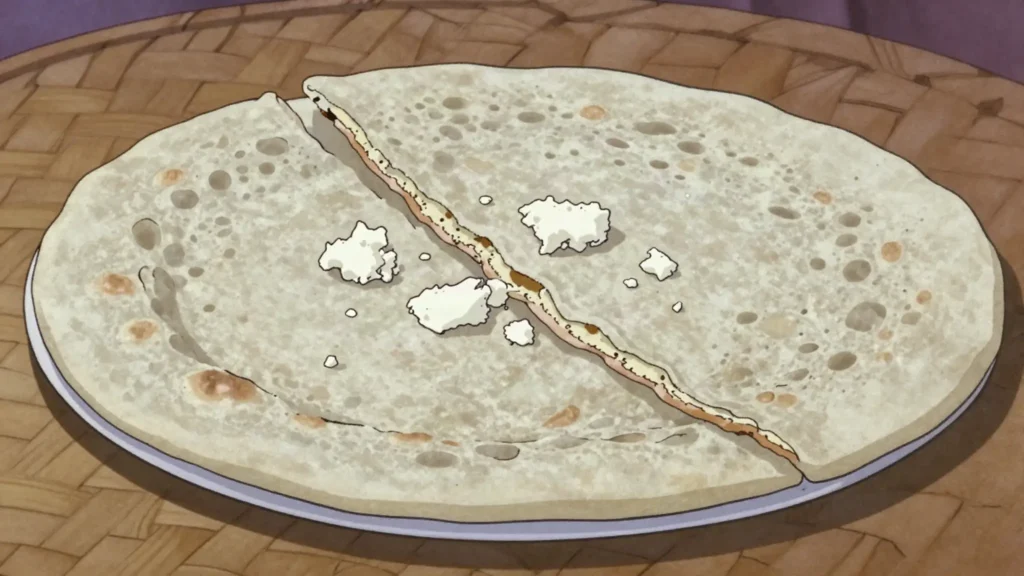
- Lift out what you need, squeeze the liquid out hard in a cloth and knead into a smooth dough, picking out any stray fibre with your fingers. Pat 1 cm thick rounds directly onto a hot clay griddle lined with an enset leaf, cover with a second leaf and bake 10–12 minutes a side over a moderate fire until set, matte and lightly speckled.
- Serve warm and dense, torn by hand, with ayib and gomen kitfo, or simply with spiced butter and honey. It keeps for days and is reheated on the griddle.
Technique
- Enset is not a banana. Its fruit is inedible and the food is the starch in the pseudostem and corm; a single plant can feed a family for weeks, and the buried pits are a household’s insurance against a bad year.
- The pit is a true lactic fermentation and is what makes the starch palatable and digestible. Unfermented scrapings are astringent and hard on the stomach.
- Age is quality. Kocho from a pit opened after a year is smoother and milder than kocho from a two-month pit, and it fetches a higher price at market.
- Food safety: line the pit so no soil touches the pulp, keep the mass packed airtight under weight, and discard any portion that is slimy, discoloured or smells putrid rather than cleanly sour.
Substitutions
- Enset is effectively unobtainable outside the Ethiopian highlands and has no true substitute. Cassava dough left to ferment three days in a sealed tub and griddled the same way gives a comparably dense, sour flatbread, but not the aroma.
Variations
- Bulla, the fine white starch that settles out of the squeezed liquid, is cooked into a pale pancake or a porridge and is the prestige product of the plant.
- Amicho, the corm simply boiled in pieces and eaten like a root vegetable.
History
Scraped enset pulp ferments in leaf-lined pits for months before baking; the Gurage and Sidama built a whole food system on it, feeding millions.
Frequently asked questions
What is Kocho?
Kocho is a bread & pastry from Ethiopia: dense fermented flatbread from enset, the false banana, sliced with kitfo. Scraped enset pulp ferments in leaf-lined pits for months before baking; the Gurage and Sidama built a whole food system on it, feeding millions.
How long does Kocho take to make?
Kocho takes 3 hr scraping and pulping of preparation and 2–12 months fermenting + 25 min baking of cooking. The recipe makes about 12 flatbreads from one opened pit. It is rated hard to make.
What can I substitute in Kocho?
Yes, within limits. Enset is effectively unobtainable outside the Ethiopian highlands and has no true substitute. Cassava dough left to ferment three days in a sealed tub and griddled the same way gives a comparably dense, sour flatbread, but not the aroma.
What is the most important thing to get right in Kocho?
Pack the scrapings in, working through a kilo of mature kocho from an older pit to seed the ferment, tread it down hard to drive out the air and fold the leaves over the top. When you open the pit the mass should be pale, dense and sourly fragrant, never slimy.