
Ethiopian household beer of barley, sorghum or maize, bittered with gesho and brewed in earthen pots. Women brew it for weddings, funerals and harvest work parties, and it is dark, sour and only lightly alcoholic.
Home brewing of alcohol is licensed or restricted almost everywhere, and the brew depends on gesho and on the culture living in pots used repeatedly.
What goes into it
- barley, sorghum or maize
- gesho leaves and powdered stems
- water
- a scorched flatbread called kita, for colour
How it is made
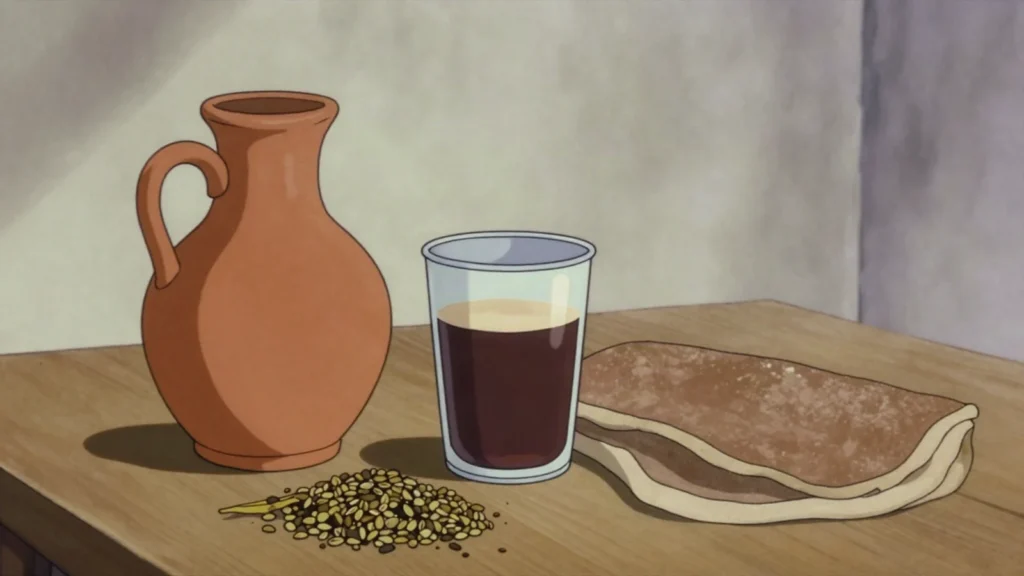
Roasted grain and powdered gesho are mixed with water in a clay pot and left to ferment for several days, then a deliberately scorched flatbread is stirred in to darken and flavour it. It ferments a few days more and is served unfiltered from the same pot.
How long it takes: five days to two weeks
How it is eaten
From a shared flask or cup with injera and stews, at weddings, funerals and work parties.
History
Household beer of barley, sorghum or maize bittered with gesho; women brew it in earthen pots for weddings, funerals and harvest work parties.
Frequently asked questions
What is Tella?
Tella is a wine & spirit from Ethiopia: homebrewed dark beer of roasted barley and gesho. Household beer of barley, sorghum or maize bittered with gesho; women brew it in earthen pots for weddings, funerals and harvest work parties.
How is Tella made?
Roasted grain and powdered gesho are mixed with water in a clay pot and left to ferment for several days, then a deliberately scorched flatbread is stirred in to darken and flavour it. It ferments a few days more and is served unfiltered from the same pot. It takes five days to two weeks.
Can I make Tella at home?
No, and the atlas gives no method for it. Home brewing of alcohol is licensed or restricted almost everywhere, and the brew depends on gesho and on the culture living in pots used repeatedly.
What goes into Tella?
Barley, sorghum or maize, gesho leaves and powdered stems, water, a scorched flatbread called kita, for colour.
How is Tella eaten?
From a shared flask or cup with injera and stews, at weddings, funerals and work parties.