
Ingredients
Char siu pork
- 600 gpork shoulder or neck
- in long strips
- 3 tablespoonshoisin sauce
- 2 tablespoonshoney
- 2 tablespoonssoy sauce
- 1 tablespoonrice wine
- 4garlic cloves, crushed
- 1 teaspoonfive spice
- a little red food colouring, optional
Roast pork belly
- 800 gpork belly, skin on
- 2 teaspoonssalt
- 1 teaspoonfive spice
- 1 teaspoonwhite pepper
- coarse salt, for the skin
- white vinegar, to brush
The duck
- 1duck
- or 4 duck legs
- 2 tablespoonssoy sauce
- 1 tablespoonfive spice
- 3spring onions
- 4 slicesginger
To serve
- plain white rice
- cucumber slices
- chilli sauce or sambal
- in a takeaway box
Directions
- Salt is used to draw moisture out. Cut the pork into long thick strips. About five centimetres thick is right. Mix the hoisin, honey and soy sauce. Add the rice wine and crushed garlic. Add the five spice powder to it.
- Add colouring if you are using it. Marinating it takes several hours. Rub the marinade into the pork. Cover it over and refrigerate it. Give it at least four full hours. Score the meat side but not the skin. That stops it puffing into crackling. Score only the meat underneath. Rub salt and five spice into the meat side.
- Rub the white pepper in as well. Keep all of it well off the skin. Pat the skin completely dry all over. Brush it over with white vinegar. Vinegar helps dry the skin further. Brush it thinly over the surface.
- Set the belly skin side up on a rack. The cold dry air draws moisture out. Rub the duck with soy sauce and five spice. Put spring onion and ginger inside it. Duck skin also needs to dry to crisp. Heat the oven to two hundred degrees. Lay the strips on a rack over a tray.
- Put a little water in the tray below. That stops the drips burning and smoking. Roast it for about fifteen minutes. Turn it and brush it with marinade. Roast it for fifteen more minutes.
- Brush it with honey near the end. Give it five more minutes there. Add it only in the last few minutes. Pack coarse salt over the dried skin. Roast it at one hundred and sixty degrees. Give it about one full hour there. Take it out and scrape the salt crust off. Brush away every last trace of it.
- Brush it thoroughly rather than quickly. The skin underneath is dry and pale. Roast it for about twenty minutes. It goes golden brown and hard. Roast it at one hundred and eighty degrees. Give it about an hour and a quarter. Pour it off as it roasts along. Keep it for cooking with later. Let all the meats rest for ten minutes. Ten minutes makes a real difference.
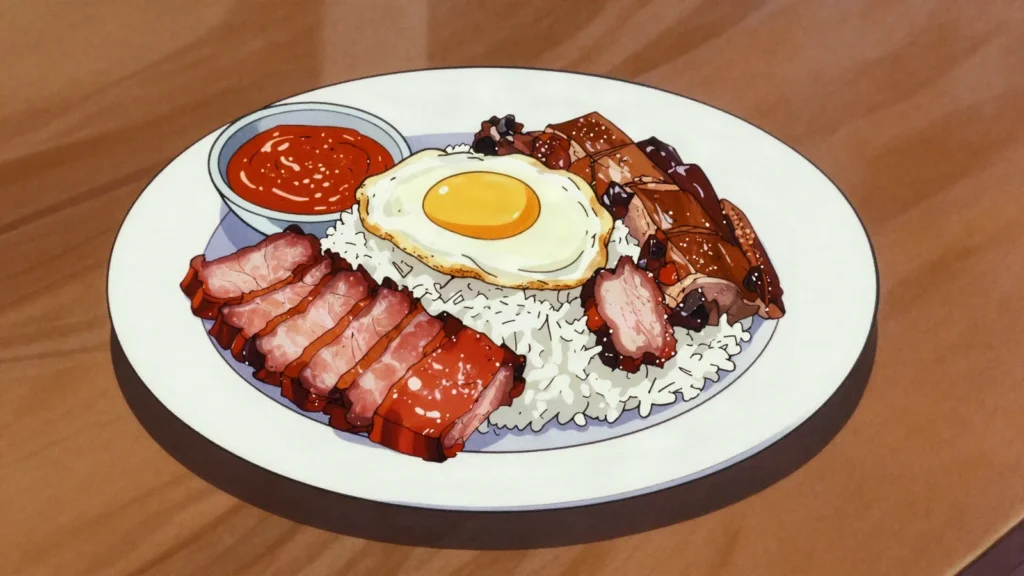
- Chop the char siu into thick slices. Chop the belly through the crackling. Use a heavy cleaver for the belly. Chop firmly rather than sawing. Chop the duck through the bone. Serving it is always done over rice. Put plain white rice in a box or bowl. Lay all three meats over the top. Add cucumber slices alongside. Put chilli sauce or sambal on the table. It keeps two days refrigerated.
Technique
- The pork belly skin must be very dry to crackle: score only the meat underneath and leave the skin unbroken, brush it with vinegar, and refrigerate it uncovered overnight on a rack so the cold dry air draws the moisture out. That step cannot be skipped. Coarse salt packed over it during the first slow roast draws out more, and must then be scraped off entirely or the meat is inedibly salty.
- Three roasts is a great deal of work — shops make each in quantity and combine them, so one or two is more realistic at home.
- Brush the char siu with honey only in the last few minutes, since honey burns quickly at high heat; and put water in the tray under the rack so dripping fat does not burn and smoke.
Substitutions
- Duck legs stand in for a whole duck.
- Fermented red bean curd colours char siu naturally where colouring is used commercially; it can be left out entirely.
Variations
- Chinese indentured labourers arrived in Suriname from 1853, and many who stayed left the plantations to open shops and eating houses.
- The dish is Cantonese in format but carries a Sranan Tongo name and is served with sambal.
- The belly and duck are chopped through the crackling and bone with a heavy cleaver, which is the Cantonese way.
History
From Suriname’s Chinese community, whose migration began with indentured labourers in 1853; sold by the box at Chinese takeaways.
Frequently asked questions
What is Moksi meti?
Moksi meti is a main from Suriname: mixed roast meats – pork belly, char siu and duck – over rice. From Suriname’s Chinese community, whose migration began with indentured labourers in 1853; sold by the box at Chinese takeaways.
How long does Moksi meti take to make?
Moksi meti takes 30 minutes plus marinating of preparation and 1 hour 30 minutes of cooking. The recipe makes serves 4. It is rated hard to make.
What can I substitute in Moksi meti?
Yes, within limits. Duck legs stand in for a whole duck. Fermented red bean curd colours char siu naturally where colouring is used commercially; it can be left out entirely.
What is the most important thing to get right in Moksi meti?
Brush it thoroughly rather than quickly. The skin underneath is dry and pale. Roast it for about twenty minutes. It goes golden brown and hard. Roast it at one hundred and eighty degrees. Give it about an hour and a quarter. Pour it off as it roasts along. Keep it for cooking with later. Let all the meats rest for ten minutes. Ten minutes makes a real difference.