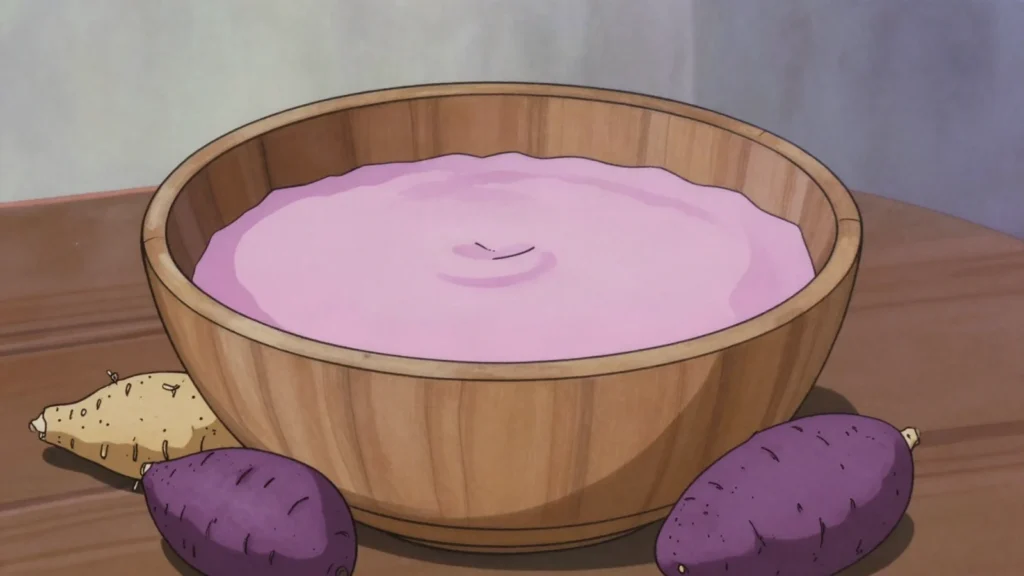

Amerindian cassava beer, sour and cloudy, drunk at village gatherings. Suriname’s Indigenous peoples brew it from grated cassava and serve it at communal work parties and celebrations.
It is a community drink specific to particular Indigenous groups, it produces alcohol, and cassava must be pressed and cooked correctly to remove its cyanogenic glycosides before any of it begins.
What goes into it
- cassava
- water
- sometimes sweet potato for colour
How it is made
Cassava is grated, pressed and cooked, and a portion is traditionally chewed and returned to the mash so saliva supplies the enzyme that converts starch to sugar. The mash ferments in a covered trough for one to several days on wild yeasts, and is strained and drunk cloudy while still working.
How long it takes: one to five days of fermentation
How it is eaten
From a bowl at communal work parties and celebrations.
History
Brewed by Suriname’s Indigenous peoples from grated cassava and served at communal work parties and celebrations.
Frequently asked questions
What is Kasiri?
Kasiri is a wine & spirit from Suriname: amerindian cassava beer, sour and cloudy, drunk at village gatherings. Brewed by Suriname’s Indigenous peoples from grated cassava and served at communal work parties and celebrations.
How is Kasiri made?
Cassava is grated, pressed and cooked, and a portion is traditionally chewed and returned to the mash so saliva supplies the enzyme that converts starch to sugar. The mash ferments in a covered trough for one to several days on wild yeasts, and is strained and drunk cloudy while still working. It takes one to five days of fermentation.
Can I make Kasiri at home?
No, and the atlas gives no method for it. It is a community drink specific to particular Indigenous groups, it produces alcohol, and cassava must be pressed and cooked correctly to remove its cyanogenic glycosides before any of it begins.
What goes into Kasiri?
Cassava, water, sometimes sweet potato for colour.
How is Kasiri eaten?
From a bowl at communal work parties and celebrations.