
Ingredients
Cabbage
- 1large white cabbage
- about 1.5 kg
- water, for blanching
Filling
- 400 gminced lamb
- 300 gshort grain rice
- rinsed
- 2 tablespoonsghee or butter, melted
- 2 teaspoonsbaharat
- 1 teaspoonground cinnamon
- 1 teaspoonsalt
- black pepper
The pot
- 500 glamb bones
- or a few lamb chops
- 10garlic cloves, whole
- juice of 3 lemons
- 2 tablespoonsdried mint
- about 800 ml water or stock
- salt
To serve
- yoghurt
- lemon wedges
- flatbread
Directions
- Roll them snug but never too tight. They also stop the rolls catching. Cut the core out of the cabbage. Cut deep around it with a sharp knife. Bring a very large pot of water to a boil. Let it boil for a few minutes. That is repeated until it is all used.
- Lift the cabbage out with tongs. Peel off the softened outer leaves. Return it to the water for the next layer. A leaf is ready when it bends without cracking.
- Take them off as they soften up. Lay each leaf flat on a board. Shave the thick rib down with a knife. Hold the knife almost flat to the leaf. Slice the raised rib right away. Cut large leaves in half or thirds. Aim for pieces about a hand’s width.
- Trim off any of the tough edges. Put the minced lamb in a large bowl. Add the rinsed uncooked rice to it. Add the melted ghee to them as well. Add the baharat and the cinnamon. Season it with salt and black pepper. Mixing it all up takes a moment.
- Mix it thoroughly with your hands. It should be evenly combined throughout. Taste is hard to check with raw meat. Fry a teaspoonful in a pan to taste it. Adjust the salt and spice accordingly. Lay a leaf piece flat on the board. Put a thin line of filling near one edge. Use far less filling than seems right. A thin finger’s worth is enough. Fold the near edge over the filling.
- Roll it snug but leave a little slack. The rice needs room in which to swell. Lay the lamb bones in the base. Add a few spare cabbage leaves over them. Lay the rolls in the pot side by side. Pack them tightly against each other. Work in rows right across the pot.
- Fill any gaps with spare leaves. Spread them through the layers. Add a second layer of rolls over the first. Lay them at right angles to the layer below. Continue until all the rolls are in.
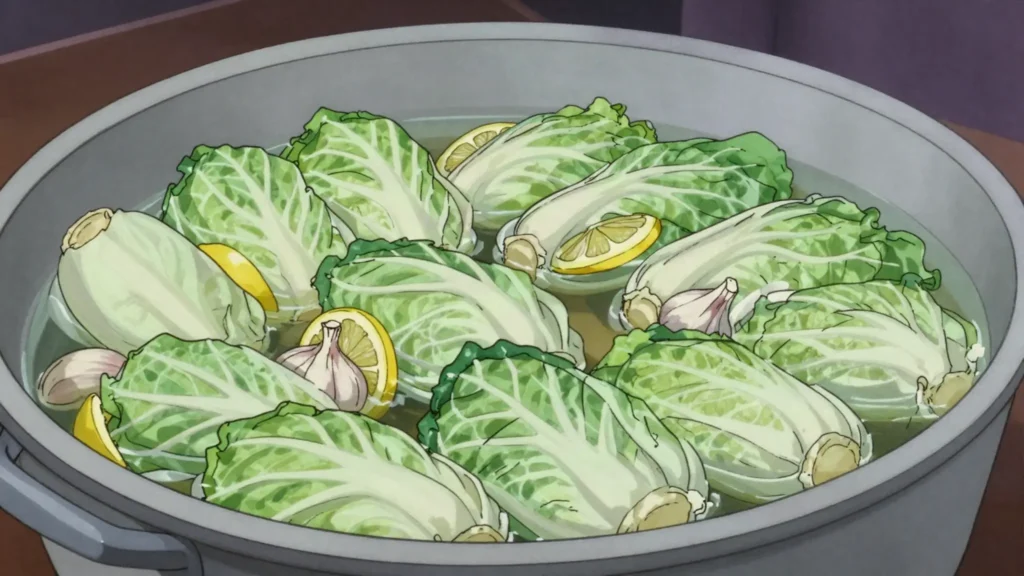
- Set an upturned plate on top of them. It should fit down inside the pot. Pour the water or stock over the plate. Add most of the lemon juice now. Season it with a little salt too. It should just cover the rolls. Bring it up to a gentle simmer. Cover the pot and let it cook on. Give it about an hour and a quarter.
- Keep it barely moving throughout. Add the dried mint after an hour. Add the rest of the lemon juice. Let it cook for fifteen more minutes. Judging when it is done takes a check. Lift one roll out and cut it open. The rice should be completely tender.
- Take the pot right off the heat. Leave the plate on top of them. Let it stand for twenty minutes. Serving it is always done piping hot. Lift the rolls out carefully with tongs. Set them out on a warm platter. Spoon a little cooking liquid over them. Add the softened garlic cloves alongside. Serve plain yoghurt alongside them. Serve flatbread with it as well. It keeps four days refrigerated.
Technique
- The rolls are made very thin, more like cigarettes than parcels, and that thinness is judged as skill: thin rolls cook evenly and give more leaf per mouthful, and the proportion of leaf to filling is what is being judged. Use far less filling than seems right.
- Unlike vine leaves, the sides are not folded in and the rolls are left open at both ends; the swelling rice holds itself in. Raw rice roughly triples, so roll them snug but with a little slack, since too tight and they burst.
- Shave the thick central rib down by holding the knife almost flat and slicing it away, which leaves the leaf whole and flat; cutting it out splits the leaf into two pieces instead.
Substitutions
- Minced beef works in place of lamb in the filling.
- A few lamb chops stand in for bones in the base of the pot.
Variations
- Dried mint is used rather than fresh, and fresh is not a substitute for it.
- Whole garlic cloves go in generously and are eaten alongside the rolls.
- Stuffed vine leaves are the spring and summer counterpart of the same idea.
History
A winter counterpart to vine leaves, layered in the pot with lamb bones and pressed under a plate.
Frequently asked questions
What is Malfouf?
Malfouf is a main from Jordan: cabbage leaves rolled thin around rice and meat, cooked with garlic and lemon. A winter counterpart to vine leaves, layered in the pot with lamb bones and pressed under a plate.
How long does Malfouf take to make?
Malfouf takes 1 hour 30 minutes of preparation and 1 hour 30 minutes of cooking. The recipe makes serves 6. It is rated hard to make.
What can I substitute in Malfouf?
Yes, within limits. Minced beef works in place of lamb in the filling. A few lamb chops stand in for bones in the base of the pot.
What is the most important thing to get right in Malfouf?
Roll them snug but never too tight. They also stop the rolls catching. Cut the core out of the cabbage. Cut deep around it with a sharp knife. Bring a very large pot of water to a boil. Let it boil for a few minutes. That is repeated until it is all used.