
Ingredients
The meat
- 400 gcharque
- dried salted beef
- soaked and pounded
- or 400 g beef, dried or salted
The rice
- 500 glong grain rice
- rinsed
- about 1.2 litres water or stock
The pot
- 2onions, chopped
- 1red pepper, chopped
- 3tomatoes, chopped
- 4garlic cloves, crushed
- 5 tablespoonsoil
- 2 tablespoonsurucú
- annatto or achiote
- 1 teaspoonground cumin
- 1 teaspoondried oregano
- salt and black pepper
To serve
- 4eggs, fried
- 2ripe plantains, fried
- sliced tomato and onion salad
- cheese, grated
Directions
- Rinse the surface salt off under cold water. Cover it with cold water in a bowl. Give it at least eight full hours. Boil a small piece and taste it. It should be seasoned rather than harsh. Salt cannot be removed after cooking. Put the soaked charque in a pot. Cover it over with fresh water.
- Bring the pot up to a full boil. Give it about forty full minutes. Cook it on if it still resists. Let it cool enough to handle it. Put it on a board or in a mortar. Pound it with a mallet or a pestle. Those strands take up the seasoning. Pull it apart with two forks instead.
- Warm the annatto seeds gently in oil. Give them about five full minutes. Keep the heat low right throughout. Strain the seeds out afterwards. Heat the urucu oil in a large heavy pot. Add the chopped onions to the pot. Cook them for a good ten minutes. Add the red pepper along with them. Cook it for five more minutes. Add the crushed garlic to them.
- Add the cumin and the oregano. Cook them for two more full minutes. Add the chopped tomatoes to the pot. Cook them down for about eight minutes. The tomato must cook right down. Oil should separate at the edges. Add the pounded charque to the pot. Stir it through the base thoroughly. Let it fry for about five minutes.
- Rinse the rice until the water runs clear. Add it to the pot and stir it through. Let it toast for about two minutes. Pour in the water or the stock. Season it with salt and black pepper.
- Add very little at this stage. Taste and adjust at the end instead. Bring the pot up to a full boil. Let it boil until the water is level with the rice. Cover the pot tightly with a lid. Let it steam for about twenty minutes. Do not lift the lid during that time.
- Use rather more liquid to start with. Stir it regularly as it cooks. Cooking the batido takes longer. Let it cook uncovered and stir it. Add hot liquid as it is absorbed. Give it about twenty-five minutes. Peel all of the ripe plantains.
- Cut them into thick diagonal slices. They should be yellow and blackening. Heat the oil in a wide heavy pan. Fry the slices for about three minutes a side. They should be deep golden and soft. Drain them all on a wire rack. Fry the eggs in a little hot oil. Keep the yolks soft and runny. Serving it is always done piping hot.
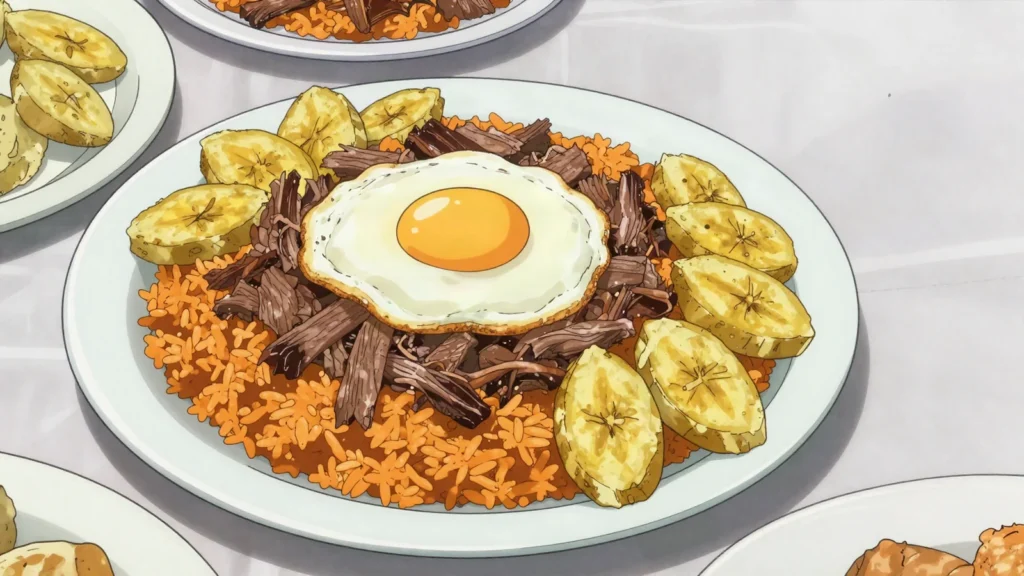
- Spoon the rice out onto plates. Lay fried plantain alongside it. Set a fried egg on top of the rice. Add a tomato and onion salad too. Grate cheese over it if you like. It keeps three days refrigerated.
Technique
- Charque is beef salted and sun dried, hard and intensely salty, and it must be soaked in several changes of water for at least eight hours before boiling; test by boiling a small piece and tasting it, since salt cannot be removed after cooking. The word charque comes from Quechua and is the origin of the English jerky.
- Majadito is made two distinct ways in Santa Cruz: batido, where the rice is stirred as it cooks so it releases starch and turns creamy, and seco, where it is left alone under a lid and the grains stay separate. Both are correct.
- The soaked and boiled charque is pounded rather than just chopped, which breaks the muscle fibres into fine strands that take up the seasoning and spread through the whole dish; two forks give coarser strands and pounding a finer result.
Substitutions
- Any dried or salted beef stands in for charque, soaked the same way.
- Achiote and annatto are the same seed as urucú under other names.
Variations
- Majadito batido is soft and almost soupy where majadito seco is dry and separate.
- A fried egg and fried ripe plantain are standard on top rather than optional.
- Grated cheese is added over it in some households.
History
Santa Cruz rice cooked with charque and urucu, a lowland dish built on dried beef and annatto.
Frequently asked questions
What is Majadito?
Majadito is a main from Bolivia: santa Cruz rice with shredded charque, fried plantain and egg. Santa Cruz rice cooked with charque and urucu, a lowland dish built on dried beef and annatto.
How long does Majadito take to make?
Majadito takes 30 minutes plus soaking of preparation and 1 hour of cooking. The recipe makes serves 6. It is rated medium to make.
What can I substitute in Majadito?
Yes, within limits. Any dried or salted beef stands in for charque, soaked the same way. Achiote and annatto are the same seed as urucú under other names.
What is the most important thing to get right in Majadito?
Rinse the surface salt off under cold water. Cover it with cold water in a bowl. Give it at least eight full hours. Boil a small piece and taste it. It should be seasoned rather than harsh. Salt cannot be removed after cooking. Put the soaked charque in a pot. Cover it over with fresh water.