
Ingredients
- 2 litreswhole milk, ideally raw or unhomogenised
- 3 tbsplive plain yoghurt or 150 ml lben from a previous batch, as starter
- 1 pinchfine salt (optional)
- About 200 ml cold water, to adjust the finished drink
To serve
- ice-cold glasses
- a few fresh mint leaves (optional)
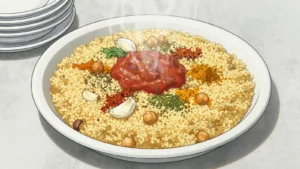
- couscous, chakhchoukha or dates alongside
Directions
- Heat the milk gently to 40°C (105°F) if it is raw, or to 85°C (185°F) and then cool it back to 40°C (105°F) if it is pasteurised, which gives the starter a clean field to work in.
- Whisk in the yoghurt or the previous batch of lben until fully dispersed, with no lumps of starter floating on top.
- Cover the pot with a cloth and leave it undisturbed in a warm place, ideally 22°C (70°F) to 26°C (80°F), for 24 to 36 hours.
- It is ready when the milk has set into a firm clabber that pulls cleanly from the side of the pot when tilted and smells sharply, pleasantly sour with no bitterness.
- Chill the clabber for 2 hours; churning cold gives a better separation and a cleaner-tasting buttermilk.
- Churn it in a traditional goatskin chekoua, a wooden butter churn or, at home, in a food processor or a jar shaken hard, for 10 to 20 minutes.
- Watch for the moment the emulsion breaks: yellow grains of butter gather and swim in a thin white liquid. That liquid is lben.
- Strain through a fine sieve or muslin to remove the butter grains, which you can wash in cold water and salt to make zebda beldia.
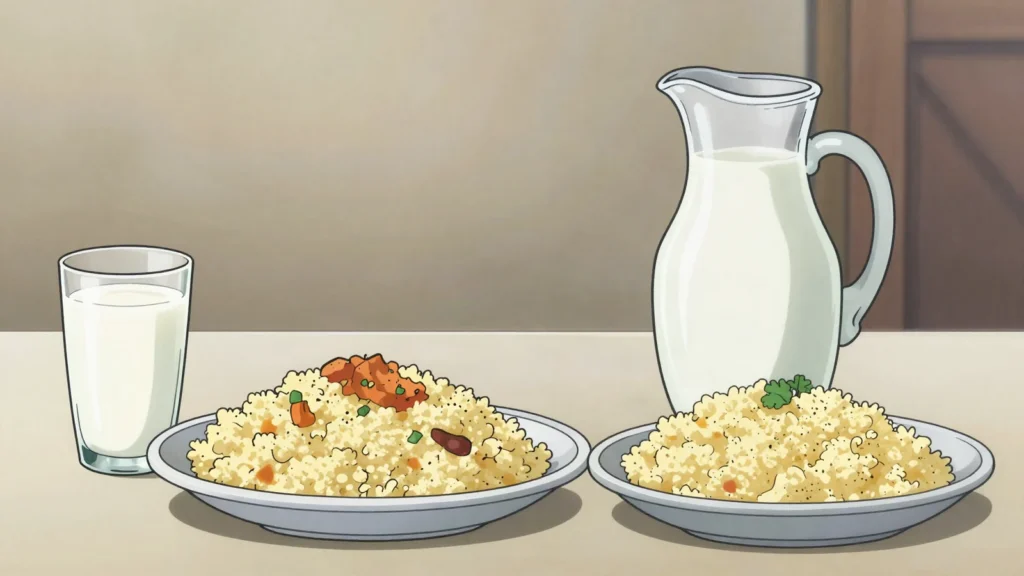
- Season the lben with a pinch of salt if you like, slacken with cold water to a pourable consistency, chill hard and serve very cold in glasses beside couscous. It keeps four days refrigerated and grows sourer each day.
Technique
- Lben is the by-product of butter-making, not a thinned yoghurt, and that is why it tastes lean and faintly sharp rather than creamy. Shop buttermilk is the closest industrial analogue.
- Temperature governs everything: too cold and it will not set, too warm and it curdles into a bitter, grainy mess. A switched-off oven with the light on is a reliable warm spot.
- If the milk is not reliably safe raw, scald it first. The souring bacteria still work, and you remove any risk from the raw stage.
- Lben is drunk with couscous throughout Algeria, especially on Fridays, and heated further it separates into the curd used for klila.
Substitutions
- No churn: shake the cold clabber in a large sealed jar for 15 minutes, resting your arms as needed, until the butter separates.
- Commercial buttermilk, or plain yoghurt whisked with a third its volume of cold water and a pinch of salt, stands in acceptably at short notice.
Variations
- Raib is the set, unchurned soured milk eaten with a spoon and a sprinkle of sugar.
- In the south lben is served with dates and a little olive oil at the end of a meal.
- Some families flavour it with dried mint crushed into the glass.
History
The buttermilk left after churning butter, traditionally in a goatskin; it is drunk cold with couscous and considered cooling in the Algerian summer.
Frequently asked questions
What is Lben?
Lben is a drink from Algeria: tangy churned buttermilk, drunk cold alongside couscous. The buttermilk left after churning butter, traditionally in a goatskin; it is drunk cold with couscous and considered cooling in the Algerian summer.
How long does Lben take to make?
Lben takes 15 min of preparation and 24 to 36 hr souring plus 20 min churning of cooking. The recipe makes about 1.5 litres. It is rated easy to make.
What can I substitute in Lben?
Yes, within limits. No churn: shake the cold clabber in a large sealed jar for 15 minutes, resting your arms as needed, until the butter separates. Commercial buttermilk, or plain yoghurt whisked with a third its volume of cold water and a pinch of salt, stands in acceptably at short notice.
What is the most important thing to get right in Lben?
Lben is the by-product of butter-making, not a thinned yoghurt, and that is why it tastes lean and faintly sharp rather than creamy. Shop buttermilk is the closest industrial analogue.