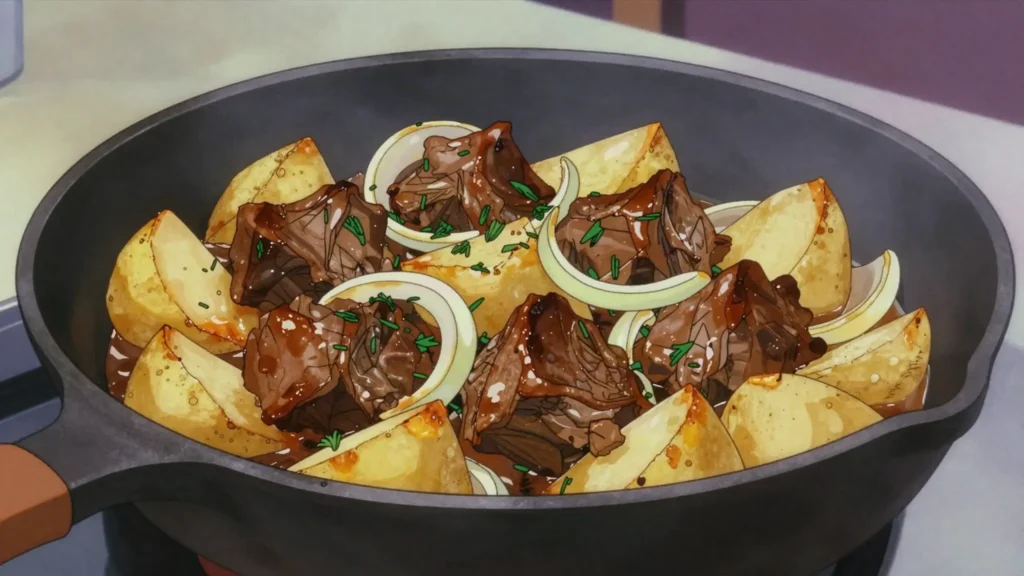

Ingredients
Meat
- 1 kgmutton or lamb, on and off the bone, in 3 cm pieces
- 150 gmutton tail fat, diced
Pot
- 4onions, thickly sliced
- 5potatoes, in large chunks
- 2tomatoes, chopped, optional
- 1 tspcumin
- salt
- black pepper
- 200 mlwater
To finish
- 1 bunchcoriander and dill
To serve
- flatbread
- black tea
Directions
- Lift the crisp scraps out and keep them for scattering over at the end. Raise the heat and brown the meat hard in that fat, in batches so the pot stays hot.
- Brown it properly. Add the onions and cook them until soft and golden, scraping up everything stuck to the base.
- Add the cumin, salt and pepper, and the tomatoes if using.
- Add only about 200 ml of water, which will look far too little. This is a fry, not a stew, and a flooded pot gives you boiled mutton and a thin gravy.
- Cover and cook on a low heat for 30 minutes.
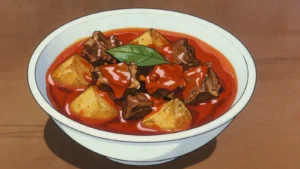
- Add the potato chunks, cover again, and cook a further 25 minutes until they are soft and have taken on the fat. Do not stir it much once the potatoes are in, or they break up and thicken everything into a mash.
- Scatter the reserved crisp fat scraps and plenty of chopped coriander and dill over the top. Serve straight from the pot with flatbread and black tea.
Technique
- Mutton tail fat, kuiruk, is sold in Central Asian butchers and is worth seeking out.
- It is eaten communally from one dish with bread and hands.
- Some households add a splash of the meat broth at the end, though it is meant to be dry.
Substitutions
- Lamb shoulder with extra fat, in place of mutton and tail fat.
- Beef, which is common in towns.
Variations
- Kuyrdak, the Kazakh offal version.
- Without potato, as a plain meat fry.
- With more onion, which is the Naryn style.
History
A dish of meat, most often lamb or beef along with organ meats, fried together with onion and potato, developed among Kyrgyz nomadic and semi-nomadic pastoral communities as a practical way to use a freshly slaughtered animal’s meat quickly, before refrigeration or extended preservation was needed, since a whole animal was typically prepared and eaten across a household or community gathering rather than portioned for gradual, extended use. Its inclusion of liver, heart and other organ meats alongside muscle meat reflects a broader Central Asian and nomadic pastoral value placed on using an entire slaughtered animal rather than only its choicest cuts. Kuurdak remains closely associated in Kyrgyzstan with hospitality and guest-welcoming customs, often one of the first dishes served to visitors.
Frequently asked questions
What is Kuurdak?
Kuurdak is a main from Kyrgyzstan: fried mutton and potatoes with onions. A dish of meat, most often lamb or beef along with organ meats, fried together with onion and potato, developed among Kyrgyz nomadic and semi-nomadic pastoral communities as a practical way to use a freshly slaughtered animal’s meat quickly, before refrigeration or extended preservation was needed, since a whole animal was typically prepared and eaten across a household or community gathering rather than portioned for gradual, extended use. Its inclusion of liver, heart and other organ meats alongside muscle meat reflects a broader Central Asian and nomadic pastoral value placed on using an entire slaughtered animal rather than only its choicest cuts. Kuurdak remains closely associated in Kyrgyzstan with hospitality and guest-welcoming customs, often one of the first dishes served to visitors.
How long does Kuurdak take to make?
Kuurdak takes 20 min of preparation and 1 hr of cooking. The recipe makes 6 servings. It is rated easy to make.
What can I substitute in Kuurdak?
Yes, within limits. Lamb shoulder with extra fat, in place of mutton and tail fat. Beef, which is common in towns.
What is the most important thing to get right in Kuurdak?
Add the potato chunks, cover again, and cook a further 25 minutes until they are soft and have taken on the fat. Do not stir it much once the potatoes are in, or they break up and thicken everything into a mash.