Ingredients
The ginger
- 350 gfresh ginger
- mature and fibrous
- roughly chopped
The liquid
- 1.5 litreswater
- boiled and cooled
- or filtered water
The sweetening
- 220 gsugar
- or to taste
The flavouring
- juice of 3 lemons
- or 4 limes
- 1 teaspoonvanilla, optional
- a pinch of salt
- a few mint leaves, optional
Sometimes combined with
- bissap, the hibiscus infusion
- tamarind water
- for a mixed drink
Equipment
- a blender
- a fine sieve and muslin
- clean bottles or small sachets
- a freezer
Directions
- Use mature ginger rather than young. Look for firm plump rhizomes. Chop the ginger roughly. Put it in a blender with half the water. Blend it for a full two or three minutes. So blend beyond the point it looks done.
- Work in batches if it labours. Add enough water to keep it moving. Pour the pulp and water into a large bowl. Add the remaining water.
- Cover it and leave it at least four hours. The ginger keeps giving up heat as it stands. Line a sieve with muslin over a bowl. Pour the mixture through. Squeeze out every drop.
- Return the pulp to the bowl. Add half a litre more water. Work it with your hands and strain again. Wash your hands after squeezing. Do not rub your eyes. Add it gradually and taste as you go.
- Stir until every grain dissolves. It should read sweet first. Add the lemon or lime juice generously. Pour it into clean bottles or a jug. Refrigerate it for at least three hours.
- Serve it half frozen and slushy. That keeps them cold without refrigeration. Keep it refrigerated or frozen. Use clean bottles and clean utensils.
- Discard it if it fizzes or smells fermented. Anyone taking such medication should ask a doctor. Serve it very cold over ice or half frozen. Shake it before pouring. It keeps four days refrigerated.
Technique
- The atlas holds three closely related entries for this drink — from the Central African Republic, from Côte d’Ivoire as gnamankoudji, and this one. They are not meaningfully different recipes. The drink is genuinely made across the whole region under different names, and recording it under each reflects that; pretending each is a distinct dish would not.
- Blend for a full two or three minutes, beyond the point it looks done. Ginger fibre holds its juice tightly and a short blend leaves most of the flavour in the pulp.
- Steep at least four hours, preferably overnight, and taste only afterwards. It keeps strengthening as it stands. Steep it refrigerated in warm weather or wild fermentation begins — which some vendors do deliberately, for a fizzy version.
- Do a second extraction: return the pulp, add half a litre of water, work it and strain again. It yields a surprising amount and makes the ginger go considerably further.
- Get the sweet-then-burn sequence right. It should read sweet at the front with the ginger arriving after; under-sweetened it is simply painful, over-sweetened the burn disappears.
- Use mature fibrous ginger rather than young pink-tipped ginger, which is milder and juicier. Heat is what the drink is for.
- Scrape ginger skin with the edge of a teaspoon rather than a peeler, which wastes far less flesh — and for a strained drink, scrubbing and leaving it on is fine.
- Wash your hands after squeezing the pulp and do not rub your eyes. Ginger juice stings cut skin and irritates eyes badly.
- Serve it half frozen rather than merely cold. It is sold in small heat-sealed sachets frozen solid, with a corner bitten off — a practice that keeps drinks cold without refrigeration and that also generates documented plastic waste problems.
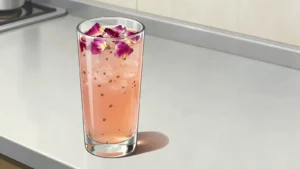
- Mixing it with bissap, the hibiscus infusion, or with tamarind is genuinely common and gives a red drink with a burn behind it.
- This is unpasteurised and never heated, so it is not preserved. Keep it refrigerated or frozen, use clean bottles, drink it within three or four days, and discard it if it fizzes or smells fermented.
- A very concentrated ginger drink can irritate the stomach in quantity, and an interaction with blood-thinning medication is sometimes noted on limited evidence mostly concerning supplements. The atlas records that the question exists and leaves it to a doctor.
Substitutions
- Lime replaces lemon and is used interchangeably.
- Honey replaces sugar, stirred in cold.
- Vanilla or mint round off the harshness and are added in some versions.
- Bissap or tamarind water mixed in gives the common combined drinks.
- Less ginger makes a gentler version.
- A concentrated syrup, diluted to order, keeps far longer than the finished drink.
Variations
- Gnamankoudji in Côte d’Ivoire is the same drink under a Dioula name.
- Ginger juice in the Central African Republic is the gentler version of the same thing.
- Bissap, the hibiscus infusion, is the other great cold drink sold the same way.
- A lightly fermented version, started with pineapple skin, becomes gently fizzy.
- Jus de tamarin is the tamarind equivalent.
- Jus de bouye, from baobab fruit, is thicker and creamier.
History
Ginger is grated, steeped and strained, then sold frozen in knotted sachets from coolers on the street alongside bissap and bouye.
Frequently asked questions
What is Jus de gingembre?
Jus de gingembre is a drink from Burkina Faso: blended fresh ginger with water, sugar and lemon, served fiery and very cold. Ginger is grated, steeped and strained, then sold frozen in knotted sachets from coolers on the street alongside bissap and bouye.
How long does Jus de gingembre take to make?
Jus de gingembre takes 20 minutes plus steeping of preparation and none of cooking. The recipe makes makes about 1.5 litres. It is rated easy to make.
What can I substitute in Jus de gingembre?
Yes, within limits. Lime replaces lemon and is used interchangeably. Honey replaces sugar, stirred in cold. Vanilla or mint round off the harshness and are added in some versions. Bissap or tamarind water mixed in gives the common combined drinks. Less ginger makes a gentler version. A concentrated syrup, diluted to order, keeps far longer than the finished drink.
What is the most important thing to get right in Jus de gingembre?
Use mature ginger rather than young. Look for firm plump rhizomes. Chop the ginger roughly. Put it in a blender with half the water. Blend it for a full two or three minutes. So blend beyond the point it looks done.