
Ingredients
Sausage
- 800 gminced beef, about 20% fat
- 200 gbeef suet or hard fat, chopped small
- 200 gcooked short-grain rice, cooled
- 2onions, chopped very fine
- 6 clovesgarlic, crushed
- 1 tbspground dried red chilli, or to taste
- 2 tspground Sichuan pepper or timur
- 1 tspground ginger
- 2 tspsalt
- 2m natural beef or hog casing, rinsed and soaked
To cook and serve
- 3 litreswater
- 1 tspsalt
- 2 tbspbutter or oil, for frying
- sliced green chilli and spring onion, to serve
Directions
- Soak the casing in cold water for 30 minutes, then run water through the inside of it from the tap to open it out and check for splits. A casing with a hole in it will empty itself into the pot.
- Mix the beef, chopped fat, cooled rice, onion, garlic, chilli, pepper, ginger and salt with your hands until it is evenly combined and starting to feel tacky. Fry a teaspoon of it in a pan and taste, then adjust the salt and chilli before you fill anything — once it is in the casing you cannot change it.
- Slide the casing onto a wide funnel or a sausage stuffer and fill it loosely, leaving room for the rice to swell. Twist into sausages about 15 cm long, tie the ends, and prick each one two or three times with a needle so steam can escape.
- Bring the water to a bare simmer with the salt — no more than the odd bubble breaking. Lower the sausages in and poach for 45 minutes to an hour, until firm and a skewer comes out clean. A rolling boil bursts them, which is the one thing that ruins the whole batch.
- Lift them out and let them cool completely, ideally overnight in the fridge. They slice cleanly cold and fall apart warm.
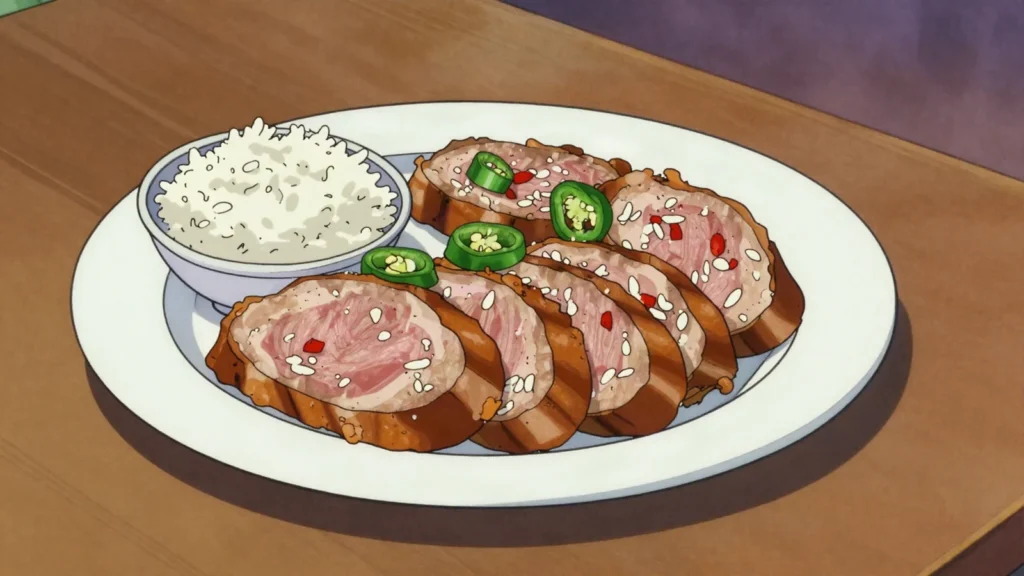
- Cut into thick rounds and fry in butter over medium-high heat until browned and crisp at the edges, three to four minutes a side.
- Serve hot with sliced green chilli, spring onion and rice.
Technique
- The rice is not filler. It absorbs the fat as the sausage poaches and gives juma its soft, yielding texture — a version made with meat alone comes out tight and dry.
- Prick the sausages before poaching, not after. Steam builds inside the casing within the first few minutes and a sealed sausage splits at exactly the point where the filling is thickest.
- The poaching is what cooks it through; the frying is only for colour and crust. Do not shorten the poach and expect the pan to finish the job.
Substitutions
- Yak or water buffalo mince in place of beef, which is what a Bhutanese household would more likely use.
- Collagen casings from a butcher if natural ones are hard to find; they poach just as well, though they do not brown as prettily.
- Cooked barley for the rice, which is closer to what highland households had before rice came up the valleys.
Variations
- The blood version, made at slaughter time, replaces some of the fat with fresh blood and comes out much darker and richer.
- Some households add chopped liver at about a tenth of the meat weight, which deepens the flavour considerably.
History
A Bhutanese blood-and-meat sausage made at slaughter time and eaten at winter meals with chilli.
Frequently asked questions
What is Juma?
Juma is a charcuterie & cured from Bhutan: fat sausage of minced beef, rice and spices, boiled then fried in slices. A Bhutanese blood-and-meat sausage made at slaughter time and eaten at winter meals with chilli.
How long does Juma take to make?
Juma takes 45 min of preparation and 1 hour 30 minutes of cooking. The recipe makes makes about 12 sausages, serves 6. It is rated medium to make.
What can I substitute in Juma?
Yes, within limits. Yak or water buffalo mince in place of beef, which is what a Bhutanese household would more likely use. Collagen casings from a butcher if natural ones are hard to find; they poach just as well, though they do not brown as prettily. Cooked barley for the rice, which is closer to what highland households had before rice came up the valleys.
What is the most important thing to get right in Juma?
Bring the water to a bare simmer with the salt — no more than the odd bubble breaking. Lower the sausages in and poach for 45 minutes to an hour, until firm and a skewer comes out clean. A rolling boil bursts them, which is the one thing that ruins the whole batch.