
Ingredients
Meat and cure, per 1 kg of mix
- 800 glean pork shoulder, chilled to 0–2 C and diced
- 200 ghard pork back fat, part-frozen and diced small
- 26 gfine sea salt
- 2.5 gcuring salt no. 2 (nitrate and nitrite blend)
- 4 gcoarsely cracked black pepper
- 2 gwhole black peppercorns
- 3 gdextrose or caster sugar
- 30 mldry white wine, chilled
Casing and hanging
- 3m natural hog casings, 32–36 mm, soaked 1 hr and flushed through
- butcher’s twine
- labels for recording the green weight
Directions
- Chill the meat, the fat, the mincer plate and the mixing bowl until everything is close to freezing. Warm fat smears and ruins the marbled cut face.
- Mince the lean meat through an 8 mm plate and the back fat through a 6 mm plate, or dice the fat by hand into 4 mm cubes.
- Mix in the salt, curing salt, cracked and whole pepper, sugar and wine, and work the mass by hand for 3–4 minutes until it turns sticky and clings to your palm; the fat should still show as distinct white pieces.
- Cover and rest the mix at 3°C (35°F) for 24 hours so the cure distributes evenly and the colour sets.
- Stuff firmly into the casings, keeping the mix cold, then prick out any air bubbles with a sterilised needle and tie into 30–35 cm lengths.
- Weigh each sausage and write that green weight on its label; the whole cure is judged from this number.
- Hang 24–48 hours at 20–22°C (70–70°F) and about 90% humidity to let the ferment start, then move to the drying room.
- Dry at 12–14°C (55–55°F) and 75–80% humidity with slow air movement for 5–8 weeks. A soft white bloom of Penicillium is wanted and can be left alone; wipe away anything green or fuzzy with a brandy-dampened cloth.
- The llonganissa is ready when it has lost 35–40% of its green weight and feels firm right through with no soft core.
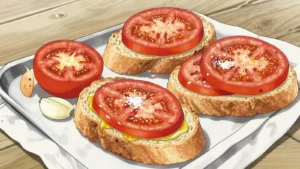
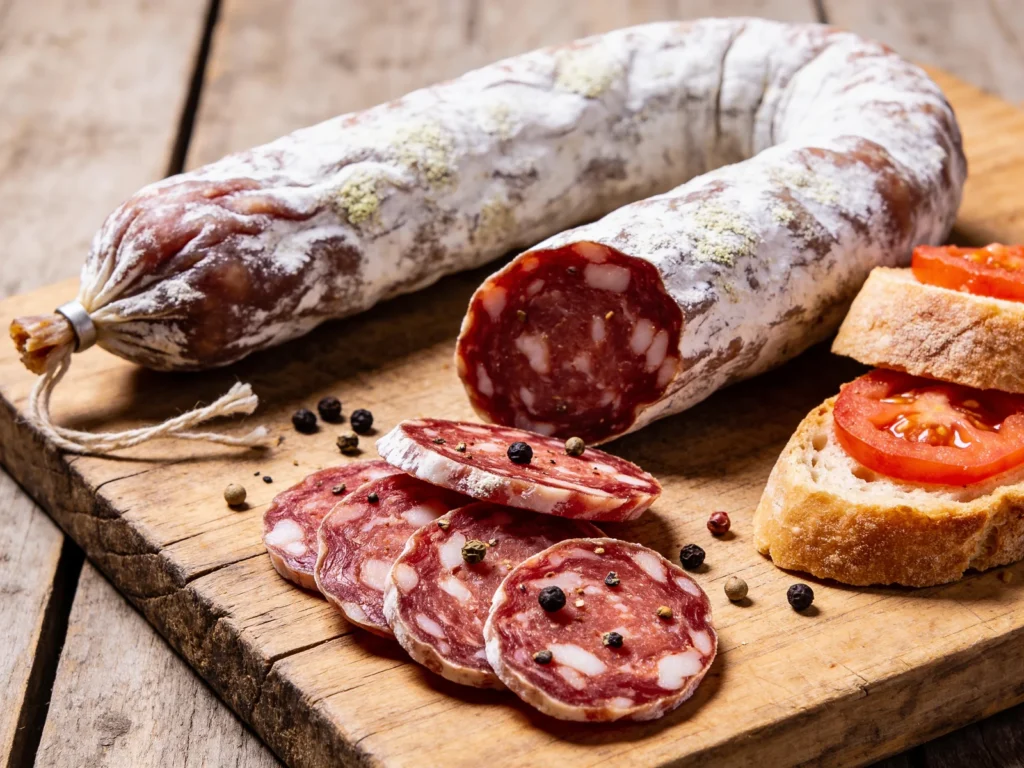
- Slice very thin on a slight angle and serve at room temperature with bread and tomato.
Technique
- Curing salt is not optional in a slow-dried sausage. Nitrate and nitrite hold off Clostridium botulinum through the weeks the interior spends warm, damp and airless, and they are what fix the deep red colour.
- If humidity falls below 70% the outside dries into a shell and traps moisture inside. You see it as a grey ring under the casing when you cut. Slow it by bagging the sausages loosely for a few days so the moisture equalises.
- Llonganissa is defined by coarse black pepper and nothing else: no paprika, which would make it a chorizo, and no smoke. Keeping everything near-frozen is what preserves the visible flecks of white fat that mark the Vic style.
Substitutions
- No curing chamber: a wine fridge set to 13°C (55°F) with an open tray of saturated salt solution holds roughly 75% humidity, and a cold stone cellar works in winter.
- Hog casing can be replaced by 40 mm collagen casing, though it dries less evenly and gives a softer bite.
Variations
- Llonganissa de Vic, the protected Catalan benchmark, slightly wider and dried longer.
- Fuet, the thinner, faster cousin, ready in about three weeks under a heavy white bloom.
- Secallona, dried thin until almost brittle and eaten in shards.
History
Cured in the Pyrenean valleys, where cold dry air preserves meat; Andorran farms hung sausages after the winter matança pig slaughter.
Frequently asked questions
What is Llonganissa?
Llonganissa is a charcuterie & cured from Andorra: long, thin dry-cured pork sausage heavy with black pepper. Cured in the Pyrenean valleys, where cold dry air preserves meat; Andorran farms hung sausages after the winter matança pig slaughter.
How long does Llonganissa take to make?
Llonganissa takes 1 hr of preparation and 5 to 8 weeks curing of cooking. The recipe makes about 1.2 kg, 6 sausages. It is rated hard to make.
What can I substitute in Llonganissa?
Yes, within limits. No curing chamber: a wine fridge set to 13°C (55°F) with an open tray of saturated salt solution holds roughly 75% humidity, and a cold stone cellar works in winter. Hog casing can be replaced by 40 mm collagen casing, though it dries less evenly and gives a softer bite.
What is the most important thing to get right in Llonganissa?
Weigh each sausage and write that green weight on its label; the whole cure is judged from this number.