
Ingredients
Fish
- 300 gfermented skate, bought ready-fermented
Samhap
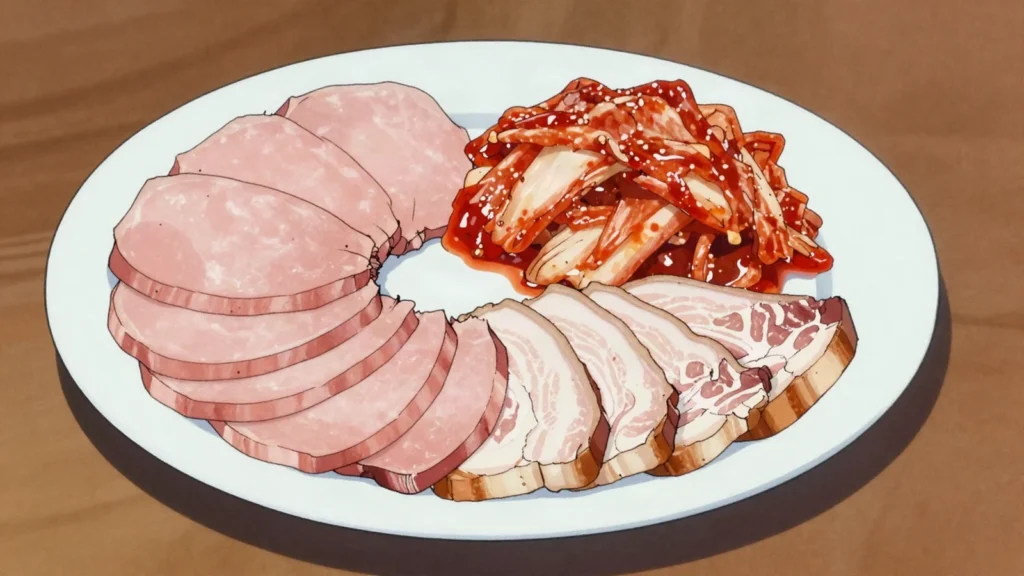
- 300 gboiled pork belly
- 200 gwell-aged kimchi
Table
- sesame oil with salt
- ssamjang
- raw garlic
- green chilli
- makgeolli
Directions
- Buy it already fermented. Skate is aged by producers, above all at Yeongsanpo in Naju, and this is not a home preparation.
- The reason it can be fermented safely is specific to the fish: skate and ray flesh carries urea, which converts to ammonia as it ages, driving the pH so high that spoilage organisms and pathogens cannot survive in it.
- That mechanism belongs to skate and ray and to nothing else. Fermenting any other fish this way is genuinely dangerous and the practice does not transfer.
- Heuksando fishermen found this out on long voyages, when the skate in the hold was the only part of the catch still edible on arrival.
- Unwrap it in a ventilated room, and open a window before you do.
- The ammonia is strong enough to sting the eyes and the back of the throat, and a small closed kitchen makes it far worse than it needs to be.
- Slice it thinly across the grain, including the soft cartilage, which is eaten along with the flesh.
- Slice it thin. The texture is firm with a slight crunch from the cartilage, and thick pieces are hard work and much stronger.
- Serve it at room temperature rather than chilled, with sesame oil and salt for dipping.
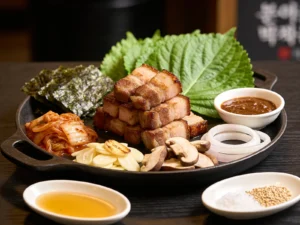
- Now the samhap, which is how it is properly eaten: take a slice of hongeo, a slice of boiled pork belly and a piece of well-aged sour kimchi, and eat all three in one mouthful.
- Three together is not a serving suggestion, it is the dish. The fat of the pork coats the mouth and the sour kimchi cuts the ammonia, and each blunts the skate in a way that none of them does alone.
- Drink makgeolli alongside, which is the traditional pairing and works for the same reason.
- Breathe out through your mouth rather than your nose on the first bite, which is the standard advice given to beginners.
- Milder grades are aged for less time and are the sensible place to start; the strongest are for people who grew up with it.
- Naju’s Yeongsanpo became the market for it and the fish still moves through there.
Technique
- It is one of the most divisive foods in Korea and Koreans themselves are thoroughly split on it.
- It is sold in grades by strength, and any shop selling it will advise on which to start with.
- Freezing it does nothing to soften the ammonia.
Substitutions
- There is no substitute. The dish is the fish, and no other species can stand in for it.
- A milder grade of the same fish, if the strong one is too much.
Variations
- Hongeo jjim, steamed with vegetables, which is considerably milder.
- Hongeo tang, made into a soup.
- Fresh unfermented skate, which is simply an ordinary white fish.
History
Skate ferments safely because its flesh converts urea to ammonia; Heuksando fishermen discovered this on long voyages and Naju’s Yeongsanpo became the market.
Frequently asked questions
What is Hongeohoe?
Hongeohoe is a main from South Korea: fermented skate sliced raw, so ammoniac it stings the nose and throat. Skate ferments safely because its flesh converts urea to ammonia; Heuksando fishermen discovered this on long voyages and Naju’s Yeongsanpo became the market.
How long does Hongeohoe take to make?
Hongeohoe takes 15 min of preparation and no cooking at all. The recipe makes 4 servings. It is rated easy to make.
What can I substitute in Hongeohoe?
Yes, within limits. There is no substitute. The dish is the fish, and no other species can stand in for it. A milder grade of the same fish, if the strong one is too much.
What is the most important thing to get right in Hongeohoe?
Heuksando fishermen found this out on long voyages, when the skate in the hold was the only part of the catch still edible on arrival.