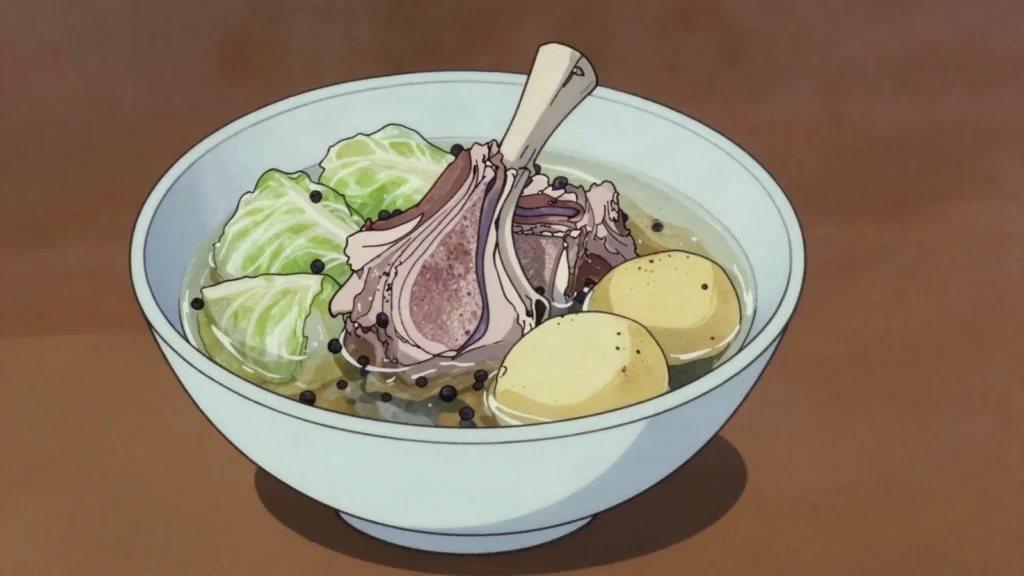

Ingredients
- 1.5 kgbone-in lamb or mutton, neck, shoulder and rib, cut in large pieces with the fat left on
- 1.5 kgwhite cabbage, cut in thick wedges through the core
- 4 tbspwhole black peppercorns
- 2 tbspsalt
- 2 tbspplain flour (optional, for a slightly thickened broth)
- 500 mlwater
To serve
- 1 kgsmall floury potatoes, boiled in their skins
- flatbrod or coarse bread
- a glass of dark beer or aquavit
Directions
- Choose a deep, heavy pot with a well-fitting lid. Fårikål is built in layers and never stirred, so the pot does the work.
- Put a layer of the fattiest meat pieces, fat side down, on the bottom – this fat renders and keeps everything below from catching.
- Cover with a layer of cabbage wedges, then scatter over salt, some of the peppercorns and, if using, a dusting of flour.
- Repeat the layers – meat, cabbage, salt, pepper – until everything is used, finishing with cabbage on top. Many Norwegian cooks tie the peppercorns in a muslin bag; most do not, and eating round them is part of the ritual.
- Pour in the water down the side of the pot. It should come about a third of the way up, no more – the cabbage will release a great deal of liquid.
- Bring slowly to the boil with the lid on, then drop the heat until you can only just hear it bubbling.
- Simmer, covered, for 2 hours without stirring, until the meat pulls easily from the bone and the cabbage has collapsed to a soft, translucent, faintly sweet mass. Older mutton may want 3 hours.
- Taste the broth for salt and let the pot stand off the heat 10 minutes so the fat rises; skim a little off if you like, though most Norwegians leave it.
- Serve deep bowls of meat, cabbage and broth with boiled potatoes on the side, and expect leftovers – fårikål is universally agreed to be better reheated the next day.
Technique
- The whole peppercorns are the defining seasoning and the only spice in the dish. Ground pepper makes the broth muddy and grey; whole corns perfume it and are eaten or pushed aside.
- Use fatty, bone-in cuts. Lean leg meat gives a thin, dull broth – the collagen from neck and rib is what makes the liquid silky.
- Never stir. The layers are meant to settle into each other; stirring shreds the cabbage and clouds the broth.
Substitutions
- Mutton is traditional and much more flavourful, but hogget or ordinary lamb shoulder works with a shorter simmer.
- Savoy cabbage can replace white cabbage, though it breaks down faster – add it 40 minutes later than you otherwise would.
Variations
- Farikal with a splash of aquavit or dark beer added to the pot, common in western Norway.
- The Fårikål Feast Day version, eaten on the last Thursday of September, when the dish is officially celebrated nationwide.
- Får i kål med gulrot, layered with carrot in some northern households.
History
A simple stew of mutton or lamb and cabbage, seasoned with little more than whole black peppercorns and salt, officially declared Norway’s national dish by a 1972 newspaper campaign and reader vote, reflecting the dish’s genuinely widespread everyday presence across Norwegian households rather than any elaborate or ceremonial history. Its minimal seasoning and reliance on just two main ingredients reflect a broader Norwegian rural cooking tradition built around what mountain and coastal farming communities could reliably produce, sheep in particular being well suited to Norway’s often steep, rocky terrain unsuitable for many other forms of agriculture. Norway holds an official Fårikål Day each autumn, timed to the traditional slaughter season when fresh mutton became available.
Frequently asked questions
What is Fårikål?
Fårikål is a soup & stew from Norway: lamb and cabbage simmered with whole peppercorns; national dish. A simple stew of mutton or lamb and cabbage, seasoned with little more than whole black peppercorns and salt, officially declared Norway’s national dish by a 1972 newspaper campaign and reader vote, reflecting the dish’s genuinely widespread everyday presence across Norwegian households rather than any elaborate or ceremonial history. Its minimal seasoning and reliance on just two main ingredients reflect a broader Norwegian rural cooking tradition built around what mountain and coastal farming communities could reliably produce, sheep in particular being well suited to Norway’s often steep, rocky terrain unsuitable for many other forms of agriculture. Norway holds an official Fårikål Day each autumn, timed to the traditional slaughter season when fresh mutton became available.
How long does Fårikål take to make?
Fårikål takes 20 min of preparation and 2 hr of cooking. The recipe makes 4 servings. It is rated easy to make.
What can I substitute in Fårikål?
Yes, within limits. Mutton is traditional and much more flavourful, but hogget or ordinary lamb shoulder works with a shorter simmer. Savoy cabbage can replace white cabbage, though it breaks down faster – add it 40 minutes later than you otherwise would.
What is the most important thing to get right in Fårikål?
Choose a deep, heavy pot with a well-fitting lid. Fårikål is built in layers and never stirred, so the pot does the work.