Ingredients
Greens
- 400 geru leaves (Gnetum africanum), shredded hair-thin
- 1 kgwaterleaf, or 800 g spinach plus 200 g sorrel
- 1 tspsalt
Protein
- 500 gbeef shin, in cubes
- 300 gcow skin (kanda), soaked overnight and cut in strips
- 250 gsmoked fish, flaked and boned
- 300 gtripe or shaki, cleaned and cut
- 60 gdried crayfish, ground
Seasoning
- 250 mlred palm oil
- 2onions, chopped
- 2stock cubes
- 1 tbspground hot pepper
- 1 tspsalt
- 500 mlwater
To serve
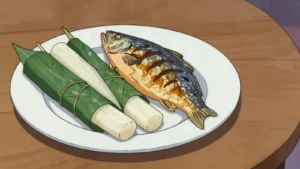
- Waterfufu (fermented cassava paste), wrapped in banana leaf
Directions
- Simmer the beef, tripe and kanda in 500 ml water with the onion, stock cubes and salt for 60 minutes until the skin is soft and jelly-like and the beef is tender. Keep the liquid in the pot; there should be about 200 ml left.
- Wash the waterleaf and chop it roughly. Cook it alone in a dry pot over high heat for 5 minutes — it collapses and floods the pan with water.
- Drain the waterleaf hard in a colander, pressing it, and discard that water. Skipping this leaves the finished dish soupy, which is the most common mistake.
- Shred the eru as finely as you can, almost like tobacco. Eru is tough and fibrous and only becomes pleasant when it is cut fine and cooked through.
- Add the eru and the drained waterleaf to the meat pot, stir, cover and cook 15 minutes over medium heat so the eru softens in the steam.
- Pour the palm oil straight over the greens, add the ground crayfish, smoked fish, hot pepper and remaining salt, and stir everything together.
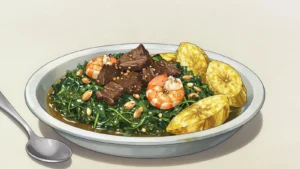
- Cook uncovered 15 to 20 minutes, stirring often, until the liquid has gone and the greens are glossy, deep green and coated in orange oil. There should be no free liquid in the pot at all.
- Taste for salt and pepper and serve hot with waterfufu, pinching off a piece of the fufu and using it to scoop the eru.
Technique
- Eru is the great dish of the Bayangi and the Southwest region and is now eaten across Cameroon and Nigeria (where it is afang). It is a dry dish — greens bound in palm oil, never a soup.
- Waterleaf is there for moisture and softness, eru for the chew. The ratio is roughly two parts waterleaf to one part eru by weight; too much eru and the dish is tough.
- Eru is harvested wild from forest vines and is increasingly under pressure from over-collection. It is sold frozen or dried in African shops abroad; dried eru needs 30 minutes of soaking and longer cooking.
Substitutions
- No eru: finely shredded collard greens or kale give a similar chew, though not the distinctive slightly bitter, resinous flavour. Nigerian afang leaf is the same plant under another name.
- Waterleaf can be replaced by spinach with a handful of sorrel for tartness — cook and drain it exactly the same way.
Variations
- A simpler everyday version drops the tripe and skin and uses only smoked fish and crayfish.
- Some cooks add a spoonful of ground egusi to bind the dish, which is closer to the Nigerian style.
History
A soup made from finely shredded eru leaves, from a specific wild forest vine, cooked with waterleaf, palm oil and often smoked fish or meat, developed among Cameroon’s Southwest and Northwest regions, where the eru vine grows in the area’s dense forest environment. Preparing eru leaf requires labor-intensive fine shredding by hand before cooking, a preparation step that has itself become a significant informal economic activity across the region, with shredded eru leaf sold prepared in markets specifically to save home cooks that time-consuming step. Increasing demand for eru leaf has raised real sustainability concerns in recent decades about overharvesting the wild vine from Cameroon’s forests, adding a more recent environmental dimension to a dish with otherwise deep traditional roots.
Frequently asked questions
What is Eru?
Eru is a soup & stew from Cameroon: shredded eru leaves with waterleaf, palm oil, smoked fish; eaten with waterfufu. A soup made from finely shredded eru leaves, from a specific wild forest vine, cooked with waterleaf, palm oil and often smoked fish or meat, developed among Cameroon’s Southwest and Northwest regions, where the eru vine grows in the area’s dense forest environment. Preparing eru leaf requires labor-intensive fine shredding by hand before cooking, a preparation step that has itself become a significant informal economic activity across the region, with shredded eru leaf sold prepared in markets specifically to save home cooks that time-consuming step. Increasing demand for eru leaf has raised real sustainability concerns in recent decades about overharvesting the wild vine from Cameroon’s forests, adding a more recent environmental dimension to a dish with otherwise deep traditional roots.
How long does Eru take to make?
Eru takes 35 min of preparation and 1 hr 15 min of cooking. The recipe makes 6 servings. It is rated medium to make.
What can I substitute in Eru?
Yes, within limits. No eru: finely shredded collard greens or kale give a similar chew, though not the distinctive slightly bitter, resinous flavour. Nigerian afang leaf is the same plant under another name. Waterleaf can be replaced by spinach with a handful of sorrel for tartness — cook and drain it exactly the same way.
What is the most important thing to get right in Eru?
Eru is the great dish of the Bayangi and the Southwest region and is now eaten across Cameroon and Nigeria (where it is afang). It is a dry dish — greens bound in palm oil, never a soup.