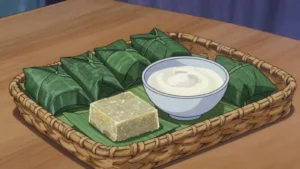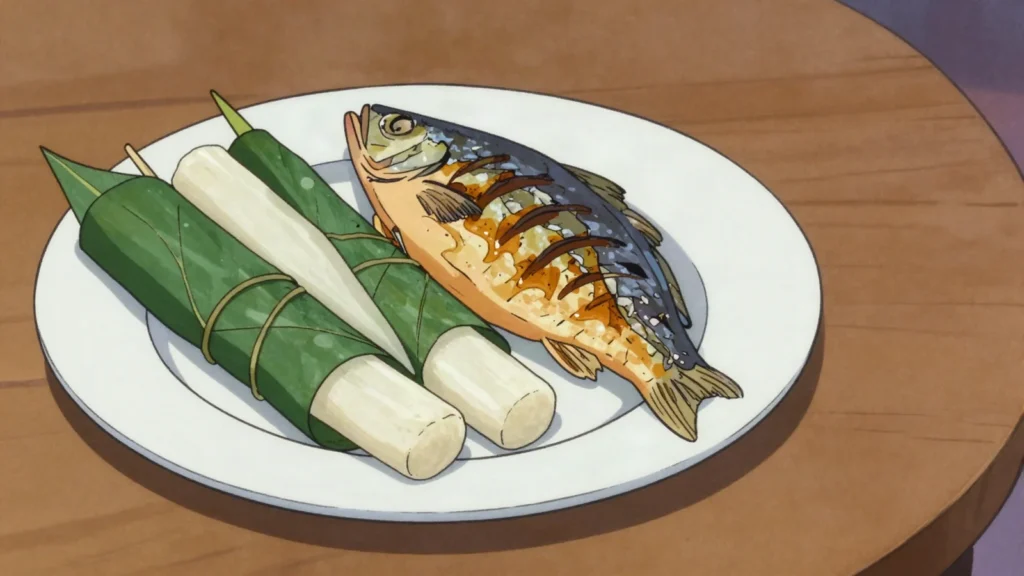

Slim sticks of fermented cassava paste, steamed in leaves and sold in tied bundles at every Douala market. It is the Sawa coastal staple, thinner than bobolo, and it goes with grilled fish as a matter of course.
The soak that sours the cassava is the same step that detoxifies it, and cutting it short — the thing an impatient cook does — is how cassava poisoning happens.
What goes into it
- cassava roots
- water
- leaves for wrapping, usually marantaceae
How it is made
Peeled cassava is submerged in water for three to five days until it softens and sours, then pounded and sieved to a smooth paste and the fibre removed. The paste is rolled into thin sticks, wrapped tightly in leaves, tied, and steamed for an hour or more. That long soak is what breaks down the cyanogenic glycosides in the root.
How long it takes: three to five days of soaking, then steaming
How it is eaten
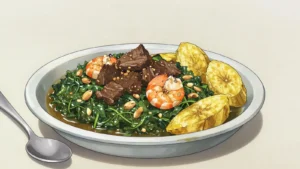
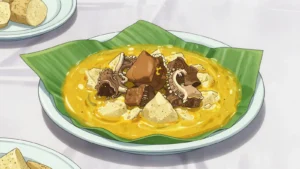
With grilled fish, ndolé and pepper soup, torn from its leaf at the table.
History
A Sawa staple of the Douala coast, thinner than bobolo and sold in tied bundles at every market.
Frequently asked questions
What is Miondo?
Miondo is a fermented & pickled from Cameroon: slim sticks of fermented cassava paste steamed in leaves, eaten with grilled fish. A Sawa staple of the Douala coast, thinner than bobolo and sold in tied bundles at every market.
How is Miondo made?
Peeled cassava is submerged in water for three to five days until it softens and sours, then pounded and sieved to a smooth paste and the fibre removed. The paste is rolled into thin sticks, wrapped tightly in leaves, tied, and steamed for an hour or more. That long soak is what breaks down the cyanogenic glycosides in the root. It takes three to five days of soaking, then steaming.
Can I make Miondo at home?
No, and the atlas gives no method for it. The soak that sours the cassava is the same step that detoxifies it, and cutting it short — the thing an impatient cook does — is how cassava poisoning happens.
What goes into Miondo?
Cassava roots, water, leaves for wrapping, usually marantaceae.
How is Miondo eaten?
With grilled fish, ndolé and pepper soup, torn from its leaf at the table.