
Ingredients
Pork
- 500 gpork loin
- 1 tbspShaoxing rice wine
- 1/2 tspsalt
- 1/2 tspground white pepper
Batter
- 200 gpotato starch
- 180 mlcold water, approximately
- 2 tbspoil
Sauce
- 5 tbsprice vinegar
- 5 tbspcaster sugar
- 2 tbspwater
- 1/2 tspsalt
Aromatics
- 1thumb ginger, cut in fine matchsticks
- 1small carrot, cut in fine matchsticks
- 3spring onions, shredded
- a handful of coriander stems, cut in lengths
For frying
- 1.5 litresfrying oil
Directions
- Trim the loin of any sinew and put it in the freezer for twenty minutes. Partly frozen meat slices far more evenly than soft meat. Slice it across the grain into pieces about three millimetres thick. The slices should be wide and thin, roughly the size of a playing card.
- Toss them with the rice wine, salt and white pepper. Leave them for ten minutes while you make the batter. Put the potato starch in a bowl and add the cold water gradually. Stir it into a thick smooth slurry with no dry pockets.
- Let it stand for fifteen minutes so the starch settles. Pour off any clear water that has risen to the top. Stir the oil into the settled starch paste. The batter should be thick enough to coat a spoon heavily and drip slowly.
- Add a splash of water if it is too stiff to coat the meat. Now coating the pork, which is done piece by piece. Drop the slices into the batter and turn them with chopsticks. Each slice should carry a thick even layer with no bare patches.
- Lift them out one at a time and let the excess run off. Now the sauce, which is mixed cold and added at the very end. Stir the vinegar, sugar, water and salt together until the sugar dissolves. Have the ginger, carrot, spring onion and coriander ready in a bowl.
- Heat the oil to 160C in a wok or deep pan. Lower the slices in one at a time so they do not stick together. Fry them in batches for about two minutes until pale and set.
- Lift them onto a rack and let them rest for five minutes. Raise the oil to 190C and check it if you have a thermometer. Return all the slices for forty-five seconds until pale gold and hard. They should be crisp enough to click against the side of the bowl.
- Lift them onto the rack again and work quickly from here. Now the finish, which takes under a minute. Pour all but a tablespoon of oil out of the wok. Set it back over a high heat and add the ginger and carrot. Stir-fry them for twenty seconds until they smell sharp. Pour in the vinegar and sugar mixture all at once. Let it bubble hard for twenty seconds until it thickens slightly.
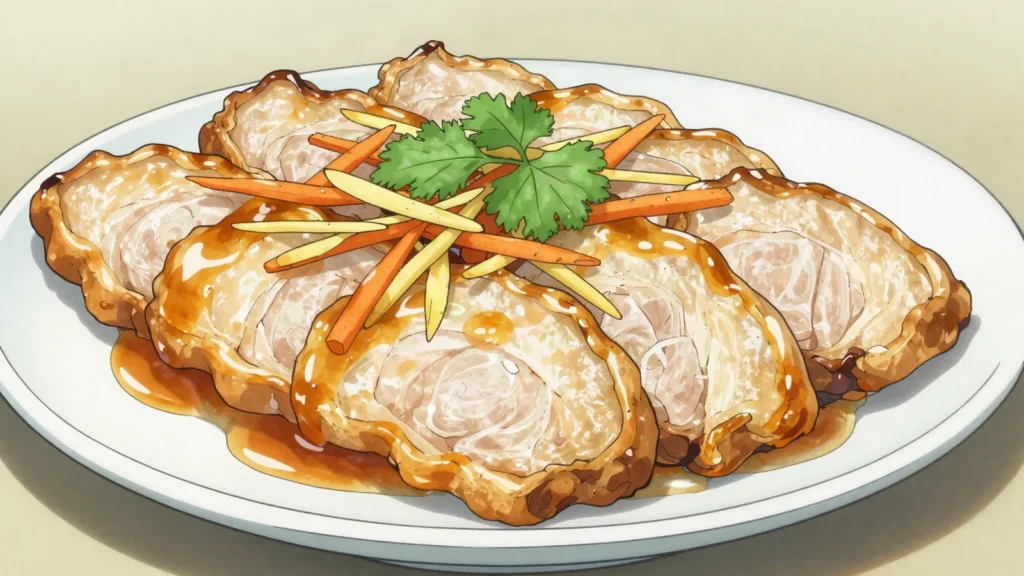
- Stand back, since hot vinegar gives off harsh fumes. Tip in the fried pork and toss it fast to coat every piece. Add the spring onion and coriander and toss once more. Turn it straight onto a warm plate and serve it immediately. The crust softens within two minutes, so nobody waits for this dish.
Technique
- Potato starch is essential; cornflour gives a soft crust rather than a translucent crisp one.
- Let the starch slurry settle and pour off the water, which is what makes the batter thick enough.
- The original Harbin version has no ketchup, which the orange Liaoning variant uses.
Substitutions
- Chicken breast in place of pork, though it is not traditional.
- White wine vinegar in place of rice vinegar, using slightly less.
Variations
- The Liaoning version, with ketchup in the sauce.
- With a little orange zest in the sauce, as some Harbin restaurants do.
- With more ginger, which is the older and sharper style.
History
Created around 1907 in Harbin by chef Zheng Xingwen, who sweetened a salty fried-pork dish to suit visiting Russian diplomats.
Frequently asked questions
What is Guo Bao Rou?
Guo Bao Rou is a main from China: harbin sweet-and-sour fried pork slices in a crisp translucent potato-starch batter. Created around 1907 in Harbin by chef Zheng Xingwen, who sweetened a salty fried-pork dish to suit visiting Russian diplomats.
How long does Guo Bao Rou take to make?
Guo Bao Rou takes 30 min of preparation and 20 min of cooking. The recipe makes 4 servings. It is rated hard to make.
What can I substitute in Guo Bao Rou?
Yes, within limits. Chicken breast in place of pork, though it is not traditional. White wine vinegar in place of rice vinegar, using slightly less.
What is the most important thing to get right in Guo Bao Rou?
Heat the oil to 160C in a wok or deep pan. Lower the slices in one at a time so they do not stick together. Fry them in batches for about two minutes until pale and set.