
Ingredients
Base
- 300 gfarinha de mandioca
- 100 gbutter
- 150 gbacon, diced
- 1onion, finely chopped
- 2 clovesgarlic, crushed
Optional
- 2eggs
- 100 graisins or chopped banana
To finish
- salt
- chopped parsley
Directions
- Fry the bacon in a wide pan until crisp, then lift it out and set it aside.
- Melt the butter in the bacon fat and soften the onion and garlic for about 8 minutes.
- If you are using eggs, scramble them into the pan now and break them up small with the spoon.
- Turn the heat down low, then add the farinha in a steady stream, stirring constantly as it goes in.
- Add the flour to the fat rather than the other way round, and add it gradually. Tipped in all at once it clumps, and the clumps stay raw and dry in the middle.
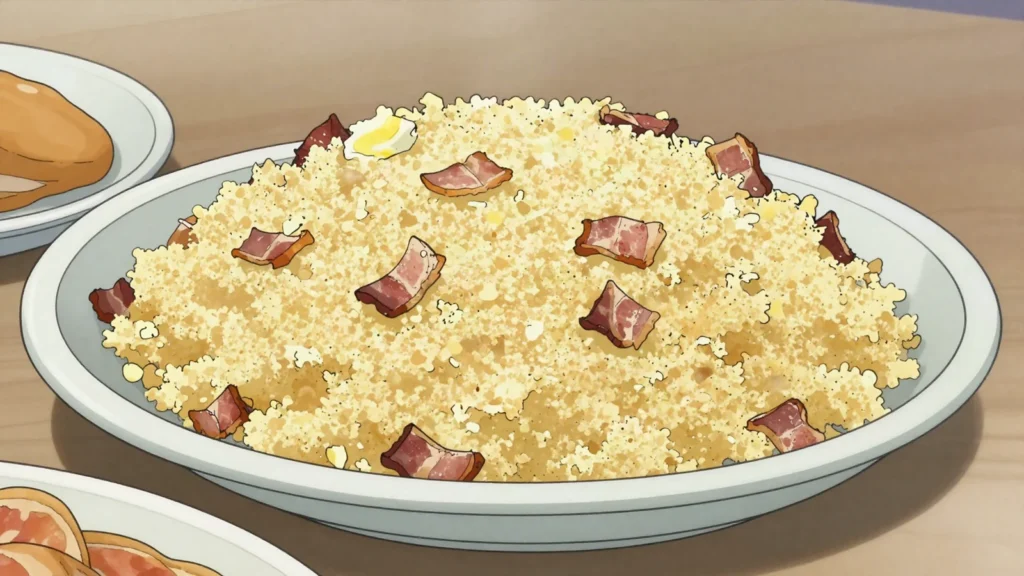
- Keep stirring over a low heat for 5 to 8 minutes, until every grain is coated and the whole lot turns a shade darker and smells toasty.
- It should be loose, sandy and free-flowing rather than pasty. If it looks damp keep going, and if it looks dry add more butter.
- Return the bacon to the pan and fold in the raisins or banana if you are using them.
- Season with salt and plenty of chopped parsley.
- Serve at room temperature in a bowl on the table, to be sprinkled over feijoada, rice, beans or grilled meat.
- It is an Indigenous Tupi staple. Farinha de mandioca fed colonial expeditions and still accompanies almost every Brazilian plate.
Technique
- It is a condiment rather than a side dish. It goes on top of everything else and adds texture rather than bulk.
- Farinha comes in coarse and fine grades and both are used. Coarse gives more crunch.
- It keeps a week in a jar and is worth making in quantity.
Substitutions
- Coarse polenta or breadcrumbs, toasted, which is not the same and does a similar job.
- Oil in place of butter for a vegan version, with mushrooms instead of bacon.
Variations
- Farofa de banana, with sliced banana fried in.
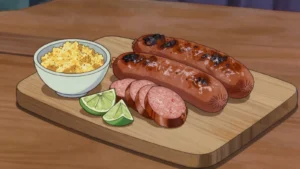
- With calabresa sausage in place of bacon.
- Plain, with nothing but butter and salt, which is how it is often served alongside a churrasco.
History
Toasted cassava flour, often cooked with butter, bacon, onion or egg to add flavour and a slightly crisp texture, developed in Brazilian cooking from Indigenous Tupi-Guarani use of cassava flour, called farinha, which predates Portuguese colonization by many centuries, since cassava itself was already a central Indigenous Brazilian staple crop before European contact in the 1500s. Portuguese colonizers and later enslaved African populations brought to Brazil each contributed their own techniques and additional ingredients to the basic toasted cassava flour base over subsequent centuries, producing the now-standard enriched farofa found across Brazilian cooking today. It remains an extremely common side dish across Brazil, traditionally served alongside feijoada and many other classic Brazilian main dishes as a textural and flavour accompaniment.
Frequently asked questions
What is Farofa?
Farofa is a salad & side from Brazil: toasted cassava flour with butter and bacon, sprinkled over everything. Toasted cassava flour, often cooked with butter, bacon, onion or egg to add flavour and a slightly crisp texture, developed in Brazilian cooking from Indigenous Tupi-Guarani use of cassava flour, called farinha, which predates Portuguese colonization by many centuries, since cassava itself was already a central Indigenous Brazilian staple crop before European contact in the 1500s. Portuguese colonizers and later enslaved African populations brought to Brazil each contributed their own techniques and additional ingredients to the basic toasted cassava flour base over subsequent centuries, producing the now-standard enriched farofa found across Brazilian cooking today. It remains an extremely common side dish across Brazil, traditionally served alongside feijoada and many other classic Brazilian main dishes as a textural and flavour accompaniment.
How long does Farofa take to make?
Farofa takes 15 min of preparation and 20 min of cooking. The recipe makes 8 servings. It is rated easy to make.
What can I substitute in Farofa?
Yes, within limits. Coarse polenta or breadcrumbs, toasted, which is not the same and does a similar job. Oil in place of butter for a vegan version, with mushrooms instead of bacon.
What is the most important thing to get right in Farofa?
Add the flour to the fat rather than the other way round, and add it gradually. Tipped in all at once it clumps, and the clumps stay raw and dry in the middle.