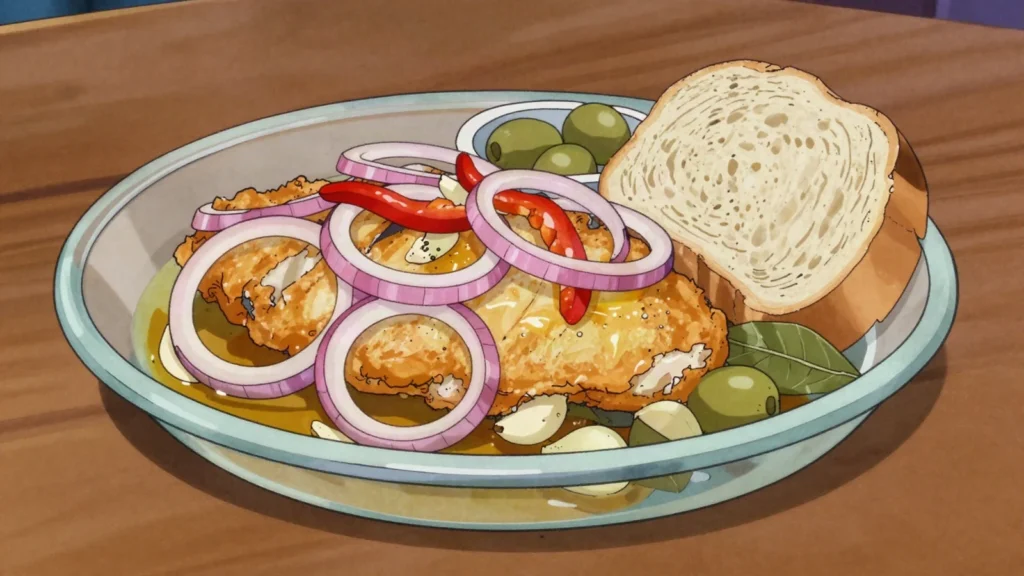

Ingredients
Fish
- 1 kgfirm white fish steaks — kingfish, swordfish or hake
- 2 tspsalt
- 60 gplain flour
- 200 mlolive oil, for frying
Escabeche
- 3onions, sliced thick
- 2red peppers, cut in strips
- 1 headgarlic, cloves peeled and left whole
- 300 mlwhite wine vinegar
- 150 mlolive oil
- 2bay leaves
- 1 tbspblack peppercorns
- 1 tspdried oregano
- 1 tspsalt
To serve
- bread
- olives
Directions
- Season the fish steaks with salt and leave them 15 minutes, then pat dry and dust lightly with flour, shaking off the excess.
- Fry in hot olive oil for two to three minutes a side, until golden and just cooked through. Lift out and lay in a single layer in a deep non-metal dish.
- Pour off most of the frying oil, leaving a couple of tablespoons, and cook the onion, pepper and whole garlic cloves over medium heat for 10 minutes until softened but still holding their shape.
- Add the vinegar, the 150 ml of fresh olive oil, the bay, peppercorns, oregano and salt, and simmer for 5 minutes. Do not reduce it — you want plenty of liquid, because the fish has to sit submerged in it.
- Pour the hot escabeche over the fried fish so everything is covered, then leave to cool completely at room temperature.
- Cover and refrigerate for at least 24 hours before eating. This is not a resting time for flavour alone: the acid is what preserves the fish, and it needs a day to penetrate the steaks.
- Serve cold or at room temperature with bread and olives. It keeps a week in the fridge, submerged.
Technique
- Fry the fish properly first. Escabeche preserves cooked fish; it is not a ceviche and raw fish will not do.
- Keep everything under the liquid in the fridge. Any piece standing proud dries and spoils.
- Use a glass or ceramic dish. Vinegar sitting for days in an aluminium or unlined metal dish picks up a metallic taste.
Substitutions
- Mackerel or bonito, both of which take escabeche very well.
- Cider vinegar for wine vinegar, giving a rounder result.
- Sherry vinegar for a sharper, more Spanish version.
Variations
- The Peruvian escabeche adds ají amarillo and is served warm.
- A version with carrot and whole cumin is made in Cuba’s eastern provinces.
History
Fish, fried and then marinated in a vinegar-based sauce with onion and pepper, developed through Spanish colonial-era culinary influence carried to Cuba beginning in the 1500s, with escabeche itself, a broader Spanish and Mediterranean technique of preserving cooked fish or meat in an acidic marinade, tracing back further through Moorish influence on medieval Iberian cooking before Spanish colonization carried the technique across the Atlantic. Its vinegar-based preservation method reflects a practical pre-refrigeration food-storage technique, allowing cooked fish to keep safely for longer than it otherwise would in Cuba’s hot climate, and Cuban escabeche developed its own particular regional seasoning and fish preferences over subsequent centuries of adaptation. It remains part of the broader traditional Cuban culinary repertoire, particularly associated with home cooking rather than restaurant menus specifically.
Frequently asked questions
What is Escabeche de pescado?
Escabeche de pescado is a fermented & pickled from Cuba: fried fish preserved in vinegar with onions and peppercorns, eaten cold. Fish, fried and then marinated in a vinegar-based sauce with onion and pepper, developed through Spanish colonial-era culinary influence carried to Cuba beginning in the 1500s, with escabeche itself, a broader Spanish and Mediterranean technique of preserving cooked fish or meat in an acidic marinade, tracing back further through Moorish influence on medieval Iberian cooking before Spanish colonization carried the technique across the Atlantic. Its vinegar-based preservation method reflects a practical pre-refrigeration food-storage technique, allowing cooked fish to keep safely for longer than it otherwise would in Cuba’s hot climate, and Cuban escabeche developed its own particular regional seasoning and fish preferences over subsequent centuries of adaptation. It remains part of the broader traditional Cuban culinary repertoire, particularly associated with home cooking rather than restaurant menus specifically.
How long does Escabeche de pescado take to make?
Escabeche de pescado takes 30 min plus 24 hours in the fridge of preparation and 35 min of cooking. The recipe makes serves 6. It is rated easy to make.
What can I substitute in Escabeche de pescado?
Yes, within limits. Mackerel or bonito, both of which take escabeche very well. Cider vinegar for wine vinegar, giving a rounder result. Sherry vinegar for a sharper, more Spanish version.
What is the most important thing to get right in Escabeche de pescado?
Add the vinegar, the 150 ml of fresh olive oil, the bay, peppercorns, oregano and salt, and simmer for 5 minutes. Do not reduce it — you want plenty of liquid, because the fish has to sit submerged in it.