
Ingredients
Choux paste
- 250 mlwater
- 100 gbutter
- 150 gplain flour
- 4eggs
- 1 tablespoonsugar
- 1/2 teaspoonsalt
- the zest of 1 lemon
- a splash of anise liqueur, optional
Filling, choose one
- 300 mldouble cream, whipped
- or 400 g pastry cream
- or 300 g thick chocolate cream
- or sweetened chestnut puree
To fry and finish
- oil, for deep frying
- icing sugar, for dusting
- ground cinnamon, optional
Equipment
- a piping bag with a plain nozzle
- a small filling nozzle
Directions
- Put the water, butter, sugar and salt in a pan. Bring it to a full rolling boil. The butter must be completely melted first. Take the pan off the heat entirely. Tip in all of the flour at once. Beat it hard with a wooden spoon. Put the pan back on a low heat.
- Beat the paste for two more minutes. It should pull cleanly away from the sides. Tip it into a bowl and let it cool. Give it about ten minutes to cool down. Beat the eggs together in a jug. Add them to the paste a little at a time. Beat hard after each addition. Keep beating and it comes back together. Stop adding egg before you have used it all.
- Lift the spoon and let the paste fall. It should drop in a thick ribbon. Add the last egg only if it needs it. Stir in the lemon zest and the liqueur. Frying them needs careful heat control. Pour oil into a deep pan to eight centimetres. Never fill a pan more than halfway with oil.
- Heat the oil to about 165C for frying. Choux needs time to cook through as it puffs. Use two spoons dipped in the hot oil. Scoop a walnut of paste and slide it in. A piping bag also works if you cut carefully.
- Drop them in a few at a time only. Do not crowd the pan at any point. Lift one out and squeeze it gently. It should feel hollow and stay puffed.
- Lift them out onto a wire rack. Filling them is done once they are cool. Let them cool completely before filling. Warm fritters melt the cream inside. Make a small hole in the side of each one. Use a skewer or the tip of a knife.
- Fill each one until it feels heavy. Stop well before it splits open. Dust them generously with icing sugar. Add a little cinnamon if you like. Serving them is done soon after filling.
Technique
- All Saints’ Day on the first of November is when Spanish bakeries sell these alongside huesos de santo, marzipan sweets shaped like small bones.
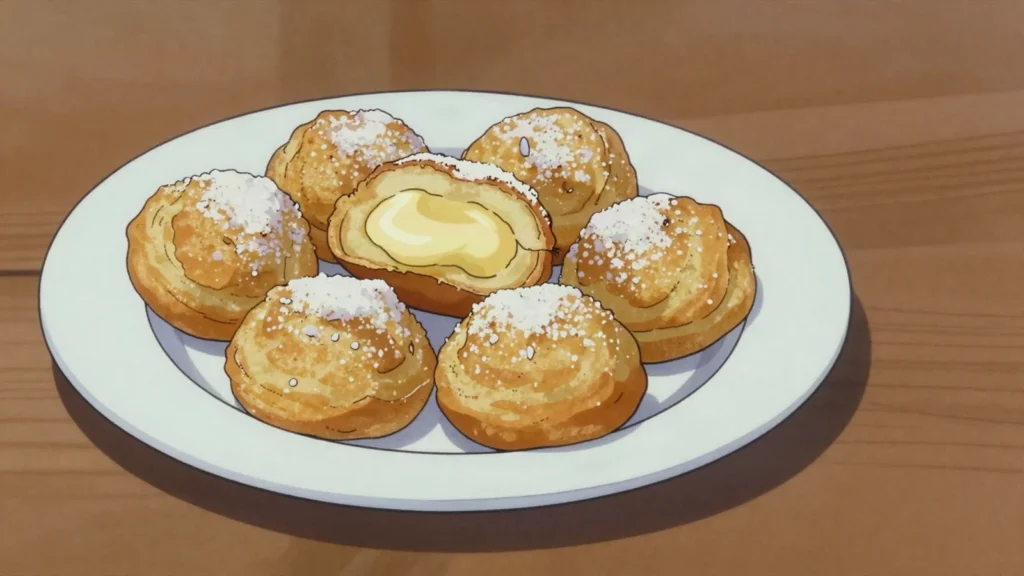
- The name means fritters of wind and refers to the hollow air pocket the choux paste forms as it fries.
Substitutions
- Whipped cream, pastry cream, chocolate cream and chestnut puree are all traditional fillings.
- They can be left unfilled and simply dusted with sugar and cinnamon.
Variations
- Some regions leave them plain and hollow with only sugar over them.
- A version flavoured with anise liqueur in the paste is common.
- Different Spanish regions make quite different bunuelos under the same name.
History
Made for All Saints’ Day across Spain, when bakeries sell them alongside huesos de santo of marzipan.
Frequently asked questions
What is Bunuelos de viento?
Bunuelos de viento is a dessert from Spain: hollow choux fritters filled with cream, custard or chocolate. Made for All Saints’ Day across Spain, when bakeries sell them alongside huesos de santo of marzipan.
How long does Bunuelos de viento take to make?
Bunuelos de viento takes 40 minutes of preparation and 25 minutes of cooking. The recipe makes about 30 fritters. It is rated medium to make.
What can I substitute in Bunuelos de viento?
Yes, within limits. Whipped cream, pastry cream, chocolate cream and chestnut puree are all traditional fillings. They can be left unfilled and simply dusted with sugar and cinnamon.
What is the most important thing to get right in Bunuelos de viento?
Put the water, butter, sugar and salt in a pan. Bring it to a full rolling boil. The butter must be completely melted first. Take the pan off the heat entirely. Tip in all of the flour at once. Beat it hard with a wooden spoon. Put the pan back on a low heat.