
Ingredients
Greens
- 400 gbulvaka or sorrel leaves (or hibiscus and amaranth leaves), stalks stripped
- 200 gkènèbdo (wild bitter greens) or spinach
- 1 tsppotash water or bicarbonate of soda, to keep the leaves green
Pot
- 300 gbroken rice, rinsed
- 2onions, chopped
- 3 tbspsoumbala (fermented néré seed), crumbled
- 60 gdried fish, pounded to a powder
- 80 groasted peanuts, ground to a coarse powder
- 1 tspsalt
- 1chilli, chopped
- 1.5 litreswater
To finish
- 3 tbspshea butter or peanut oil
- 1stock cube (optional, but standard in Burkina kitchens)
Directions
- Wash the leaves in several changes of water — wild greens carry sand — then chop them roughly.
- Boil the leaves in 1.5 litres of water with the pinch of potash for 10 minutes until they collapse and darken. Do not drain; the greens and their water are the base of the dish.
- Add the crumbled soumbala, the chopped onion, chilli and salt and simmer 5 minutes so the fermented seasoning dissolves into the liquid and perfumes it.
- Stir in the rinsed rice, then lower the heat right down and cover.
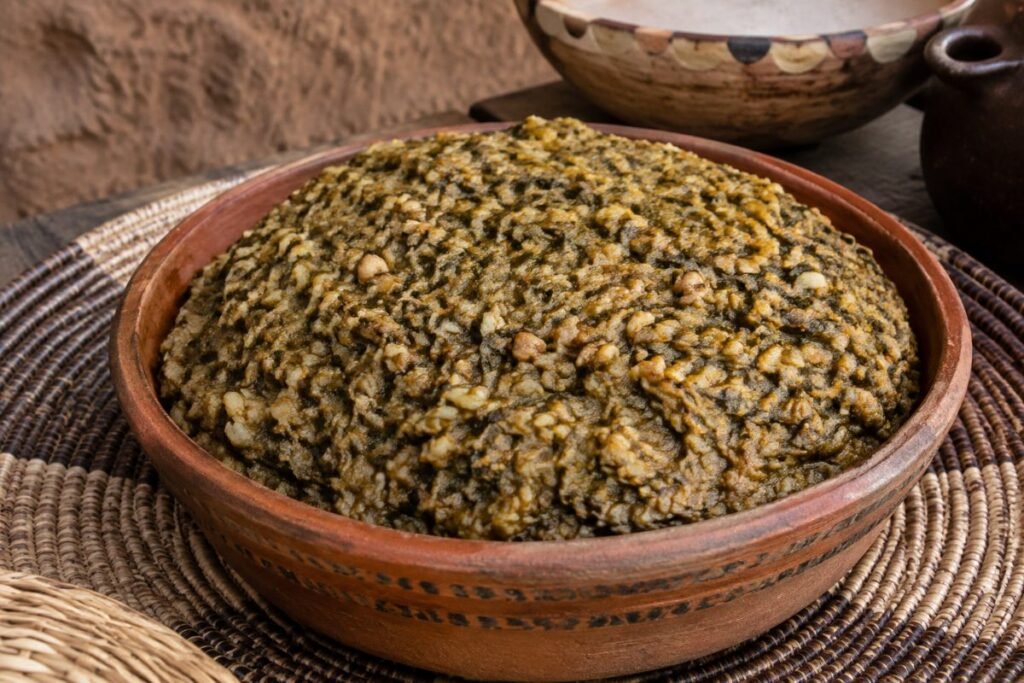
- Cook 25 to 30 minutes, stirring every 5 minutes and scraping the base. The rice should swell, break down and thicken into a coarse, dark green porridge rather than staying in separate grains.
- Beat in the ground peanuts and the pounded dried fish and cook a further 10 minutes, adding a splash of hot water if it stiffens too fast.
- The consistency is right when a spoon stands briefly before falling over — thick but still spoonable.
- Take off the heat, work in the shea butter until it melts through and the surface turns glossy, taste for salt, and serve hot in a communal bowl.
Technique
- Soumbala is the flavour engine of Mossi cooking: fermented néré (locust bean) seeds, pungent and cheesy, doing the job that stock does elsewhere. Nothing else tastes like it and no amount of stock cube replaces it.
- Babenda is a Mossi dish of the lean season and of home rather than restaurants — it is built from foraged leaves and broken rice, the cheapest grain in the market.
- Shea butter (beurre de karité) stirred in off the heat gives the characteristic nutty, slightly waxy finish. Adding it early destroys the aroma.
Substitutions
- No bulvaka: use a mix of sorrel and spinach in equal weight; the sorrel provides the sourness that the wild leaves normally carry.
- Soumbala can be approximated by Japanese natto or a Nigerian iru/dawadawa cube, both of which are the same fermented-legume idea.
- Broken rice can be replaced by ordinary long-grain rice pulsed briefly in a blender to crack the grains.
Variations
- Some cooks add a handful of white beans with the rice, making the dish more substantial.
- In Ouagadougou it is often finished with more peanut paste and less shea butter, giving a smoother, richer bowl.
History
A thick, dark green sauce made from baobab leaves, cooked down with meat or fish and often combined with a fermented locust bean seasoning, developed in Burkina Faso using baobab, a distinctive, long-lived tree native to the African savanna whose leaves have been used in traditional Sahelian cooking for many centuries. Baobab leaves must be dried and ground before use in most preparations, allowing the leaf to be stored and used well beyond its fresh seasonal availability, and its use as a thickening and flavouring agent reflects a broader pattern of baobab-based cooking found across several Sahelian West African countries. Babenda remains a traditional Burkinabé sauce, typically served over tô or rice as part of a complete meal.
Frequently asked questions
What is Babenda?
Babenda is a soup & stew from Burkina Faso: rice cooked down with fermented greens, fish powder and peanut. A thick, dark green sauce made from baobab leaves, cooked down with meat or fish and often combined with a fermented locust bean seasoning, developed in Burkina Faso using baobab, a distinctive, long-lived tree native to the African savanna whose leaves have been used in traditional Sahelian cooking for many centuries. Baobab leaves must be dried and ground before use in most preparations, allowing the leaf to be stored and used well beyond its fresh seasonal availability, and its use as a thickening and flavouring agent reflects a broader pattern of baobab-based cooking found across several Sahelian West African countries. Babenda remains a traditional Burkinabé sauce, typically served over tô or rice as part of a complete meal.
How long does Babenda take to make?
Babenda takes 30 min of preparation and 1 hr of cooking. The recipe makes 5 servings. It is rated medium to make.
What can I substitute in Babenda?
Yes, within limits. No bulvaka: use a mix of sorrel and spinach in equal weight; the sorrel provides the sourness that the wild leaves normally carry. Soumbala can be approximated by Japanese natto or a Nigerian iru/dawadawa cube, both of which are the same fermented-legume idea. Broken rice can be replaced by ordinary long-grain rice pulsed briefly in a blender to crack the grains.
What is the most important thing to get right in Babenda?
Boil the leaves in 1.5 litres of water with the pinch of potash for 10 minutes until they collapse and darken. Do not drain; the greens and their water are the base of the dish.