
Ingredients
Dough
- 500 gstrong white flour
- 10 gdried yeast, or 20 g fresh
- 1 tspsugar
- 10 gsalt
- 80 gbutter, softened
- 280 mlwarm milk
To glaze
- 1egg yolk
- 1 tbspmilk or cream
To serve
- on a Sunday morning, with butter, jam and honey
- with coffee
Directions
- Warm the milk to body temperature before mixing, since cold liquid slows the yeast considerably. Do not overheat it, since anything above about fifty degrees kills the yeast outright. Mix the flour, yeast and sugar, then add the milk and work it into a rough dough. Add the salt and the softened butter after the dough has come together. Now knead it thoroughly for ten to twelve minutes.
- Knead it longer than seems necessary, since the soft stretchy crumb depends on well developed gluten. The dough will be sticky at first and will become smooth and elastic as you work it.
- Cover it and let it rise until doubled, which takes an hour and a half to two hours. Divide the dough into two equal pieces and roll each into a long rope, about fifty centimetres. Roll them slightly thicker in the middle and tapering at the ends, which gives the finished loaf its shape. If the dough springs back, let it rest five minutes and continue.
- Lay one rope over the other in a cross, with the vertical rope on top. Now take the two ends of the bottom rope and cross them over the top rope, swapping them. Keep alternating, working from the middle outward, and tuck the ends underneath at each end. A three-strand or four-strand plait works perfectly well if you prefer.
- Cover the shaped loaf and let it rise for about forty-five minutes until visibly puffy. Do not overprove it at this stage, since an overproved braid loses its definition and collapses into a shapeless mass.
- Press it gently: the dent should spring back slowly rather than staying put. Brush it thoroughly with egg yolk beaten with a little milk, getting into the crevices of the braid. Egg yolk alone rather than whole egg gives the deep glossy brown that a Zopf should have.
- Brush it twice, once before proving and again just before baking, which gives a better finish still. Do not let the glaze pool in the folds, where it will scorch.
- Cover it loosely with foil if the top browns too fast. It is done when it is deep glossy brown and sounds hollow tapped underneath. Let it cool completely before cutting, since cutting into warm enriched bread compresses the crumb. Serve it torn or sliced thickly, with butter, jam and honey. It keeps two days wrapped and it makes excellent French toast after that.
Technique
- It is a Sunday morning bread in Switzerland, and that rhythm is genuinely observed.
- It contains no egg in the dough and is less sweet than brioche.
- Braid loosely, since a tight braid tears itself apart in the oven.
Substitutions
- Any good strong white flour in place of Zopfmehl.
- A three-strand plait if the Swiss braid seems awkward.
Variations
- Made with a three or four-strand plait.
- With raisins worked into the dough.
- Made as individual small braided rolls.
Frequently asked questions
What is Zopf?
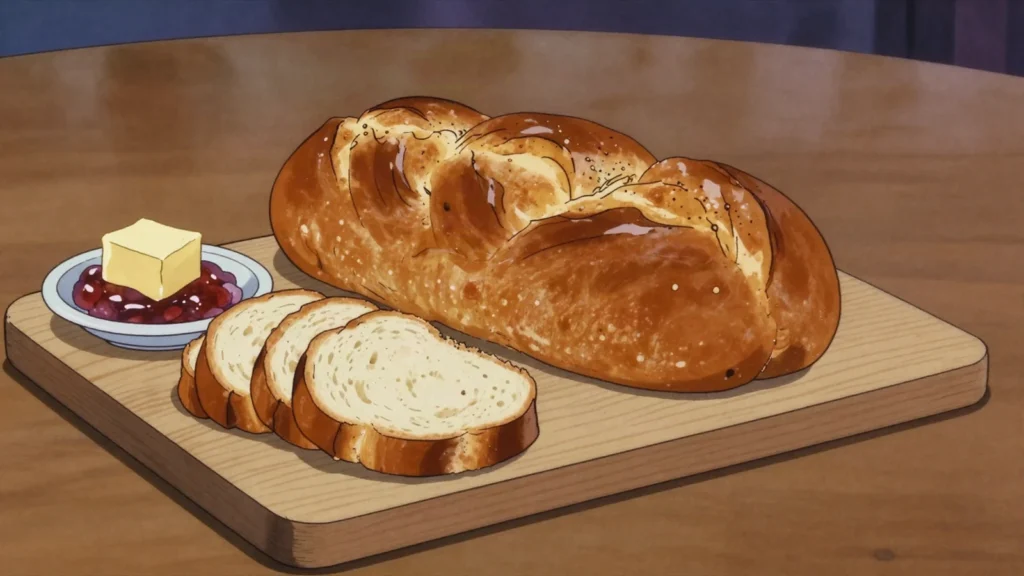
Zopf is a bread & pastry from Switzerland: glossy braided butter loaf for Sunday mornings.
How long does Zopf take to make?
Zopf takes 30 min plus 2 hr 30 min rising of preparation and 35 min of cooking. The recipe makes 1 large loaf. It is rated medium to make.
What can I substitute in Zopf?
Yes, within limits. Any good strong white flour in place of Zopfmehl. A three-strand plait if the Swiss braid seems awkward.
What is the most important thing to get right in Zopf?
Warm the milk to body temperature before mixing, since cold liquid slows the yeast considerably. Do not overheat it, since anything above about fifty degrees kills the yeast outright. Mix the flour, yeast and sugar, then add the milk and work it into a rough dough. Add the salt and the softened butter after the dough has come together. Now knead it thoroughly for ten to twelve minutes.