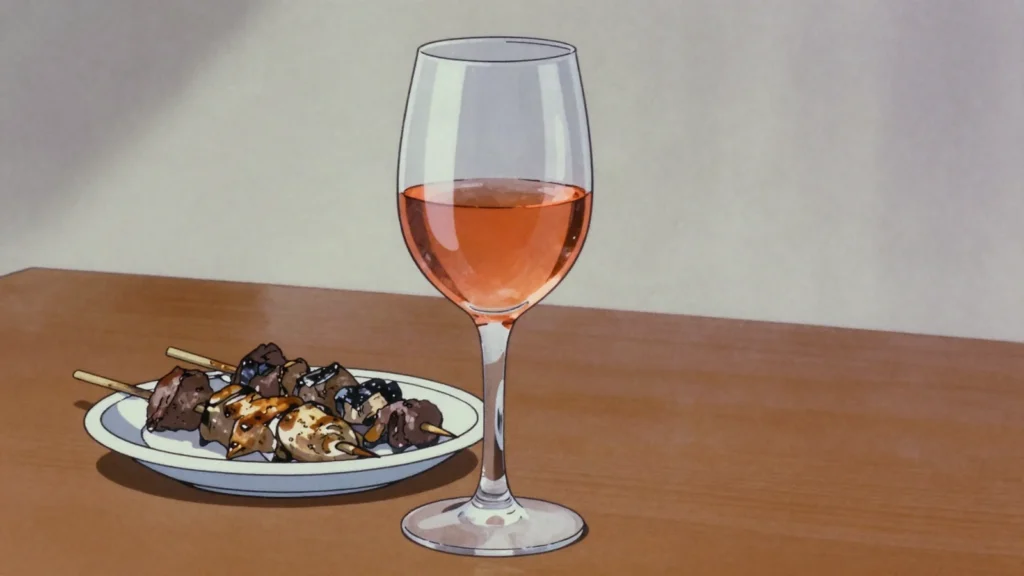

A pale dry rosé from the sandy Doukkala plains and Morocco’s best-known wine. French settlers planted the Meknès and Doukkala vineyards from the 1910s; the pale grey rosé survived independence and holds a Moroccan controlled-origin label.
Wine is grown, not cooked, and made in a licensed cellar under a Moroccan appellation.
What goes into it
- Cinsault, Grenache and Carignan grapes
- yeast
How it is made
Red grapes are pressed immediately and the juice run off the skins within hours, so it takes almost no colour — hence grey rather than pink. It ferments cool in steel and is bottled young. In a very hot region, picking early and pressing fast is what keeps it fresh.
How long it takes: one vintage a year
How it is eaten
Very cold with grilled fish, brochettes and salads.
History
French settlers planted the Meknes and Doukkala vineyards from the 1910s; the pale grey rosé survived independence and holds a Moroccan controlled-origin label.
Frequently asked questions
What is Vin gris de Boulaouane?
Vin gris de Boulaouane is a wine & spirit from Morocco: pale dry rosé from the sandy Doukkala plains, Morocco’s best-known wine. French settlers planted the Meknes and Doukkala vineyards from the 1910s; the pale grey rosé survived independence and holds a Moroccan controlled-origin label.
How is Vin gris de Boulaouane made?
Red grapes are pressed immediately and the juice run off the skins within hours, so it takes almost no colour — hence grey rather than pink. It ferments cool in steel and is bottled young. In a very hot region, picking early and pressing fast is what keeps it fresh. It takes one vintage a year.
Can I make Vin gris de Boulaouane at home?
No, and the atlas gives no method for it. Wine is grown, not cooked, and made in a licensed cellar under a Moroccan appellation.
What goes into Vin gris de Boulaouane?
Cinsault, Grenache and Carignan grapes, yeast.
How is Vin gris de Boulaouane eaten?
Very cold with grilled fish, brochettes and salads.