
Ingredients
The fat
- 400 gcured pork back fat
- Speck or fatty bacon
- smoked or unsmoked
- bought cured, not home-cured
- see the note
- with some meat in it if you like
The seasoning
- 4 clovesgarlic, crushed
- or more, to taste
- 1 teaspoonsalt
- or to taste
- 1 teaspoonblack pepper
- coarsely ground
- 1 teaspooncaraway seeds
- lightly crushed, optional
- a pinch of dried marjoram
- optional
To serve
- dark rye bread
- or Schwarzbrot
- freshly grated horseradish
- sliced onion or spring onion
- gherkins
- a glass of most, apple cider
Directions
- Use cured pork back fat. Pure fat gives a smooth pale spread. Chill the fat well before chopping. Put it in the freezer for twenty minutes. Cold fat chops cleanly.
- Warm fat smears and sticks to the knife. Cut it into small dice first. This takes ten or fifteen minutes.
- Chop it until it is a coarse paste. It should hold together. Chill everything first. If you use one, pulse it briefly.
- Use a generous amount. Crush it to a paste with a little salt. Use less than you think if that concerns you. Use coarsely ground black pepper. Mix the chopped fat with the garlic paste.
- Add the salt, pepper and caraway. Work it together with a fork or your hands. Work it enough to combine. Do not work it into a smooth mass.
- Taste before adding salt. Pack it into a jar or a bowl. Cover it and refrigerate it. Take it out well before serving. Give it half an hour at room temperature.
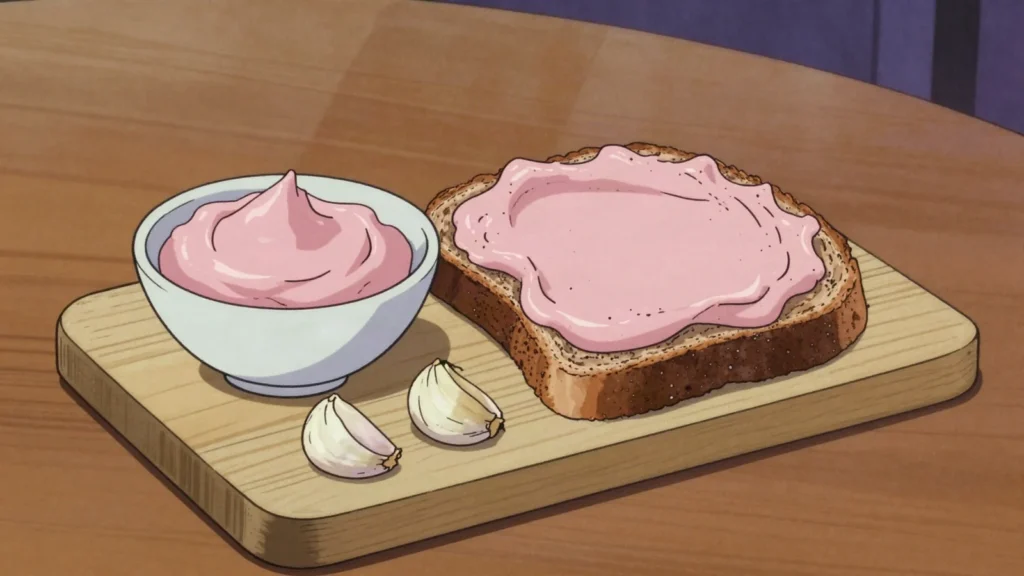
- Spread it thickly on dark bread. It is not a thin scraping. Grate it in a well-ventilated place. Keep your face away. It appears on a Brettljause, the cold board. Keep it covered.
Technique
- This gives a method for the spread, not for curing the fat. Home curing uses nitrite salts measured in small precise quantities to prevent botulism and needs controlled conditions — buy the cured Speck or back fat ready made, which is what almost everyone does anyway.
- Chop it, never blend it. Chopping keeps the slight graininess that Verhackert should have; blending warms the fat into a greasy paste that separates. If you use a processor, pulse it briefly and stop while it is still coarse.
- Chill the fat hard first — twenty minutes in the freezer. Cold fat chops cleanly while warm fat smears and sticks to the knife.
- Expect ten or fifteen minutes of chopping. There is no shortcut and that is the preparation.
- Crush the garlic to a paste with a little salt. A paste distributes through the fat, where chopped pieces sit as lumps. It is raw and gets stronger as the spread sits.
- Use coarsely ground pepper. Fine pepper disappears into the fat; coarse gives bursts of heat.
- Taste before salting. Cured fat is already salty and how salty varies enormously between producers.
- Rest it at least a day refrigerated. The garlic and salt need to permeate the fat, and a freshly made Verhackert tastes raw and separate.
- Take it out half an hour before serving. Cold pork fat is hard, will not spread and tastes of very little; at room temperature it does both.
- Grate the horseradish in a well-ventilated place with your face away — the fumes sting far more than onion. It is not a garnish here: its sharpness is what cuts straight through the fat.
- Spread it thickly on a strong dark rye. Thickly is the word used, and white bread is simply overwhelmed.
- Caraway is not cumin, though the names are confused in several languages.
- Cured meats contain nitrites and processed meat has documented health associations, with public health bodies advising moderation. The atlas records that as fact and makes no dietary recommendation.
Substitutions
- Fatty bacon or pancetta replace cured back fat, giving more meat and less pure fat.
- Polish słonina is the same product under another name.
- Smoked fat gives a stronger spread; unsmoked a cleaner one.
- Caraway and marjoram are both optional; garlic, salt and pepper are not.
- A coarse mincer plate replaces hand chopping if everything is well chilled.
- Any strong dark bread replaces Schwarzbrot.
Variations
- Verhackertes with streaks of meat left in is coarser and more savoury.
- Grammelschmalz uses rendered lard with crisp pork scratchings.
- Liptauer is the curd cheese spread served on the same board.
- Smalec in Poland is the closely related lard spread.
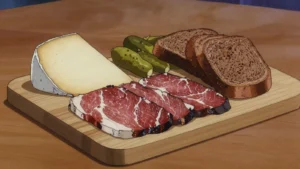
- Brettljause is the Austrian cold board where it appears.
- A version with more marjoram is made in some Styrian households.
History
A Styrian farmhouse spread eaten with black bread, horseradish and a glass of most.
Frequently asked questions
What is Verhackert?
Verhackert is a charcuterie & cured from Austria: finely chopped cured bacon and fat spread thickly on bread. A Styrian farmhouse spread eaten with black bread, horseradish and a glass of most.
How long does Verhackert take to make?
Verhackert takes 30 minutes of preparation and none of cooking. The recipe makes makes about 400 g. It is rated easy to make.
What can I substitute in Verhackert?
Yes, within limits. Fatty bacon or pancetta replace cured back fat, giving more meat and less pure fat. Polish słonina is the same product under another name. Smoked fat gives a stronger spread; unsmoked a cleaner one. Caraway and marjoram are both optional; garlic, salt and pepper are not. A coarse mincer plate replaces hand chopping if everything is well chilled. Any strong dark bread replaces Schwarzbrot.
What is the most important thing to get right in Verhackert?
Add the salt, pepper and caraway. Work it together with a fork or your hands. Work it enough to combine. Do not work it into a smooth mass.