
Ingredients
Base
- 400 gsamp, dehulled cracked maize
- 250 gsugar beans or speckled beans
- both soaked overnight separately
Flavour
- 2onions, chopped
- 3 tbspoil or butter
- 2 clovesgarlic
- 1stock cube
- 1 tspcurry powder, optional
- salt and black pepper
Optional
- 200 gsmoked meat or a ham hock
- 2potatoes
- 1chilli
- chopped tomato
To serve
- as a main dish
- or alongside meat and chakalaka
Directions
- Soak the samp and the beans separately, both overnight in plenty of cold water. Soak them separately, since they absorb at different rates and the beans would otherwise be mush before the samp softens.
- Drain and rinse both of them well. Sugar beans and speckled beans are the traditional choice and neither needs the treatment kidney beans do. Put the drained samp in a large pot with plenty of fresh water and bring it to a boil.
- Simmer it, partly covered, for about an hour and a half. It takes far longer than the beans, and adding them together means dissolved beans and hard maize. Skim off any foam in the first few minutes. Top up with hot water as it absorbs, which it will do steadily.
- Simmer everything together for a further hour to an hour and a half. Stir occasionally and scrape the base, since it settles and catches. Do not add any salt to the pot yet.
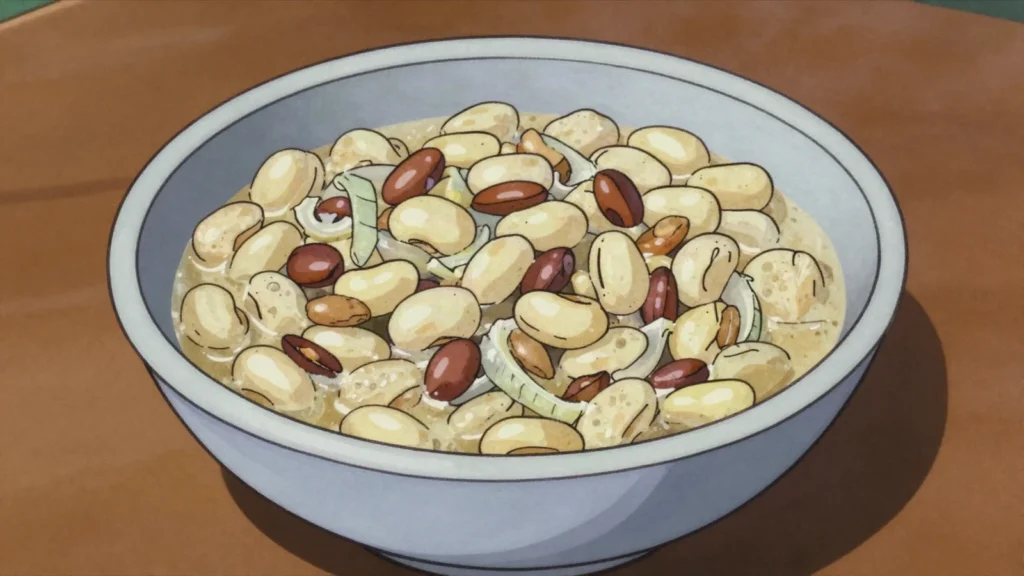
- Salt added early slows both beans and maize softening considerably, so it goes in at the end. It is ready when the samp is soft and has burst open and the beans are completely creamy. Cook it properly soft. Taste several pieces rather than one, since they vary. It should be thick and porridge-like rather than soupy, with the grains holding their shape.
- Fry the onions in oil until soft and golden, add the garlic, and stir the lot into the pot. Add the stock cube, curry powder if using, and season with salt and pepper. Add a knob of butter, which is common and improves it considerably. Simmer another 15 minutes so the flavours settle.
- Serve it hot, as a main dish on its own, or alongside meat and chakalaka. It is served at Xhosa weddings and ceremonies with tripe or with lamb, and as everyday food it needs nothing beyond itself.
Technique
- Samp is dehulled cracked maize and is not the same as hominy or maize meal.
- Mandela referred to it repeatedly as his favourite food.
- It is served at Xhosa ceremonies as well as everyday.
Substitutions
- Ready-mixed samp and beans, which is widely sold.
- Hominy, which is close and cooks faster.
Variations
- With a ham hock or smoked meat.
- With potatoes and tomato added.
- Made plain, with only onion and salt.
History
A dish combining samp, coarsely crushed dried corn kernels, with sugar beans, slow-cooked together until soft and often flavoured with onion and chili, documented across South Africa’s Xhosa communities as a traditional staple dish, notably known to have been a favorite meal of Nelson Mandela, who referenced the dish in his own writing about his rural Xhosa upbringing in the Eastern Cape. Its combination of corn and legume reflects a broader Southern African agricultural and culinary pattern of pairing a starch staple with a protein-rich bean, and umngqusho’s long, slow cooking time to properly soften the samp reflects patient, traditional Xhosa home cooking passed down across generations. Umngqusho remains an important traditional dish within Xhosa culture and South African cuisine more broadly.
Frequently asked questions
What is Umngqusho?
Umngqusho is a main from South Africa: samp and beans simmered soft; Xhosa staple Mandela loved. A dish combining samp, coarsely crushed dried corn kernels, with sugar beans, slow-cooked together until soft and often flavoured with onion and chili, documented across South Africa’s Xhosa communities as a traditional staple dish, notably known to have been a favorite meal of Nelson Mandela, who referenced the dish in his own writing about his rural Xhosa upbringing in the Eastern Cape. Its combination of corn and legume reflects a broader Southern African agricultural and culinary pattern of pairing a starch staple with a protein-rich bean, and umngqusho’s long, slow cooking time to properly soften the samp reflects patient, traditional Xhosa home cooking passed down across generations. Umngqusho remains an important traditional dish within Xhosa culture and South African cuisine more broadly.
How long does Umngqusho take to make?
Umngqusho takes 20 min plus overnight soaking of preparation and 3 hr of cooking. The recipe makes 8 servings. It is rated easy to make.
What can I substitute in Umngqusho?
Yes, within limits. Ready-mixed samp and beans, which is widely sold. Hominy, which is close and cooks faster.
What is the most important thing to get right in Umngqusho?
Soak the samp and the beans separately, both overnight in plenty of cold water. Soak them separately, since they absorb at different rates and the beans would otherwise be mush before the samp softens.