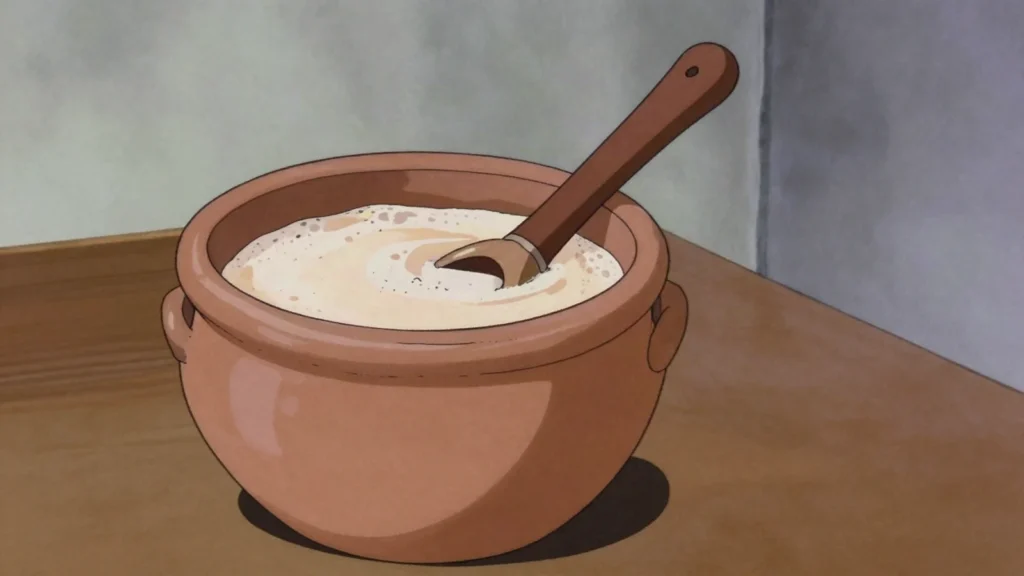

A creamy sorghum and maize beer brewed by women over days and served in a clay pot. It is poured for the ancestors at Xhosa and Zulu ceremonies, and the brewing itself is part of the occasion.
Home brewing of alcohol is licensed or restricted in most of the atlas’s readership, and the sour stage depends on the culture living in pots used continuously.
What goes into it
- sorghum malt
- maize meal
- water
How it is made
Sorghum is sprouted and dried to malt, mixed with water and left to sour overnight with lactic bacteria. The soured mash is cooked into a porridge, cooled, and more malt stirred in for the yeast fermentation. It is strained through a sieve and served within a day or two, thick, gritty and still working.
How long it takes: three to five days from grain to pot
How it is eaten
From a shared clay pot passed with both hands, at weddings, funerals and ancestral ceremonies.
History
A traditional fermented beer made from maize and sorghum malt, documented across several Southern African Bantu-speaking peoples for many generations before European colonization, brewed as an unfiltered, low-alcohol beverage carrying significant ceremonial and social weight in Xhosa and Zulu culture specifically, traditionally brewed for ancestral rituals, weddings and other major community occasions rather than as an everyday casual drink. Its brewing, a multi-day fermentation process using specific traditional techniques passed down largely through oral and practical instruction across generations of South African women, who have historically been the primary brewers of umqombothi within many communities, reflects deep cultural continuity despite centuries of colonial disruption to many other aspects of Indigenous South African life. It remains an important living tradition rather than a purely historical curiosity.
Frequently asked questions
What is Umqombothi?
Umqombothi is a wine & spirit from South Africa: creamy sorghum and maize beer brewed for ceremonies. A traditional fermented beer made from maize and sorghum malt, documented across several Southern African Bantu-speaking peoples for many generations before European colonization, brewed as an unfiltered, low-alcohol beverage carrying significant ceremonial and social weight in Xhosa and Zulu culture specifically, traditionally brewed for ancestral rituals, weddings and other major community occasions rather than as an everyday casual drink. Its brewing, a multi-day fermentation process using specific traditional techniques passed down largely through oral and practical instruction across generations of South African women, who have historically been the primary brewers of umqombothi within many communities, reflects deep cultural continuity despite centuries of colonial disruption to many other aspects of Indigenous South African life. It remains an important living tradition rather than a purely historical curiosity.
How is Umqombothi made?
Sorghum is sprouted and dried to malt, mixed with water and left to sour overnight with lactic bacteria. The soured mash is cooked into a porridge, cooled, and more malt stirred in for the yeast fermentation. It is strained through a sieve and served within a day or two, thick, gritty and still working. It takes three to five days from grain to pot.
Can I make Umqombothi at home?
No, and the atlas gives no method for it. Home brewing of alcohol is licensed or restricted in most of the atlas’s readership, and the sour stage depends on the culture living in pots used continuously.
What goes into Umqombothi?
Sorghum malt, maize meal, water.
How is Umqombothi eaten?
From a shared clay pot passed with both hands, at weddings, funerals and ancestral ceremonies.