
Ingredients
The rice
- 600 gbasmati rice
- rinsed until the water runs clear
- soaked 30 minutes
- 1 tablespoonsalt, for the water
The beans
- 600 gfresh broad beans
- podded, about 250 g shelled
- or 400 g frozen broad beans
- or 300 g dried broad beans
- soaked overnight and cooked
- see the important note on favism
The dill
- a very large bunch fresh dill
- about 100 g
- fronds chopped, stalks discarded
- or 3 tablespoons dried dill
The topping
- 4lamb shanks
- or 6 pieces lamb on the bone
- or 6 hard-boiled eggs
- for the simpler version
- 1onion, quartered
- 2bay leaves
- 1 stickcinnamon
- 4cardamom pods
- salt and black pepper
For the pot
- 80 gbutter or ghee
- or 80 ml oil
- 2 tablespoonsplain yoghurt
- for the crust
- optional
- a pinch of saffron
- optional
To serve
- plain yoghurt
- torshi pickles
- sliced raw onion
- fresh salad
Directions
- Drop them into cold water immediately. They still usually need the skins removed. Soak them overnight and cook them until tender. The quantity should look excessive to you. Use the soft fronds and discard the thick stalks. Chop the fronds roughly rather than finely. Chop them shortly before you use them. Use about three tablespoons if that is all you have. Now cook the meat, if you are using lamb.
- Put the shanks in a pot with cold water. Bring it to a boil and skim off the grey foam. Add the quartered onion and the whole spices. Add the bay leaves, cinnamon and cardamom. Season with salt and plenty of black pepper.
- Simmer them for about two hours. The meat should be falling from the bone. Lift the shanks out and keep them warm. Strain the broth and keep it for the rice. Boil the eggs for eight minutes and peel them. Now prepare the rice, which needs care. Rinse it in several changes of cold water. Keep rinsing until the water runs clear.
- Soak the rinsed rice for thirty minutes. Soaking helps the grains cook evenly and long. Drain it well before it goes into the water. Bring a large pot of salted water to the boil. Salt it generously, like pasta water. Add the drained rice and boil it uncovered. Boil it for only five to seven minutes. The rice should be soft outside but firm inside.
- Drain it immediately in a large sieve. Rinse it briefly with warm water. Now blanch the beans if they are still raw. Boil them for three to four minutes only. Drain them and set them aside. Melt the butter in the bottom of a heavy pot. Now decide about the crust, the hikaka.
- Add a pinch of saffron to that mixture. Spread that layer over the buttered base. It bakes into a golden crisp disc. Add a layer of rice, then beans, then dill. Repeat until everything is in the pot.
- Mound it towards the centre in a dome. That dome shape helps the steam circulate. Use the handle of a wooden spoon for that. Pour a few tablespoons of broth over the top. Do not add much liquid at this stage. Tie the corners up over the top of the lid. Without it, drips fall back and make the rice wet.
- Keep the cloth well away from any flame. Put the wrapped lid on the pot firmly. Cook it over a medium heat for ten minutes. You should hear it start to sizzle below.
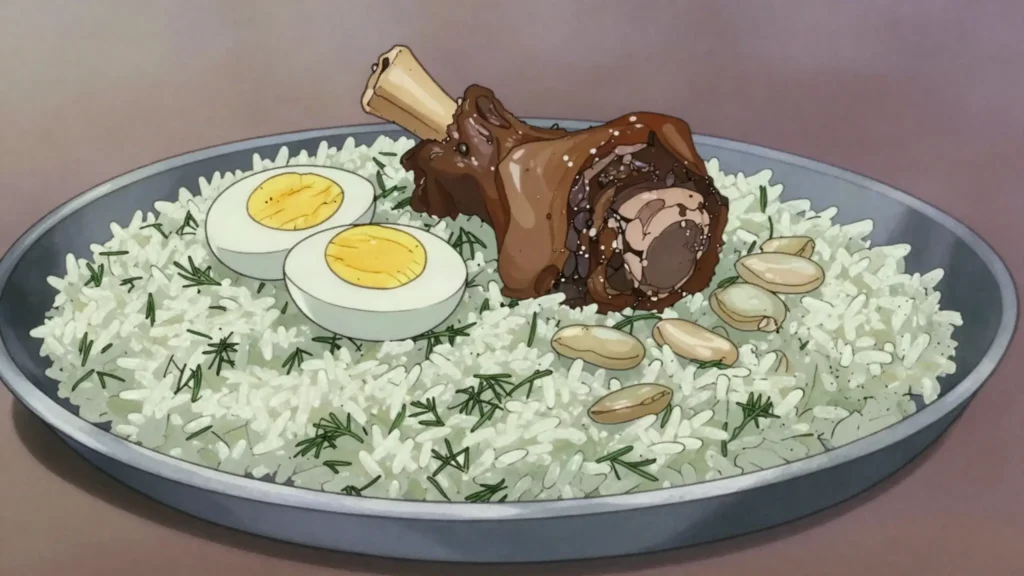
- Steam it gently for another thirty minutes. Do not lift the lid during that time. Turn off the heat and let it stand ten minutes. Now serve it, which takes a little confidence. Scatter the crust pieces over the top. Arrange the lamb shanks over the rice. Serve it with plain yoghurt alongside. Leftovers keep for three days in the fridge.
Technique
- Broad beans trigger favism — acute haemolytic anaemia — in people with G6PD deficiency, an inherited enzyme deficiency that is common around the Mediterranean, across the Middle East, and in parts of Africa and South Asia. Cooking, soaking and peeling do not remove the risk. Anyone who has reacted before must avoid them, anyone unsure should ask a doctor, and if you are cooking for guests, say explicitly that the dish contains broad beans. For everyone else they are simply food, eaten for thousands of years.
- The quantity of dill should look excessive. A very large bunch goes into one pot. Without it, the dish is just rice and beans.
- Boil the rice for five to seven minutes only. It must still have a firm white core when you drain it, because it finishes cooking in the steam. Rice fully cooked at this stage turns to mush in the pot.
- Remove the tough grey skins from larger broad beans. Blanch, cool and squeeze each bean out. Skins left on make the whole dish grey and bitter, and it is worth the slow work.
- Wrap the lid in a tea towel to absorb condensation, and keep the cloth corners well away from a gas flame — a towel over a burner catches fire.
- The hikaka, the crisp golden crust on the bottom of the pot, is prized and fought over. Inverting the whole pot onto a platter is dramatic and sometimes goes wrong; spooning the rice out and lifting the crust separately is the safer route.
- Broad beans are a spring crop, and this is a spring dish. Frozen beans make it year-round and dried beans make a mealier winter version.
Substitutions
- Frozen broad beans replace fresh and save a great deal of podding. They usually still need skinning.
- Dried broad beans, soaked overnight and cooked until tender, make a winter version with a denser, mealier texture.
- Hard-boiled eggs replace lamb entirely and are a genuine everyday Iraqi version, not a compromise.
- Chicken pieces replace lamb shank and cook far more quickly.
- Dried dill replaces fresh; use about three tablespoons, and accept that it is much weaker.
- Oil replaces butter or ghee, and vegetable stock replaces lamb broth, for a vegetarian version topped with eggs.
- Any long-grain rice replaces basmati, though basmati gives the best separate grains.
Variations
- Timman bagilla with lamb shank is the festive version; with hard-boiled eggs it is the everyday one.
- Baghali polo is the closely related Persian dish, made with the same beans and dill and usually served with lamb shank.
- A version with a saffron and yoghurt crust gives a deeper golden hikaka and is considered the finest.
- Some cooks stir a little turmeric through the rice for colour.
- Tashreeb bagilla uses the same beans in a bread-and-broth dish rather than with rice.
- A green version with far more dill, until the rice is properly green, is made in some households.
History
Rice with broad beans and dill, often crowned with lamb; a Baghdad staple in bean season.
Frequently asked questions
What is Timman bagilla?
Timman bagilla is a main from Iraq: dill rice with fava beans, topped with lamb shank or egg. Rice with broad beans and dill, often crowned with lamb; a Baghdad staple in bean season.
How long does Timman bagilla take to make?
Timman bagilla takes 25 minutes of preparation and 1 hour 30 minutes of cooking. The recipe makes serves 6. It is rated medium to make.
What can I substitute in Timman bagilla?
Yes, within limits. Frozen broad beans replace fresh and save a great deal of podding. They usually still need skinning. Dried broad beans, soaked overnight and cooked until tender, make a winter version with a denser, mealier texture. Hard-boiled eggs replace lamb entirely and are a genuine everyday Iraqi version, not a compromise. Chicken pieces replace lamb shank and cook far more quickly. Dried dill replaces fresh; use about three tablespoons, and accept that it is much weaker. Oil replaces butter or ghee, and vegetable stock replaces lamb broth, for a vegetarian version topped with eggs. Any long-grain rice replaces basmati, though basmati gives the best separate grains.
What is the most important thing to get right in Timman bagilla?
Drop them into cold water immediately. They still usually need the skins removed. Soak them overnight and cook them until tender. The quantity should look excessive to you. Use the soft fronds and discard the thick stalks. Chop the fronds roughly rather than finely. Chop them shortly before you use them. Use about three tablespoons if that is all you have. Now cook the meat, if you are using lamb.