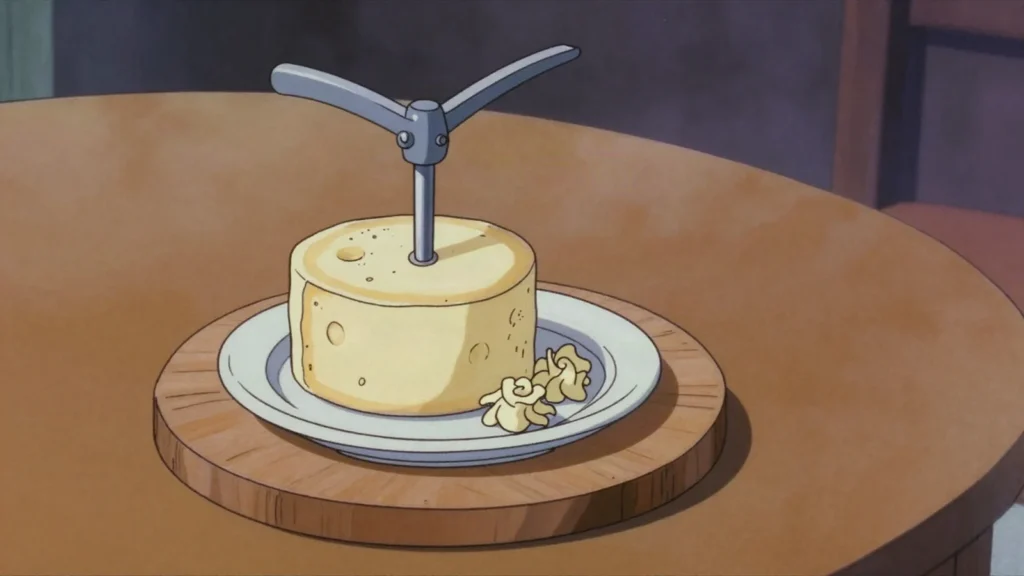

A firm cheese shaved into thin rosettes with a turning blade rather than cut. It has been made at Bellelay Abbey in the Jura since 1136 and was once used to pay rent; the girolle that shaves it was only invented in 1982.
It is a PDO raw-milk cheese ripened on spruce boards in a controlled cellar, and it is made in a shape designed for a shaving tool rather than a knife.
What goes into it
- raw cow’s milk from the Jura
- rennet
- a whey starter
- salt
How it is made
Raw milk is set with rennet, the curd cut and scalded, pressed into small cylinders and brined. The cylinders ripen on spruce boards for at least seventy-five days, washed and turned. The shape matters: the cheese is meant to be shaved off the top face in curls, which exposes far more surface to the air and is why it tastes different shaved than sliced.
How long it takes: at least 75 days, often longer
How it is eaten
Shaved into rosettes with a girolle, with black pepper, cumin or a glass of red.
History
Made at Bellelay Abbey in the Jura since 1136 and once used to pay rent; the girolle shaving tool was invented in 1982.
Frequently asked questions
What is Tête de Moine?
Tête de Moine is a cheese & dairy from Switzerland: firm cheese shaved into thin rosettes with a turning blade. Made at Bellelay Abbey in the Jura since 1136 and once used to pay rent; the girolle shaving tool was invented in 1982.
How is Tête de Moine made?
Raw milk is set with rennet, the curd cut and scalded, pressed into small cylinders and brined. The cylinders ripen on spruce boards for at least seventy-five days, washed and turned. The shape matters: the cheese is meant to be shaved off the top face in curls, which exposes far more surface to the air and is why it tastes different shaved than sliced. It takes at least 75 days, often longer.
Can I make Tête de Moine at home?
No, and the atlas gives no method for it. It is a PDO raw-milk cheese ripened on spruce boards in a controlled cellar, and it is made in a shape designed for a shaving tool rather than a knife.
What goes into Tête de Moine?
Raw cow’s milk from the Jura, rennet, a whey starter, salt.
How is Tête de Moine eaten?
Shaved into rosettes with a girolle, with black pepper, cumin or a glass of red.