
Ingredients
Cabbage
- 2.5 kgwhite cabbage
- 50 gnon-iodised salt — 2% of the shredded weight
- 1 tbspjuniper berries
- 1 tspcaraway seed
- 2bay leaves
Equipment
- a stone crock or a large glass jar
- a weight that fits inside
- a few whole outer leaves, saved
To serve
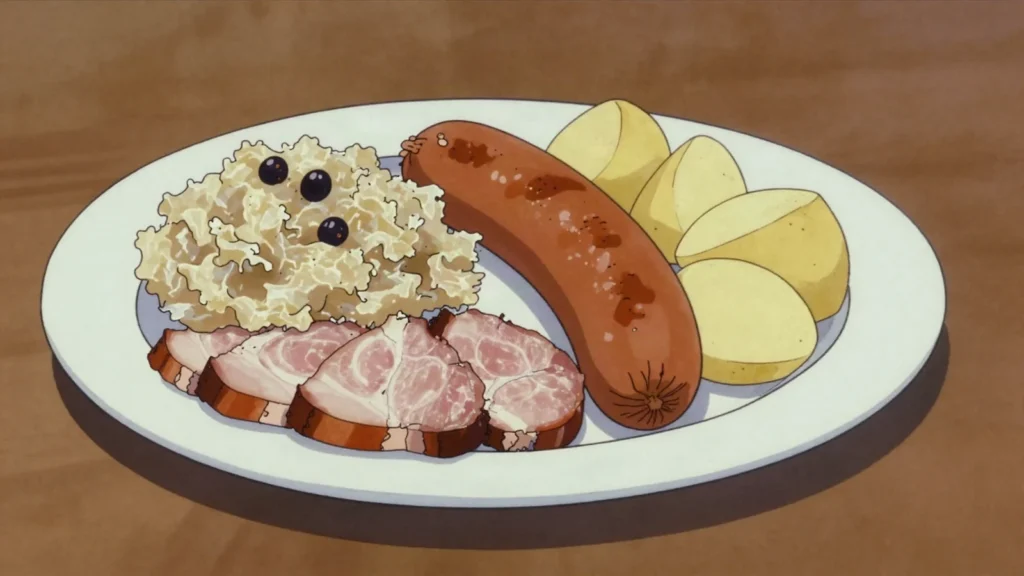
- smoked pork or Bernese sausage
- boiled potatoes
Directions
- Take off the outer leaves and set two aside whole. Quarter the cabbages, cut out the cores, and shred the rest as finely as you can.
- Weigh the shredded cabbage and use exactly 2 percent of that weight in salt. This is the only number in the recipe that matters: below about 1.5 percent the ferment goes soft and slimy, above 3 percent the lactobacilli are held back and nothing happens.
- Mix the salt through and leave 20 minutes, then knead and squash it hard by the handful for 10 minutes until it is limp and sitting in a pool of its own brine.
- Pack it into the crock in layers with the juniper, caraway and bay, pressing each layer down hard with a fist to drive out air.
- Lay the saved whole leaves on top and set the weight on them. The brine must rise above everything. If it does not after an hour, top up with brine made at 2 percent salt to water — never plain water, which dilutes the whole crock.
- Everything above the brine will mould. Everything below it will ferment. That is the entire craft of sauerkraut.
- Keep at 18 to 20°C (64 to 68°F) for the first week. It will bubble and smell sharp; skim any white film from the surface.
- Then move it somewhere cool, 12 to 15°C (54 to 59°F), for three to six weeks more. Taste from four weeks — it is done when it is pleasantly sour and still crisp.
- Move it to jars in the fridge, under its brine, where it keeps months. Braise it with smoked pork and potatoes, or with sausage for a Berner Platte.
Technique
- Two percent salt by weight of shredded cabbage. Weigh it.
- Everything under the brine, always.
- White film on the surface is kahm yeast and is skimmed off. Fuzzy coloured mould means the batch goes out.
Substitutions
- Pointed cabbage or red cabbage, which ferments the same way.
- A ziplock bag of brine as a weight, which conforms to the jar and seals the surface.
- Grated apple or carrot added, which is done in some Swiss valleys.
Variations
- Rüeblichabis, with carrot shredded through it.
- The German Sauerkraut and Alsatian choucroute are the same preserve.
History
Swiss households fermented cabbage in stone crocks for winter; it accompanies Berner Platte and smoked pork.
Frequently asked questions
What is Suurchabis?
Suurchabis is a fermented & pickled from Switzerland: salt-fermented cabbage served with pork, sausage and potatoes. Swiss households fermented cabbage in stone crocks for winter; it accompanies Berner Platte and smoked pork.
How long does Suurchabis take to make?
Suurchabis takes 45 min plus 3 to 6 weeks fermenting of preparation and no cooking at all. The recipe makes makes about 2 kg. It is rated medium to make.
What can I substitute in Suurchabis?
Yes, within limits. Pointed cabbage or red cabbage, which ferments the same way. A ziplock bag of brine as a weight, which conforms to the jar and seals the surface. Grated apple or carrot added, which is done in some Swiss valleys.
What is the most important thing to get right in Suurchabis?
Weigh the shredded cabbage and use exactly 2 percent of that weight in salt. This is the only number in the recipe that matters: below about 1.5 percent the ferment goes soft and slimy, above 3 percent the lactobacilli are held back and nothing happens.