
Ingredients
The tarragon syrup
- 100 gfresh tarragon
- leaves and soft stems
- Russian or French tarragon
- 400 gwhite sugar
- 500 mlwater
- juice of 1 lemon
To build the drink
- 1 litresparkling water
- well chilled
- or still water, for a flat version
- plenty of ice
- extra lemon juice, to taste
Sometimes added
- a few sprigs fresh mint
- a strip of lemon zest
- a pinch of citric acid
- a drop of green food colouring
- see the note on colour
Equipment
- a small heavy pan
- a fine sieve
- a blender, optional
- sterilised glass bottles
- with tight lids
Directions
- Wash the tarragon carefully in cold water. Lift it out of the water rather than pouring it away. Shake it dry and pat it with a clean cloth. Strip the leaves and the soft stems from the woody ones. Woody stems add bitterness and should be discarded.
- Put the sugar and the water into the pan together. Heat it gently and stir until the sugar dissolves. Do not let it boil before the sugar has dissolved.
- Boil it for about three minutes and no longer. Longer boiling thickens it too far for a drink. Take the pan off the heat immediately after that. Hot sugar syrup causes very serious burns. Cool it for twenty full minutes and seek advice. Now add the tarragon to the hot syrup. Cover the pan with a lid straight away.
- Let it steep as it cools for at least an hour. Two hours gives a noticeably stronger flavour. Taste it after an hour and decide for yourself. There is a second method that keeps more colour.
- Blend the raw tarragon with a little cold water. Blend it hard until it is a bright green slurry. Strain that slurry through muslin into a jug. Stir the green liquid into cooled sugar syrup. This keeps a far greener, fresher tasting syrup. Use it within about a week if you make it this way.
- Strain the steeped syrup through a fine sieve. Press the leaves firmly with the back of a spoon. Squeeze out every bit of the flavoured syrup. Discard the spent leaves once they are pressed. Stir in the lemon juice once it has cooled. It also helps the syrup keep a little longer. Taste the syrup and judge the balance now. It should be very sweet and clearly herbal.
- Pour the syrup into sterilised glass bottles. Let them drain upside down on a clean cloth. Seal them and keep them in the refrigerator. The hot-steeped syrup keeps about three weeks. Discard it if it smells fermented or looks cloudy.
- Fill the glass with plenty of ice cubes first. Pour in about fifty millilitres of the syrup. Top it up with well chilled sparkling water. Stir it gently so the bubbles are not lost. Taste it and add more syrup if it is too weak. Add a squeeze of lemon if it is too sweet.
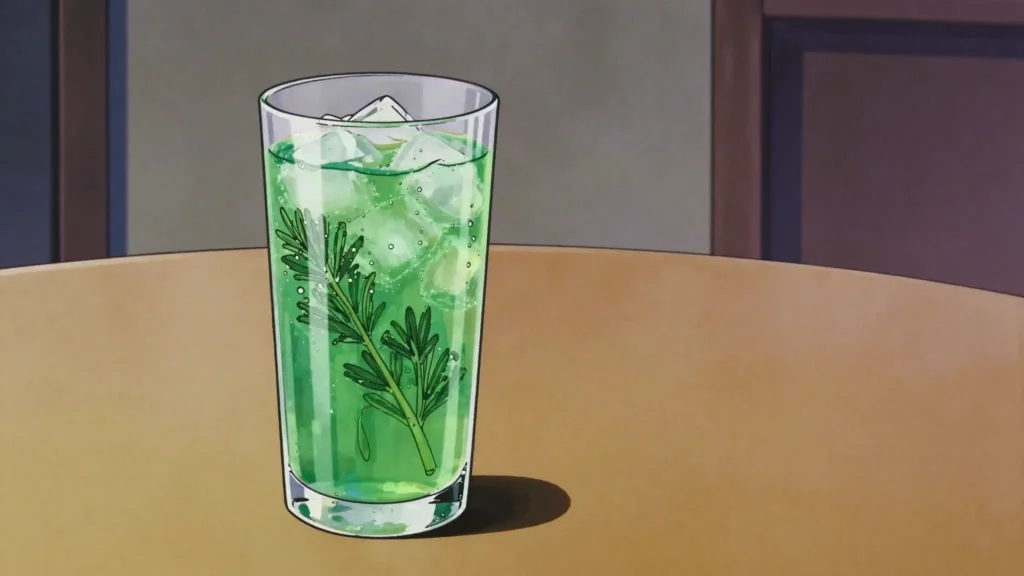
- Add a drop of green colouring now if you want it. Add it to the glass rather than to the bottle. Garnish with a sprig of tarragon or of mint. It must be drunk properly cold to be any good. Warm tarkhuna tastes cloying and medicinal. Guests who are not drinking wine often take this.
Technique
- The famous vivid green is added colouring, not tarragon. A real tarragon syrup is a dull olive or brownish green. Commercial tarkhuna uses permitted food dyes and does not hide it; at home you can add a drop or leave it out, and the flavour is the same either way.
- Two different plants are sold as tarragon. French tarragon is finer and sweeter; Russian tarragon is coarser and hardier, and is closer to the Georgian plant. Mexican tarragon is a marigold and a different plant altogether, though it can be used knowingly.
- Tarragon naturally contains estragole, a compound found in several culinary herbs that food-safety bodies have assessed. The atlas quotes no figures and sets no limits — those assessments are technical and are revised. This is an ordinary culinary use of a herb, not a concentrated extract.
- Hot sugar syrup burns far worse than boiling water because it is hotter and it sticks to skin. Never taste it from the pan. If it splashes, cool the area under running water for a full twenty minutes and get advice.
- The blended cold method keeps a much greener, fresher syrup but only lasts about a week. The hot-steeped method is duller in colour and keeps around three weeks.
- Mitrofan Lagidze began bottling flavoured waters in Kutaisi in 1887, and the Lagidze name is still attached to these drinks. The tarragon version became the one that outlasted the rest and spread across the Soviet Union.
Substitutions
- Russian and French tarragon are interchangeable here; French gives a sweeter, finer syrup and Russian a coarser, more robust one.
- Still water replaces sparkling for a flat lemonade, which is how some households serve it to children.
- A pinch of citric acid replaces the lemon juice and gives a sharper, more commercial edge.
- Honey replaces some of the sugar, though it changes the flavour towards something less clean.
- A few sprigs of mint steeped alongside the tarragon give a fresher, greener drink that is a common home variation.
- Green food colouring is optional and purely cosmetic.
Variations
- Lagidze waters come in a whole family of flavours, including chocolate, cream, grape and pear, all made on the same syrup principle.
- Soviet-era tarkhun was mass produced across the union and is remembered widely outside Georgia.
- A version with added lemon zest and extra citric acid tastes sharper and closer to a commercial soda.
- Some Georgian households make a tarragon syrup with no colouring at all and serve it proudly olive-coloured.
- The syrup is used in modern Tbilisi bars as a cocktail base, most often with gin, which is a recent bar use rather than a traditional one.
- A frozen version, churned into a granita, appears on some summer restaurant menus.
History
Pharmacist Mitrofan Lagidze began bottling flavoured spring waters in Kutaisi in 1887; his tarkhuna syrup became a Soviet classic.
Frequently asked questions
What is Tarragon lemonade?
Tarragon lemonade is a drink from Georgia: bright green tarragon soda, sweet and herbal, drunk ice-cold. Pharmacist Mitrofan Lagidze began bottling flavoured spring waters in Kutaisi in 1887; his tarkhuna syrup became a Soviet classic.
How long does Tarragon lemonade take to make?
Tarragon lemonade takes 20 minutes of preparation and 15 minutes of cooking. The recipe makes makes about 1.5 litres of syrup-based drink. It is rated easy to make.
What can I substitute in Tarragon lemonade?
Yes, within limits. Russian and French tarragon are interchangeable here; French gives a sweeter, finer syrup and Russian a coarser, more robust one. Still water replaces sparkling for a flat lemonade, which is how some households serve it to children. A pinch of citric acid replaces the lemon juice and gives a sharper, more commercial edge. Honey replaces some of the sugar, though it changes the flavour towards something less clean. A few sprigs of mint steeped alongside the tarragon give a fresher, greener drink that is a common home variation. Green food colouring is optional and purely cosmetic.
What is the most important thing to get right in Tarragon lemonade?
Wash the tarragon carefully in cold water. Lift it out of the water rather than pouring it away. Shake it dry and pat it with a clean cloth. Strip the leaves and the soft stems from the woody ones. Woody stems add bitterness and should be discarded.