
Ingredients
The yoghurt
- 1.2 kgthick plain yoghurt
- full fat
- strained overnight
- to give about 600 g
To sweeten
- 150 gicing sugar
- or caster sugar
- or to taste
- sifted
The flavourings
- 1 teaspoonground cardamom
- freshly ground
- a large pinch saffron
- soaked in 2 tablespoons warm milk
- quarter teaspoon grated nutmeg
- a pinch of ground cinnamon
- optional
The nuts
- 40 gpistachios, chopped
- 40 galmonds, chopped
- or cashews
- a few kept back to garnish
Directions
- Line a sieve with muslin or a clean cloth. Tip the yoghurt in and set it over a bowl. Overnight gives a properly thick strained yoghurt. Use the best full fat yoghurt you can find. Saffron must be soaked before it goes in. Warm the milk gently rather than boiling it. Crush the saffron threads between your fingers first. Then stir them into the warm milk and leave them.
- Use it sparingly rather than generously. Grind it fresh from green pods if you can. Split the green pods and take out the black seeds. Grind only those seeds rather than the whole pods. It must be kept refrigerated at every stage. Strain the yoghurt in the refrigerator, not on the counter. It keeps about three days once made.
- Keep the whole setup in the refrigerator throughout. Line a large sieve with muslin or a clean cloth. Use several layers of muslin rather than one. A clean thin tea towel works equally well. Set the sieve over a bowl deep enough to catch the whey. The sieve must not sit in the collected liquid.
- Tip the yoghurt into the lined sieve. Spread it out rather than leaving it in a mound. Fold the cloth over the top to cover it. That keeps anything from falling into the yoghurt. Put the whole setup into the refrigerator. It must strain cold rather than at room temperature.
- Warm yoghurt sours and can spoil during that time. Leave it overnight, or at least eight hours. Check it in the morning and pour off the whey. The yoghurt should be thick and hold its shape.
- Crush the saffron threads and soak them in warm milk. Crush them between your fingers into the milk. Leave it for at least fifteen minutes to infuse. The milk should turn a deep golden orange. Chop the pistachios and almonds roughly.
- Keep them fairly coarse rather than chopping them fine. Their crunch is the point against the smooth yoghurt. Set a few aside for scattering over at the end. Toast them lightly first if you want more flavour. Toast them in a dry pan over a moderate heat. Give them two or three minutes, shaking the pan.
- Let them cool completely before they go in. Put the strained yoghurt into a large bowl. Whisk it on its own first until it is smooth. Whisking breaks it down into a smooth cream. Whisk the sifted sugar into the smooth yoghurt. Sift the icing sugar before it goes in. Sifting takes only a moment and prevents that.
- Add the sugar gradually and taste as you go. Stop when it is sweet but still clearly tangy. Whisk in the cardamom, nutmeg and saffron milk. Add them all together and whisk them right through. The saffron milk colours the whole mixture golden.
- Whisk until the colour is entirely even. Streaks of colour mean it needs more whisking. Grate the nutmeg fresh rather than using ground. Too much nutmeg becomes overpowering quickly. Fold most of the chopped nuts through the mixture. Fold them in rather than whisking them hard. Their texture is the point, so keep them whole.
- Keep a handful back for the top of each bowl. Cover the bowl and refrigerate it thoroughly. It is served genuinely cold rather than cool. Taste it again once it has chilled properly. Cold mutes sweetness considerably in any dessert.
- Whisk in a spoonful more if it needs it. It should be thick but still soft and spoonable. Whisk that in gently rather than beating it. Spoon the sikarni into small bowls or glasses.
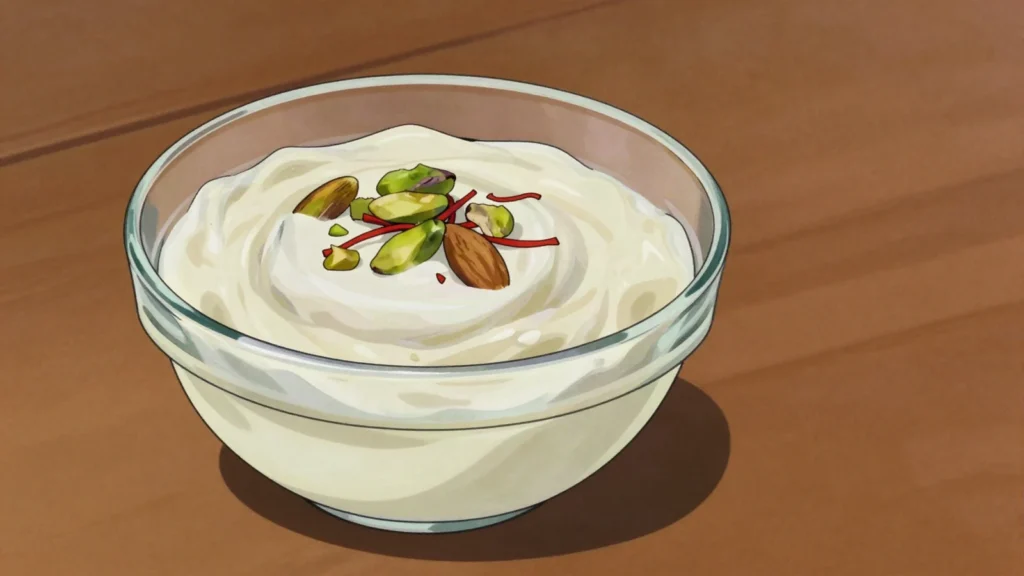
- Serve it in small portions rather than large ones. Small glass bowls show the golden colour well. Scatter the reserved chopped nuts over each bowl. Add them just before serving rather than in advance. It keeps three days refrigerated in a covered bowl. Stir it gently before serving if it has.
Technique
- This is an uncooked dairy dessert and must be kept refrigerated at every stage, including the overnight straining — yoghurt left at room temperature for those hours sours and spoils. It keeps about three days once made.
- Straining loses roughly half the weight, so 1.2 kg of yoghurt gives about 600 g of strained curd; buy considerably more than you expect to need. Use full fat yoghurt, since low fat gives a thin sour dessert and the dish is essentially only yoghurt and sugar.
- Pistachios, almonds or cashews are stirred through and hard to see once folded in, so say clearly which nuts you have used.
Substitutions
- Cashews replace pistachios or almonds directly. Caster sugar replaces icing sugar but takes considerably longer to dissolve; granulated stays gritty and does not work.
- Sikarni and Indian shrikhand share the same strained-curd technique and are closely related rather than identical — Nepali sikarni often carries more nutmeg and cinnamon and is frequently served looser. The atlas records them as separate but linked.
Variations
- Soak the saffron in warm milk for at least fifteen minutes, crushing the threads between your fingers first — dry threads give colour in patches rather than evenly, and a large pinch is plenty since too much tastes medicinal.
- Grind cardamom fresh from green pods, using only the black seeds and discarding the fibrous husks, and grate the nutmeg fresh — both lose their aroma very quickly once ground, and the difference is genuinely noticeable here.
- Whisk the strained yoghurt smooth on its own before anything goes in, sift the icing sugar to avoid lumps, and fold the nuts in rather than whisking them, since whisking breaks them into fragments. Chill it at least two hours or overnight: cold mutes sweetness, so taste and adjust again after chilling.
History
Served at Nepali feasts and weddings; it uses the same strained-curd technique as Indian shrikhand.
Frequently asked questions
What is Sikarni?
Sikarni is a dessert from Nepal: strained yoghurt whipped with sugar, cardamom, saffron and chopped nuts. Served at Nepali feasts and weddings; it uses the same strained-curd technique as Indian shrikhand.
How long does Sikarni take to make?
Sikarni takes 20 minutes plus straining of preparation and no cooking at all. The recipe makes serves 6. It is rated easy to make.
What can I substitute in Sikarni?
Yes, within limits. Cashews replace pistachios or almonds directly. Caster sugar replaces icing sugar but takes considerably longer to dissolve; granulated stays gritty and does not work. Sikarni and Indian shrikhand share the same strained-curd technique and are closely related rather than identical — Nepali sikarni often carries more nutmeg and cinnamon and is frequently served looser. The atlas records them as separate but linked.
What is the most important thing to get right in Sikarni?
Line a sieve with muslin or a clean cloth. Tip the yoghurt in and set it over a bowl. Overnight gives a properly thick strained yoghurt. Use the best full fat yoghurt you can find. Saffron must be soaked before it goes in. Warm the milk gently rather than boiling it. Crush the saffron threads between your fingers first. Then stir them into the warm milk and leave them.