
Ingredients
Raw materials
- About 14 kg glutinous rice, soaked 12–18 days in winter water
- About 60 litres water from Jianhu Lake, the mineral profile of which is part of the appellation
- 1.5 kgmaiqu (crushed wheat starter cakes, grown with Aspergillus and Rhizopus moulds)
- About 5 litres jiuyao or jiumu, a yeast-rich seed mash from a previous batch
Vessels
- Glazed ceramic jars sealed with lotus leaf and clay
- A wooden steaming basket
- A press cloth
To serve
- 150 mlwine per person
- A pewter or ceramic warming pot
- Slivered ginger and preserved plums, optional
Directions
- Brewing starts at the winter solstice (dong niang) because the cold suppresses spoilage bacteria while the slow moulds and yeasts keep working; the season is part of the definition, not tradition for its own sake.
- Soak the glutinous rice in cold water for up to 18 days until it sours gently and the grains crush between the fingers, then rinse and steam it until translucent.
- Spread the steamed rice to cool to about 28–30°C (80–85°F), then mix with crushed wheat qu, the jiuyao seed mash and water in the jar.
- Ferment in the open jar at 12–18°C (55–65°F), stirring vigorously (kai pa) for the first days to control the temperature and oxygenate the mash; it foams, hisses and smells of sweet bread.
- Seal the jar and let it ferment slowly for 60–90 days. Saccharification and alcoholic fermentation run at the same time, the mould converting starch to sugar while the yeast converts sugar to alcohol, reaching 14–18% ABV.
- Press the mash through cloth, settle the liquid, then pasteurise it by heating in sealed jars, which also sets the amber colour and caramel notes.
- Seal with lotus leaf and clay and age in a cool store for at least one year, and for three to five for huadiao grade; ageing rounds the sharpness into nutty, sherry-like depth.
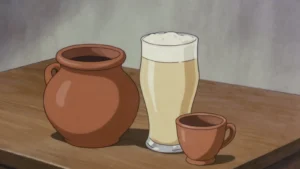
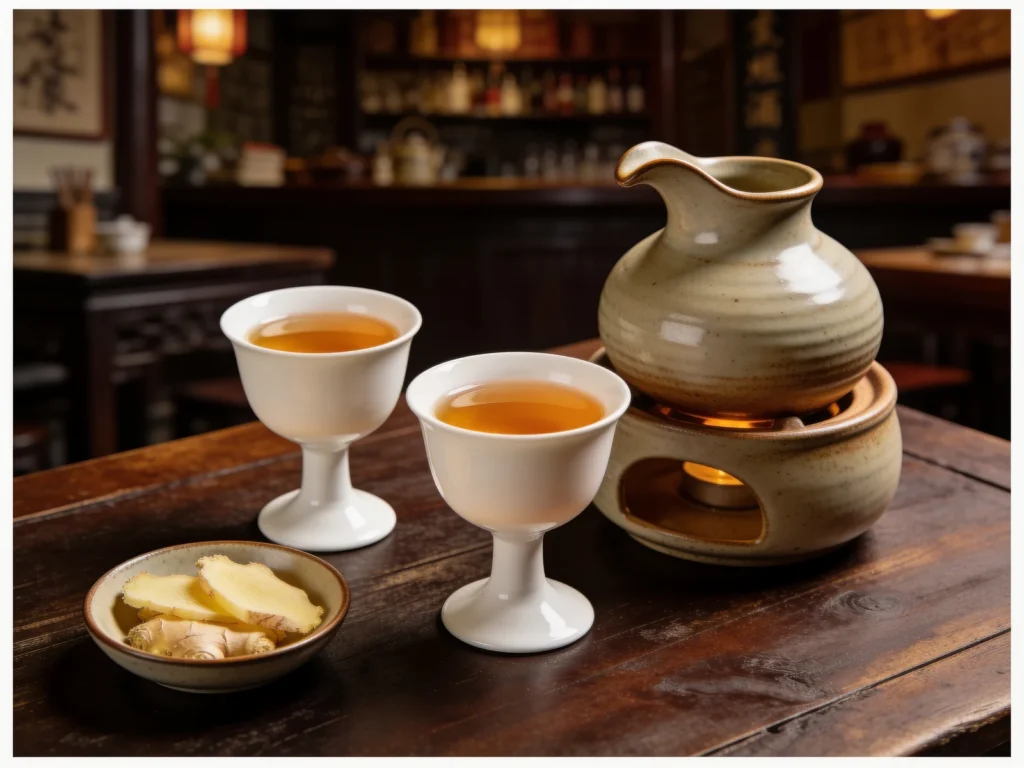
- To drink, decant into a warming pot and heat to 35–40°C (95–105°F), adding ginger or preserved plum in cold weather. Serve in small ceramic cups alongside strongly flavoured food.
- To cook with it, use a jiafan or huadiao grade you would actually drink; splash it down the hot side of the wok so it hisses and evaporates, carrying off strong odours and leaving sweetness behind.
Technique
- Shaoxing is a huangjiu (yellow wine), brewed like beer from grain rather than distilled, and is one of the world’s oldest continuously produced alcoholic drinks.
- The named grades matter: yuanhong is the base, jiafan is richer, shanniang is brewed using wine instead of water, and xiangxue is sweet and fortified with distilled lees spirit. Huadiao and nu’er hong are aged jiafan.
- Avoid supermarket bottles labelled ‘Shaoxing cooking wine’ with added salt. The salt is there for tax and licensing reasons, it makes seasoning unpredictable, and the wine underneath is poor.
- Home brewing needs scrupulously clean vessels and a stable cool temperature; a warm room gives acetic, vinegary results.
Substitutions
- In cooking, dry sherry (fino or amontillado) is the closest widely available substitute; a dry sake is second best. Neither has quite the same caramel weight.
- Where alcohol must be avoided, use a mixture of white grape juice and a splash of rice vinegar, accepting a sweeter, less complex result.
Variations
- Nu’er hong (daughter’s red) was buried at a daughter’s birth and dug up at her wedding, sometimes eighteen years later.
- Other huangjiu regions produce distinct styles: Jimo in Shandong uses millet, and Fujian’s hongqu jiu uses red yeast rice.
History
Brewed in Shaoxing since at least the Song dynasty with Jian Lake water; huadiao jars were traditionally buried at a daughter’s birth for her wedding.
Frequently asked questions
What is Shaoxing Wine?
Shaoxing Wine is a wine & spirit from China: amber rice wine from Zhejiang, drunk warm and used in nearly every braise. Brewed in Shaoxing since at least the Song dynasty with Jian Lake water; huadiao jars were traditionally buried at a daughter’s birth for her wedding.
How long does Shaoxing Wine take to make?
Shaoxing Wine takes 2 days of soaking and steaming rice of preparation and About 90 days of fermentation plus 1–5 years of ageing of cooking. The recipe makes traditionally brewed in ceramic jars of about 25 litres. It is rated hard to make.
What can I substitute in Shaoxing Wine?
Yes, within limits. In cooking, dry sherry (fino or amontillado) is the closest widely available substitute; a dry sake is second best. Neither has quite the same caramel weight. Where alcohol must be avoided, use a mixture of white grape juice and a splash of rice vinegar, accepting a sweeter, less complex result.
What is the most important thing to get right in Shaoxing Wine?
Shaoxing is a huangjiu (yellow wine), brewed like beer from grain rather than distilled, and is one of the world’s oldest continuously produced alcoholic drinks.