
Ingredients
Components
- 2large aubergines, sliced lengthways 1 cm thick
- 2 tspsalt, for degorging
- 400 mlsunflower oil, for frying
- 4eggs
- skins of 3 onions and 1 tbsp black tea leaves, if making haminado
- 2potatoes, boiled and sliced (optional but common)
Salad and sauces
- 3tomatoes, finely diced
- 2cucumbers, finely diced
- ½onion, finely diced
- 2 tbspchopped parsley
- juice of 1 lemon
- 150 mltahini sauce (tahini loosened with lemon, garlic and iced water)
- 4 tbspamba
- 2 tbspschug (green chilli and coriander paste)
- 150 gpickled cucumbers, sliced
Bread
- 4large pita breads with a good pocket
Directions
- Salt the aubergine slices on both sides and stand them in a colander for 30 minutes, then rinse and press dry between cloths. This draws out bitterness and stops them drinking the entire pan of oil.
- For haminado eggs, simmer the eggs with the onion skins and tea leaves in water on the lowest possible heat, or in a 120°C (250°F) oven, for 6–12 hours. They come out beige-brown, creamy and faintly caramelised. Otherwise boil them 9 minutes and peel.
- Heat the oil to 180°C (350°F) and fry the aubergine in batches for 2–3 minutes a side, until deep brown and completely soft in the middle. Pale, half-cooked aubergine is the most common fault in a home sabich.
- Drain on a rack. Fry the potato slices in the same oil if using.
- Mix the chopped salad with lemon juice and a pinch of salt and leave it to sit while you assemble.
- Whisk the tahini with lemon, garlic and iced water until it thickens, seizes, then loosens again into a pourable ivory cream.
- Warm the pita, cut a wide opening and line the inside walls with tahini and a stripe of amba.
- Layer in the aubergine, then sliced egg, then potato, pressing down gently to make room. The eggs go in whole slices, not mashed.
- Top with chopped salad, pickles, more tahini, more amba and schug to taste, and wrap the base in paper. Eat immediately, leaning forward.
Technique
- Sabich comes from the Iraqi-Jewish Shabbat morning table, where fried aubergine, slow-cooked haminado eggs and amba were eaten together because none of it required cooking on the Sabbath. Immigrants in Ramat Gan put it into a pita in the 1960s.
- Amba is not optional. The fenugreek and turmeric in pickled mango sauce is what makes the sandwich taste of sabich rather than of aubergine.
- The order of assembly keeps the pita intact: sauces on the walls first, solid items next, wet salad last.
- Haminado eggs are what a long, gentle cook does to an egg; the white turns beige and the yolk goes dense and creamy.
Substitutions
- No amba: mango chutney blitzed with lemon juice, ground fenugreek, turmeric and a pinch of chilli is a workable stand-in.
- The aubergine can be brushed with oil and roasted at 220°C (425°F) for 25 minutes if you want to avoid deep-frying, though the texture is drier.
- Schug can be replaced by harissa or any fresh green chilli paste.
Variations
- Sabich in a laffa, rolled rather than pocketed, is standard in Tel Aviv.
- Some stands add fried onion or a spoonful of hummus at the base.
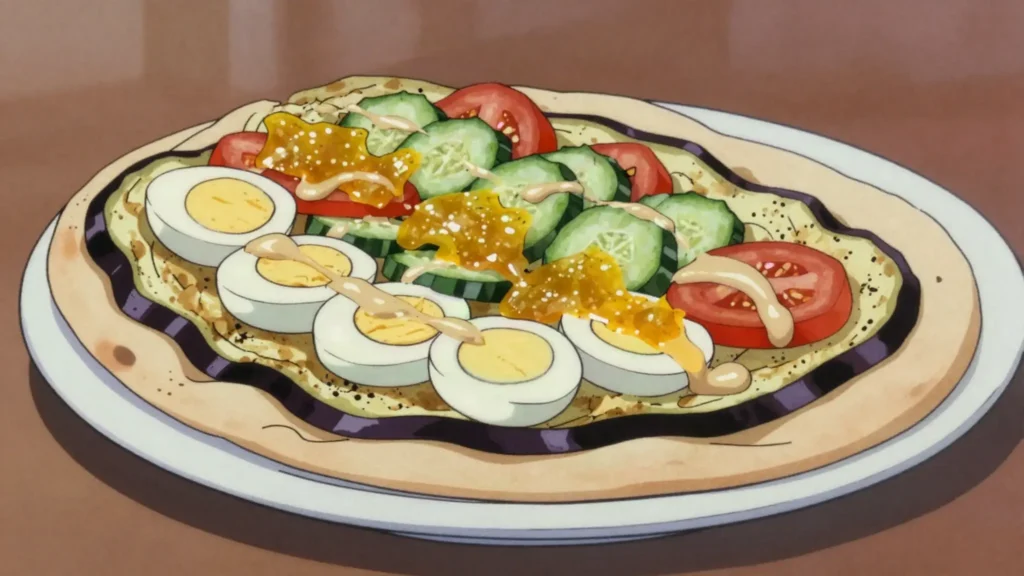
- A plated sabich, served open on a dish with the pita alongside, is common at brunch restaurants.
History
A pita sandwich filled with fried aubergine, hard-boiled egg, hummus, Israeli salad and amba, a tangy pickled mango sauce, generally credited to Iraqi Jewish immigrants who arrived in Israel in large numbers following mass Jewish emigration from Iraq in the early 1950s, adapting a traditional Iraqi Jewish Sabbath breakfast of fried aubergine and egg into a portable street-food sandwich. Its name is thought to derive from an Arabic word related to morning, referencing its origin as a Sabbath-morning meal traditionally prepared the night before, since observant Jewish households avoid cooking on the Sabbath itself. Amba, the pickled mango condiment considered essential to a proper sabich, itself reflects Iraqi Jewish culinary heritage with roots tracing further back through Indian trade influence on Iraqi cooking.
Frequently asked questions
What is Sabich?
Sabich is a street food from Israel: pita of fried aubergine, egg and amba; Iraqi-Jewish Shabbat legacy. A pita sandwich filled with fried aubergine, hard-boiled egg, hummus, Israeli salad and amba, a tangy pickled mango sauce, generally credited to Iraqi Jewish immigrants who arrived in Israel in large numbers following mass Jewish emigration from Iraq in the early 1950s, adapting a traditional Iraqi Jewish Sabbath breakfast of fried aubergine and egg into a portable street-food sandwich. Its name is thought to derive from an Arabic word related to morning, referencing its origin as a Sabbath-morning meal traditionally prepared the night before, since observant Jewish households avoid cooking on the Sabbath itself. Amba, the pickled mango condiment considered essential to a proper sabich, itself reflects Iraqi Jewish culinary heritage with roots tracing further back through Indian trade influence on Iraqi cooking.
How long does Sabich take to make?
Sabich takes 30 min of preparation and 30 min, plus overnight if making haminado eggs of cooking. The recipe makes 4 sandwiches. It is rated easy to make.
What can I substitute in Sabich?
Yes, within limits. No amba: mango chutney blitzed with lemon juice, ground fenugreek, turmeric and a pinch of chilli is a workable stand-in. The aubergine can be brushed with oil and roasted at 220°C (425°F) for 25 minutes if you want to avoid deep-frying, though the texture is drier. Schug can be replaced by harissa or any fresh green chilli paste.
What is the most important thing to get right in Sabich?
Salt the aubergine slices on both sides and stand them in a colander for 30 minutes, then rinse and press dry between cloths. This draws out bitterness and stops them drinking the entire pan of oil.