
Ingredients
Batter
- 4eggs, at room temperature
- 120 gcaster sugar
- 3 tbsphoney
- 2 tbspmilk
- 150 gcake flour or plain flour
- ½ tspbaking powder
- a pinch of salt
- 1 tspvanilla
To cook
- a little neutral oil or melted butter, for the moulds
Equipment
- a takoyaki pan, an aebleskiver pan, or a moulded cake pan
To serve
- warm, in a paper bag, from a night market stall
Directions
- Beat the eggs and sugar together for a full eight to ten minutes. Beat them until the mixture is pale, thick and holds a ribbon on the surface for a few seconds when the whisk is lifted. It takes longer than seems reasonable with an electric whisk and much longer by hand.
- Warm it slightly with the milk so it blends in easily rather than sinking in a lump. Sift the flour and baking powder over the surface in two or three additions. Fold it in with a spatula using a cutting and lifting motion, turning the bowl as you go. Fold rather than stir, since beating at this stage knocks out the air you spent ten minutes building. Stop as soon as no dry flour is visible.
- Cover it and let it rest for twenty to thirty minutes. Do not stir it hard after resting, and fold it gently once if it has separated. Heat the moulded pan over a low to medium heat, not a high one. Keep the heat low, since these are cooked from both sides in a closed mould and a hot pan burns the outside before the middle sets.
- Brush every mould thoroughly with oil, including up the sides. The moulds are detailed and the cakes stick readily, so be thorough about greasing. Fill each mould about three-quarters full. Do not overfill them, since the batter rises and overflowing cakes fuse together and lose their shape.
- Use a piping bag or a jug with a spout for control. Cook for two or three minutes until the surface is set around the edges and beginning to look dry. Turn them once the base has set but before the top has fully cooked, so the two halves fuse into a rounded cake.
- Cook the other side for another two or three minutes until golden. They are done when both sides are golden and they spring back when pressed lightly.
- Take them out slightly earlier than seems right, since they continue setting in the residual heat. Lift them out onto a rack rather than stacking them, so steam escapes. Serve them warm, which is when they are at their best. They keep a day in a sealed bag and they go dry after that.
Technique
- They descend from Japanese castella, which came from Portugal by way of Nagasaki.
- The lift comes from beaten eggs rather than raising agents.
- Turn each cake when the base has set but the top has not.
Substitutions
- A takoyaki or aebleskiver pan in place of a moulded cake pan.
- Golden syrup in place of honey, though honey is better.
Variations
- With chocolate or cheese in the centre.
- Flavoured with matcha or cocoa in the batter.
- Made larger, as a single castella loaf.
History
Descended from Japanese-era castella baking, now cast in novelty moulds at school gates and night markets.
Frequently asked questions
What is Baby Castella?
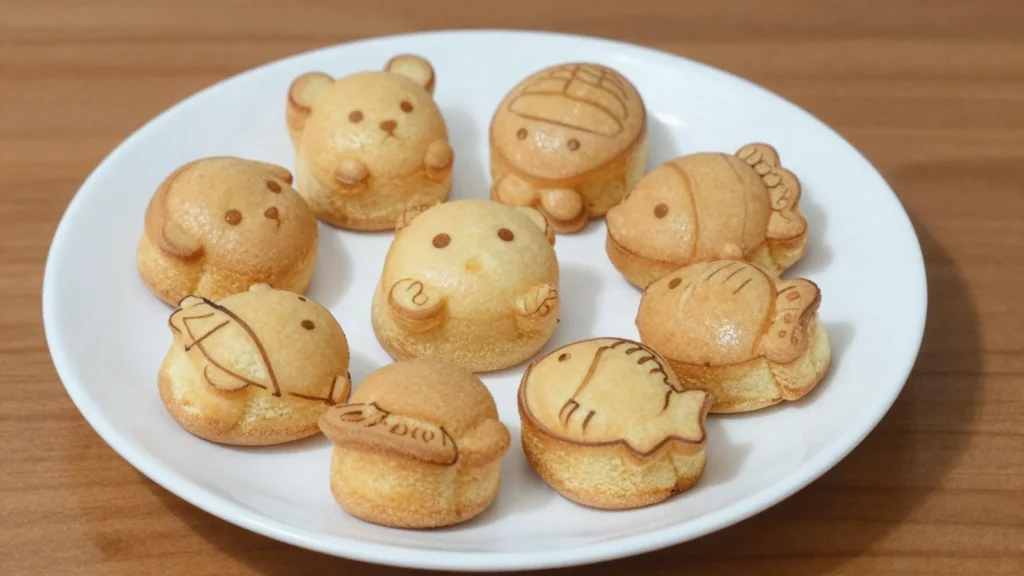
Baby Castella is a street food from Taiwan: small moulded egg sponge cakes sold warm in animal shapes. Descended from Japanese-era castella baking, now cast in novelty moulds at school gates and night markets.
How long does Baby Castella take to make?
Baby Castella takes 20 min plus 30 min resting of preparation and 20 min of cooking. The recipe makes about 30 small cakes. It is rated medium to make.
What can I substitute in Baby Castella?
Yes, within limits. A takoyaki or aebleskiver pan in place of a moulded cake pan. Golden syrup in place of honey, though honey is better.
What is the most important thing to get right in Baby Castella?
Warm it slightly with the milk so it blends in easily rather than sinking in a lump. Sift the flour and baking powder over the surface in two or three additions. Fold it in with a spatula using a cutting and lifting motion, turning the bowl as you go. Fold rather than stir, since beating at this stage knocks out the air you spent ten minutes building. Stop as soon as no dry flour is visible.