Ingredients
Per teapot (multiply by 4)
- 200 glamb neck or shank on the bone, cut into 3 cm pieces
- 1small onion, finely sliced
- 2 tbspcooked chickpeas, or 1 tbsp dried chickpeas soaked overnight
- 1small tomato, chopped
- ¼ tspturmeric
- ¼ tspground coriander
- ¼ tspblack pepper
- 1small piece cinnamon bark
- ½ tspsalt
- 150 mlwater
- 1 tbsplamb fat or oil
To serve
- 4rounds of Afghan naan
- 1 handfulcoriander, chopped
- 4spring onions
- chaka on the side
Directions
- Choose the vessel: chainaki is cooked in a lidded ceramic or metal teapot, one per person, which is where the dish gets its name. A small heatproof teapot or a lidded ceramic jug works at home.
- Divide the lamb, onion, chickpeas, tomato, spices, salt and fat between the teapots, packing them in loosely so there is room for the liquid to move.
- Pour 150 ml of water into each pot; the liquid should just cover the solids, since almost none of it will evaporate.
- Seal the lid with a twist of dough made from flour and water, or with foil, so no steam escapes and the pot works like a small pressure vessel.
- Set the pots in a deep roasting tin with 3 cm of water in the bottom, or bury their bases in warm ash and low embers as the Kabul teahouses do.
- Cook at 150°C (300°F) for 3 hours, checking once at 2 hours; the meat should be falling from the bone and the liquid reduced to a dark, unctuous broth with a slick of fat on top.
- Tear the naan into a wide bowl for each person, in rough pieces the size of a matchbox.
- Bring the teapots to the table sealed and let each person break the seal and pour the contents over their own bread, which is the whole theatre of the dish.
- Scatter coriander over the top and eat immediately, with spring onions and chaka alongside.
Technique
- The long, sealed, gentle cook is the technique. Nothing browns, nothing reduces by evaporation, and the meat effectively confits in its own juices, giving a broth far richer than the ingredient list suggests.
- Chainaki is teahouse food, especially in the old city of Kabul, cooked overnight in the embers of the bread oven and sold from breakfast onwards in winter.
- Use bony, gelatinous cuts. Neck, shank and ribs give the body that makes the broth cling to the bread; lean leg meat produces a thin, disappointing pot.
- If your teapot is not oven-safe, small lidded casseroles or heatproof jam jars in a bain-marie do the same job.
Substitutions
- No teapot: use 4 small lidded ramekins or a single lidded casserole, cooked the same time and temperature, then ladled over bread. Goat is used interchangeably with lamb in Afghanistan.
Variations
- Some cooks add a split dried lime or a spoonful of split peas to each pot.
- In Herat the same method is used with a whole quail per pot.
History
Cooked in teapots set on the edge of a teahouse fire, a Kabul method that let each customer’s portion simmer slowly and separately.
Frequently asked questions
What is Chainaki?
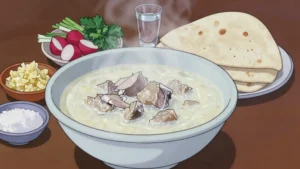
Chainaki is a soup & stew from Afghanistan: lamb, chickpeas and onion stewed inside a sealed teapot, poured over bread. Cooked in teapots set on the edge of a teahouse fire, a Kabul method that let each customer’s portion simmer slowly and separately.
How long does Chainaki take to make?
Chainaki takes 20 min of preparation and 3 hr of cooking. The recipe makes 4 servings. It is rated medium to make.
What can I substitute in Chainaki?
Yes, within limits. No teapot: use 4 small lidded ramekins or a single lidded casserole, cooked the same time and temperature, then ladled over bread. Goat is used interchangeably with lamb in Afghanistan.
What is the most important thing to get right in Chainaki?
Bring the teapots to the table sealed and let each person break the seal and pour the contents over their own bread, which is the whole theatre of the dish.