
Ingredients
The dough
- 600 gplain flour
- 250 mlwarm milk
- 60 gbutter, melted
- 1egg
- 10 gdried yeast
- 2 tablespoonssugar
- 1 teaspoonsalt
The filling
- 400 gsmoked streaky bacon
- or speck, finely diced
- 2onions, very finely chopped
- black pepper
- a little caraway, optional
To finish
- 1egg, beaten
- to glaze
To bake
- a hot oven
- lined trays
Directions
- Warm the milk gently in a pan. Stir the yeast and a spoon of sugar in. Let it stand there for ten minutes. The yeast should foam up visibly. Discard it and start again if not. Mixing the dry is the next step.
- Put the flour in a large bowl. Add the sugar and the salt to it. Stir them together thoroughly. Add the yeast milk and the egg. Add the melted butter to them. Bring it together into a soft dough. Knead it for about ten minutes. It becomes smooth as gluten develops.
- Keep going through the sticky stage. Put the dough in an oiled bowl. Cover it and leave it somewhere warm. Give it about ninety full minutes. Dice all the bacon very finely. Chop it patiently rather than quickly. Chop all the onions very finely. The onion must be as fine as the bacon.
- Mix the bacon and onion together. Season it with plenty of black pepper. Taste it if you are at all unsure. Add a little caraway seed to it. Some households add it and some do not. Roll it out on a floured surface. Roll it about three millimetres thick. Thin enough to be mostly filling. Keep it even across the sheet. Cut small rounds with a cutter. About seven centimetres across is right.
- Keep every one of them the same size. Put a little filling on each round. Do not overfill any of them at all. Leave a clear border all round. Fold the round over into a half-moon. Press the curved edge firmly closed. The seal must be entirely complete.
- Press the whole edge properly. Press out the air as you seal. Work from the middle right outward. Pinch it firmly closed all round. Bring the two ends round slightly. Set them on lined baking trays. Set them all seam side downward. Seam down keeps them all closed. Leave good wide gaps between them.
- Cover them and leave them to rise. Give them about thirty minutes. Brush them all with the beaten egg. Brush the glaze on thinly and evenly. Heat the oven to two hundred degrees. Bake them for about eighteen minutes. The bacon must cook right through.
- Bake them longer if it is not. Lift them out onto a wire rack. Let them cool at least a little. The filling is extremely hot inside. Pile them onto a serving plate. They keep three days in a sealed tin.
Technique
- The filling goes in raw in most versions and cooks inside the bun, with the bacon fat rendering into the dough — that richness is the traditional result. It also means the bun must bake long enough to cook the bacon through: about eighteen minutes for small ones, and break the first one open to check.
- Dice the bacon and chop the onion very finely, a few millimetres across, since large pieces tear the thin dough and make sealing difficult as well as cooking unevenly inside.
- The seal must be complete, since bacon fat leaks through any gap and burns on the tray. Press the air out as you seal, working from the middle outward, since trapped air expands and bursts them.
Substitutions
- Speck is the traditional Latvian choice and smoked streaky bacon the substitute; either should be fatty rather than lean, since that fat renders and flavours the bun and lean bacon gives a dry filling.
- Some cooks fry the filling first, which renders off some fat and gives a drier less rich bun; both are genuinely made.
Variations
- They are small, about the length of a finger and eaten in one or two bites, because they are party food handed round standing and made in large quantities.
- The bacon is already salty so no extra salt is needed; a little caraway is a matter of family habit.
- Latvian communities worldwide make them and they carry a strong association with home, which is a real part of what they are.
History
Small bacon and onion rolls baked for every celebration; they are the standard party food at Latvian gatherings worldwide.
Frequently asked questions
What is Pīrāgi?
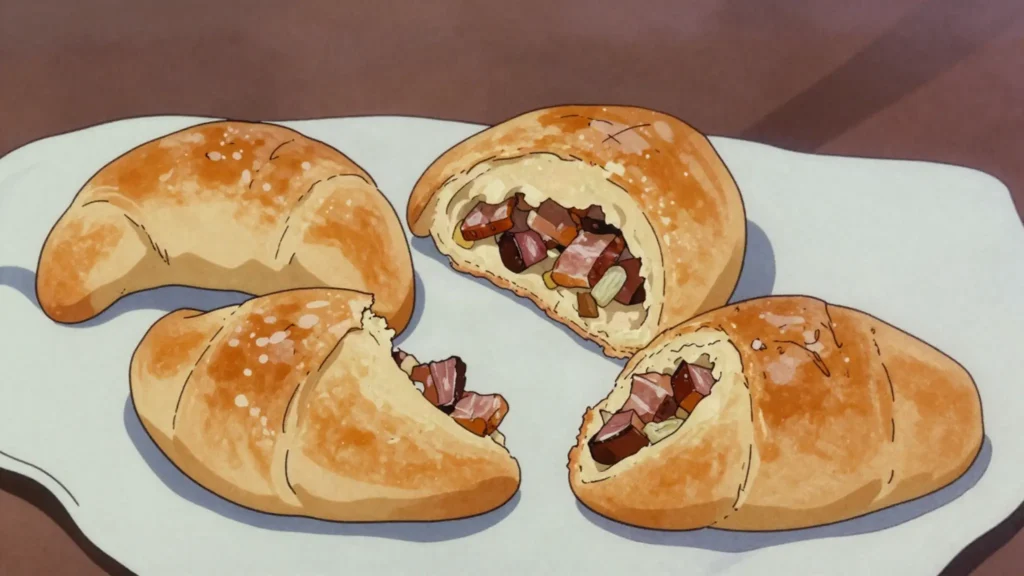
Pīrāgi is a snack from Latvia: crescent yeast buns stuffed with smoked bacon and onion. Small bacon and onion rolls baked for every celebration; they are the standard party food at Latvian gatherings worldwide.
How long does Pīrāgi take to make?
Pīrāgi takes 1 hour plus rising of preparation and 20 minutes of cooking. The recipe makes about 30 buns. It is rated hard to make.
What can I substitute in Pīrāgi?
Yes, within limits. Speck is the traditional Latvian choice and smoked streaky bacon the substitute; either should be fatty rather than lean, since that fat renders and flavours the bun and lean bacon gives a dry filling. Some cooks fry the filling first, which renders off some fat and gives a drier less rich bun; both are genuinely made.
What is the most important thing to get right in Pīrāgi?
Keep going through the sticky stage. Put the dough in an oiled bowl. Cover it and leave it somewhere warm. Give it about ninety full minutes. Dice all the bacon very finely. Chop it patiently rather than quickly. Chop all the onions very finely. The onion must be as fine as the bacon.