
Ingredients
Dough
- 600 gstrong white flour
- 150 gsugar
- 10 ginstant yeast
- 1 tspsalt
- 6eggs
- 150 mlwarm milk
- 180 gbutter, softened
- 2 tbsporange blossom water
- grated zest of 2 oranges
To finish
- 80 gbutter, melted
- 150 gcaster sugar
Optional glaze
- 1egg, beaten
To serve
- hot chocolate
- café de olla
Directions
- Mix the flour, sugar, yeast and salt, then work in the eggs, warm milk, orange blossom water and zest. Knead for 10 minutes until the dough comes together and starts to smooth out. Add the butter gradually and late. This is a very rich dough and adding it all at once means it never comes together at all.
- Keep kneading for a further 15 minutes until the dough is glossy, elastic and pulls away from the bowl. It will look hopeless and greasy for several minutes, and then quite suddenly it comes together.
- Keep going. Prove for 2 hours until doubled, or refrigerate it overnight, which is easier to handle. A cold overnight prove makes this dough far easier to shape and improves the flavour. Divide the rest into two, shape each into a tight ball, and set them on lined trays. Shape them with real surface tension by cupping and dragging them on the worktop, which gives a high round loaf.
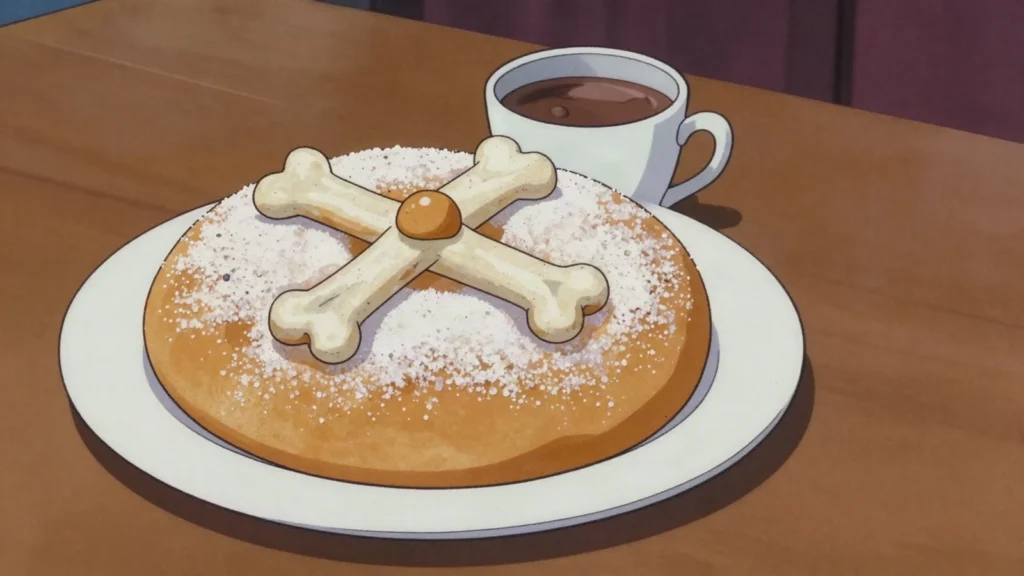
- Lay two ropes across each loaf in a cross, tucking the ends underneath. Roll a small ball for the centre and press it into the middle where the ropes meet. Press the decorations down firmly and moisten them with a little water so they do not lift off during the rise.
- Prove a further hour to an hour and a half until visibly puffed. Bake at 180°C (355°F) for 25 to 30 minutes until deep golden and hollow-sounding underneath.
- Cover loosely with foil if the bones brown before the loaf is done. While it is still warm, brush the whole surface generously with melted butter. Butter and sugar it while warm. On a cold loaf the butter sets and the sugar simply falls off.
- Coat it thoroughly, including the bones and the sides, because the sugar crust is part of the loaf. Serve with hot chocolate or café de olla, torn apart and dunked.
Technique
- Orange blossom water is sold in Middle Eastern and Mexican shops and a little goes a long way.
- It stales quickly and is best on the day, or lightly toasted afterwards.
- Some bakers colour the sugar pink, which is traditional in parts of central Mexico.
Substitutions
- Orange zest with a drop of vanilla, in place of orange blossom water, which is not the same.
- Plain sugar in place of caster, ground a little finer.
Variations
- Oaxacan pan de yema, with a ceramic face.
- Filled with cream or chocolate, which is a modern bakery version.
- Coloured pink sugar rather than white.
History
A sweetened, orange-blossom-scented bread, its top decorated with bone-shaped strips of dough arranged around a small round knob representing a skull, baked specifically for Día de los Muertos, the Day of the Dead, a Mexican holiday held each November blending Indigenous Mesoamerican traditions of honoring deceased ancestors with Catholic All Souls’ and All Saints’ Day observances introduced through Spanish colonization. Its skull-and-bone decoration directly and deliberately evokes the holiday’s broader visual themes around death, memory and ancestor reverence, rather than being purely decorative, and pan de muerto is traditionally placed on ofrendas, home altars built to welcome the spirits of deceased family members back for the holiday, alongside other favorite foods of the departed.
Frequently asked questions
What is Pan de muerto?
Pan de muerto is a bread & pastry from Mexico: sugar-dusted orange-scented loaf topped with dough bones, for Day of the Dead. A sweetened, orange-blossom-scented bread, its top decorated with bone-shaped strips of dough arranged around a small round knob representing a skull, baked specifically for Día de los Muertos, the Day of the Dead, a Mexican holiday held each November blending Indigenous Mesoamerican traditions of honoring deceased ancestors with Catholic All Souls’ and All Saints’ Day observances introduced through Spanish colonization. Its skull-and-bone decoration directly and deliberately evokes the holiday’s broader visual themes around death, memory and ancestor reverence, rather than being purely decorative, and pan de muerto is traditionally placed on ofrendas, home altars built to welcome the spirits of deceased family members back for the holiday, alongside other favorite foods of the departed.
How long does Pan de muerto take to make?
Pan de muerto takes 45 min plus 4 hr rising of preparation and 30 min of cooking. The recipe makes 2 loaves. It is rated medium to make.
What can I substitute in Pan de muerto?
Yes, within limits. Orange zest with a drop of vanilla, in place of orange blossom water, which is not the same. Plain sugar in place of caster, ground a little finer.
What is the most important thing to get right in Pan de muerto?
Mix the flour, sugar, yeast and salt, then work in the eggs, warm milk, orange blossom water and zest. Knead for 10 minutes until the dough comes together and starts to smooth out. Add the butter gradually and late. This is a very rich dough and adding it all at once means it never comes together at all.