
Ingredients
The leaves
- a large handful fresh zumbani leaves
- Lippia javanica, fever tea
- about 30 g, washed
- or 3 tablespoons dried leaves
- from a reputable supplier
The water
- 1 litrefresh water
- brought to a boil
The sweetening
- sugar or honey, to taste
- added at the cup
- or nothing at all
Sometimes added
- a thumb of fresh ginger, sliced
- a squeeze of lemon
- a strip of lemon peel
- a little milk
To serve
- hot, in cups or mugs
- with bread or scones
- or on its own
Directions
- Check what you are buying is the right plant. Do not forage it without knowing it.
- Fill a bowl with cold water. Swirl the leaves and lift them out. Do not pour the water off over them.
- Strip the leaves from the woody stems. Crush the leaves lightly in your hands. Bring fresh water to a full boil.
- Use freshly drawn water. Put them in a pot or a jug. Pour boiling water over them. Cover it immediately with a lid.
- Let it steep for ten minutes. Put the leaves in a pan of water. Bring it to a boil and lower it. Simmer it gently for ten minutes. Start with a shorter steep if new to it.
- Strain it through a sieve into cups. Serve it hot in cups or mugs. Warm the cups first if they are thin. Hot liquid can crack cold thin glass.
- Wrap them loosely in a cloth. Dried leaves keep a year airtight. Check they still smell strongly before use.
Technique
- Zumbani has long been used as a household remedy for colds and coughs in Zimbabwe, and the atlas records that as the genuine tradition it is. It makes no medical claim of its own.
- Demand surged across Zimbabwe in 2020 during the COVID-19 pandemic, with prices rising and supplies running short. The atlas records that as a documented fact of what happened. It does not claim that zumbani treats, prevents or helps with COVID-19 — there is no basis for a food reference to say that. Relying on a home remedy can delay medical care, and anyone who is unwell should seek medical advice.
- Herbal infusions are not automatically harmless. Plants contain active compounds, some interact with medications and some are not advised in pregnancy. The atlas has no specific guidance on this plant and will not invent any — anyone pregnant, breastfeeding, taking medication or drinking it in quantity should ask a doctor.
- The 2020 surge raised a genuine conservation concern. Stripping a shrub bare can kill it and digging up roots certainly does. Sustainable harvesting takes leaves only, from several plants, leaving each able to recover. The plant grows easily from cuttings, and cultivating it is the obvious answer to demand.
- Bruise the leaves before brewing. The aromatic oils sit inside the leaf tissue in glands that have to be broken, and unbruised leaves give a weak infusion.
- Cover the pot while steeping. The aroma is volatile and escapes entirely without a lid.
- Zumbani is assertive rather than delicate, with a strong camphor character some people find medicinal. Start with a shorter steep if you are new to it — you can always make the next pot stronger.
- Do not forage it without knowing the plant, and learn it from someone who does rather than from a book. Dried zumbani is sold by African grocers and online; buy from a reputable food supplier.
- Check dried leaves still smell strongly before using them. Light and heat degrade the aromatic oils, and leaves that smell of nothing will taste of nothing.
Substitutions
- Dried zumbani replaces fresh; use about three tablespoons per litre and expect a slightly flatter flavour.
- Fresh ginger is the most common addition and gives warmth alongside the camphor.
- Lemon juice or a strip of peel brightens the infusion considerably.
- Honey replaces sugar, and many people drink it entirely unsweetened.
- A little milk softens the camphor edge, though it is less traditional than the other additions.
- Other southern African herbal teas — rooibos, honeybush, lemongrass — are quite different drinks and not substitutes for the flavour.
Variations
- A stronger simmered version is what most Zimbabwean households make, rather than a steeped infusion.
- Zumbani with ginger and lemon is probably the most common variation.
- The leaves are also burned as an insect repellent, a well-established separate use.
- Related Lippia species are used as herbal teas across southern Africa under local names.
- Some households mix zumbani with other local herbs in the same pot.
- An iced version, brewed strong and chilled, is drunk in hot weather.
History
Lippia javanica has long been a Zimbabwean home remedy for colds; demand surged nationally during the COVID-19 pandemic.
Frequently asked questions
What is Zumbani tea?
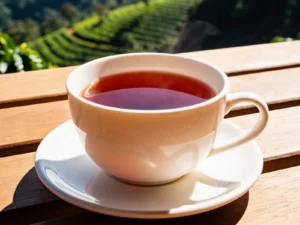
Zumbani tea is a drink from Zimbabwe: herbal infusion of fever-tea leaves, camphor-scented and drunk hot. Lippia javanica has long been a Zimbabwean home remedy for colds; demand surged nationally during the COVID-19 pandemic.
How long does Zumbani tea take to make?
Zumbani tea takes 5 minutes of preparation and 15 minutes of cooking. The recipe makes serves 4. It is rated easy to make.
What can I substitute in Zumbani tea?
Yes, within limits. Dried zumbani replaces fresh; use about three tablespoons per litre and expect a slightly flatter flavour. Fresh ginger is the most common addition and gives warmth alongside the camphor. Lemon juice or a strip of peel brightens the infusion considerably. Honey replaces sugar, and many people drink it entirely unsweetened. A little milk softens the camphor edge, though it is less traditional than the other additions. Other southern African herbal teas — rooibos, honeybush, lemongrass — are quite different drinks and not substitutes for the flavour.
What is the most important thing to get right in Zumbani tea?
Check what you are buying is the right plant. Do not forage it without knowing it.