
Ingredients
The juice
- 4 litresfresh sugarcane juice
- pressed from cane
- or 2 kg raw cane sugar
- with 1 litre water
Sometimes added
- a squeeze of lime
- to stop it crystallising
To serve over
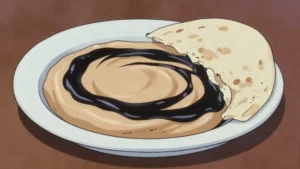
- cuscuz
- steamed maize couscous
- bread or fried dough
- fresh cheese
Or stirred into
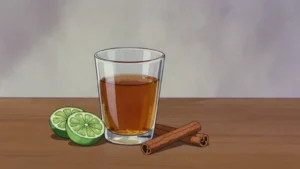
- ponche
- with grogue and lime
Directions
- Keep children well away from the pot. Use a deep pot rather than a shallow one. Have cold water nearby in case of a splash. Use a pot far larger than you need. Never walk away from it on the heat.
- Pour the fresh juice through a fine cloth. Strain it thoroughly before boiling. Pour the strained juice into a deep heavy pot. Fill it no more than halfway up. Starting the boil is straightforward enough. Bring it up to a boil over a high heat.
- Skim off the foam that rises at first. Grey-green scum rises in the first minutes. Keep skimming until it stops rising. Let it boil on for a long time. That takes an hour or two at least. Stir it occasionally as it reduces.
- Stir it constantly near the end. Thin juice does not catch on the pot. Stir constantly once it thickens. It should be dark brown rather than black.
- Take it off before that point. Judging the thickness takes a test. Drop a little onto a cold plate. Let it cool for a few seconds. It should be thick and slow to run. Take it off when it reaches that.
- Squeeze a little lime juice in near the end. Acid stops the sugar crystallising. Take the pot right off the heat. Let it cool right down completely. Hot syrup in a sealed bottle creates pressure.
- Let it cool right down first instead. Pour the cooled syrup into clean bottles. Seal all the bottles up tightly. Very high sugar keeps it from spoiling. Pour it over steamed maize cuscuz. Pour it over bread or fried dough. Or pour it over soft fresh cheese. Mix it with grogue and lime juice. The syrup keeps months in a sealed bottle.
Technique
- Boiling sugar is far hotter than boiling water, sticks to skin and burns very badly: never touch or taste it hot, keep children away, and use a deep pot filled no more than halfway, since cane syrup foams up dramatically and can triple in height. Never walk away from it on the heat.
- Cane juice starts fermenting within hours of pressing because wild yeasts sit on the cane itself, which is why mills boil it on the spot. Strain it through cloth first, since pressed juice carries fibre that burns onto the pot and leaves the syrup gritty.
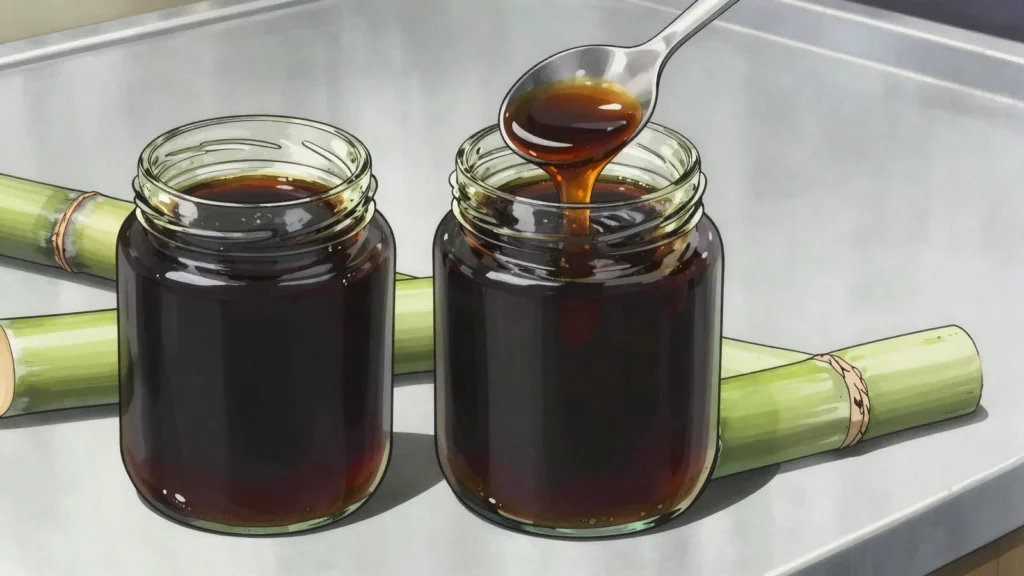
- Judge it by dropping a little onto a cold plate rather than by how it looks hot, since hot syrup is always much thinner than cooled. It should pour thickly like treacle and be dark brown rather than black — black means it has gone too far and tastes burnt.
Substitutions
- Raw cane sugar dissolved in water gives a comparable syrup where fresh cane juice is unavailable, though not quite the same flavour.
- A squeeze of lime near the end stops the sugar crystallising and keeps the syrup smooth.
Variations
- The same trapiche mill and the same juice make grogue when fermented and distilled, and mel de cana when boiled down.
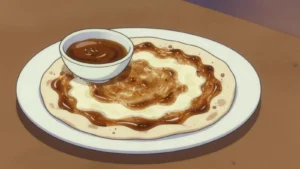
- It is poured over cuscuz, the steamed maize meal eaten at breakfast, and over bread, fried dough or fresh cheese.
- Ponche is roughly two parts grogue to one of the syrup with lime to taste, and is strong despite the sweetness.
History
Boiled down in the same trapiche mills that produce grogue, cane honey sweetens breakfasts and gives ponche its body.
Frequently asked questions
What is Mel de cana?
Mel de cana is a sauce & condiment from Cape Verde: thick dark sugarcane molasses poured over cuscuz or stirred into ponche. Boiled down in the same trapiche mills that produce grogue, cane honey sweetens breakfasts and gives ponche its body.
How long does Mel de cana take to make?
Mel de cana takes 10 minutes of preparation and 2 hours of cooking. The recipe makes about 700 ml. It is rated medium to make.
What can I substitute in Mel de cana?
Yes, within limits. Raw cane sugar dissolved in water gives a comparable syrup where fresh cane juice is unavailable, though not quite the same flavour. A squeeze of lime near the end stops the sugar crystallising and keeps the syrup smooth.
What is the most important thing to get right in Mel de cana?
Keep children well away from the pot. Use a deep pot rather than a shallow one. Have cold water nearby in case of a splash. Use a pot far larger than you need. Never walk away from it on the heat.