
Ingredients
Drained yoghurt
- 1.5 litresthick plain yoghurt, full fat
- 1 tspsalt
For the oil-packed balls
- 1 tspextra salt
- olive oil, to cover
- dried mint or za’atar, optional
To serve
- flatbread
- olive oil and dried mint
- walnuts
Directions
- Stir the salt through the yoghurt. Salting before draining rather than after draws out water faster and seasons the curd all the way through.
- Line a sieve with a double layer of muslin, tip in the yoghurt, gather the corners and tie them.
- Hang it over a bowl in the fridge for 12 to 24 hours. Twelve gives a thick spreadable curd; twenty-four gives something firm enough to roll.
- Do not squeeze the cloth. Pressing forces solids through the weave and gives a grainy, chalky result instead of a smooth one.
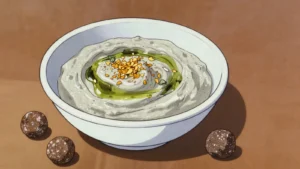
- For the spread, stop here, turn it into a bowl and serve with olive oil, dried mint and walnuts.
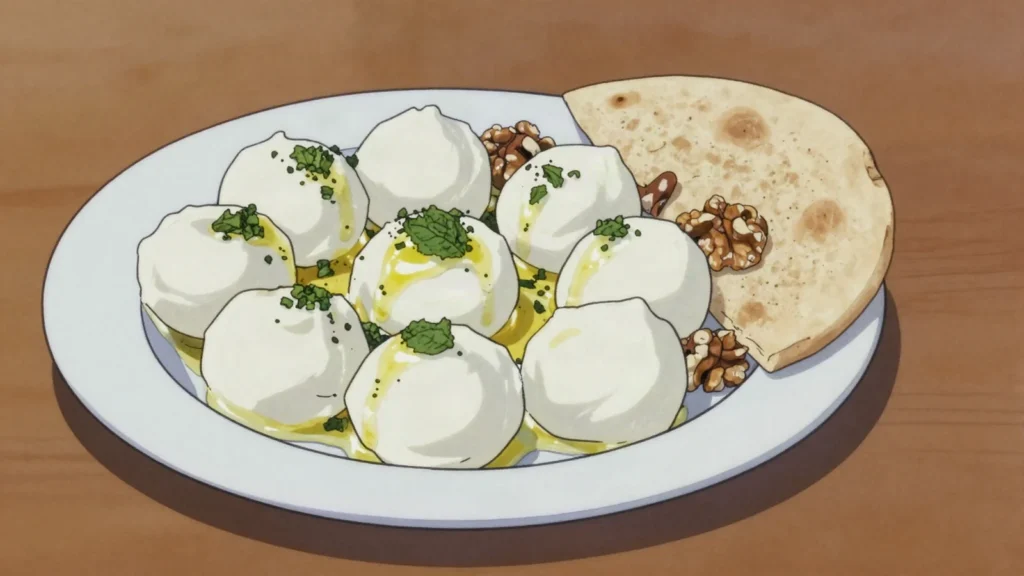
- For the keeping version, work in the extra salt, roll the drained curd into walnut-sized balls with wet hands, and lay them on a rack for a few hours to dry the surfaces.
- Pack the dried balls into a clean jar and cover completely with olive oil, tapping to release air. Keep refrigerated — nomadic practice kept them in a cool larder, but a modern kitchen is warmer, and dairy under oil at room temperature is not something to gamble on.
- They keep two months refrigerated and submerged. Lift them out with a dry spoon.
Technique
- Salt before draining, and never squeeze the cloth. Those two things decide the texture.
- Dry the surfaces of the balls before they go under oil. Wet curd trapped in oil is where a jar goes wrong.
- Keep the whey — it is good in bread and in soup.
Substitutions
- Sheep’s milk yoghurt, which is what the nomadic version uses and which drains richer.
- A clean thin tea towel or a coffee filter in place of muslin.
Variations
- Rolled in za’atar or dried mint before going under oil, which is the Levantine labneh treatment.
- Thinned back with water and salt into a drink, close to doogh.
History
Straining lets summer yoghurt keep; in nomadic practice the balls are stored under oil for winter.
Frequently asked questions
What is Mast-e chekide?
Mast-e chekide is a cheese & dairy from Iran: yoghurt drained to a dense curd, salted and sometimes rolled into oil-packed balls. Straining lets summer yoghurt keep; in nomadic practice the balls are stored under oil for winter.
How long does Mast-e chekide take to make?
Mast-e chekide takes 15 min plus 24 hours draining of preparation and no cooking at all. The recipe makes makes about 500 g from 1.5 litres. It is rated easy to make.
What can I substitute in Mast-e chekide?
Yes, within limits. Sheep’s milk yoghurt, which is what the nomadic version uses and which drains richer. A clean thin tea towel or a coffee filter in place of muslin.
What is the most important thing to get right in Mast-e chekide?
Stir the salt through the yoghurt. Salting before draining rather than after draws out water faster and seasons the curd all the way through.