
Ingredients
Dough
- 500 gplain flour
- 100 gsugar
- 7 ginstant yeast
- ½ tspsalt
- 300 mlwarm water
- 1egg
- 2 tbspoil
- ½ tspgrated nutmeg, optional
To fry
- oil, for deep frying
Directions
- Mix the flour, sugar, yeast, salt and nutmeg, then work in the warm water, egg and oil.
- The dough should be soft and sticky, wetter than a bread dough and too loose to knead on a board.
- Keep it slack. A stiff dough gives heavy, bready makara instead of the light hollow ball you want.
- Beat it hard with a wooden spoon or your hand for 5 minutes rather than kneading it.
- Cover and prove in a warm place for 1 hour 30 minutes, until doubled and full of bubbles.
- Wait for the bubbles. Under-proved dough sinks in the oil and cooks into a solid lump.
- Heat the oil to 170°C (340°F) in a deep pan.
- Wet your hand, take a handful of dough and squeeze a ball out between your thumb and forefinger, scooping it off with a wet spoon into the oil.
- Keep your hand and the spoon wet throughout. Dry hands make the sticky dough impossible to shape and every ball comes out ragged.
- Fry a few at a time, turning them, for 4 to 5 minutes until deep golden all over.
- Moderate heat and patience. Fierce oil browns the outside in a minute and leaves a wet raw centre, which is the single most common failure.
- They will turn themselves over as one side cooks, and nudging them keeps the colour even.
- Drain them on a rack so the steam escapes instead of softening the crust.
- Break one open to check the first batch before frying the rest.
- Eat them warm, plain or rolled in sugar.
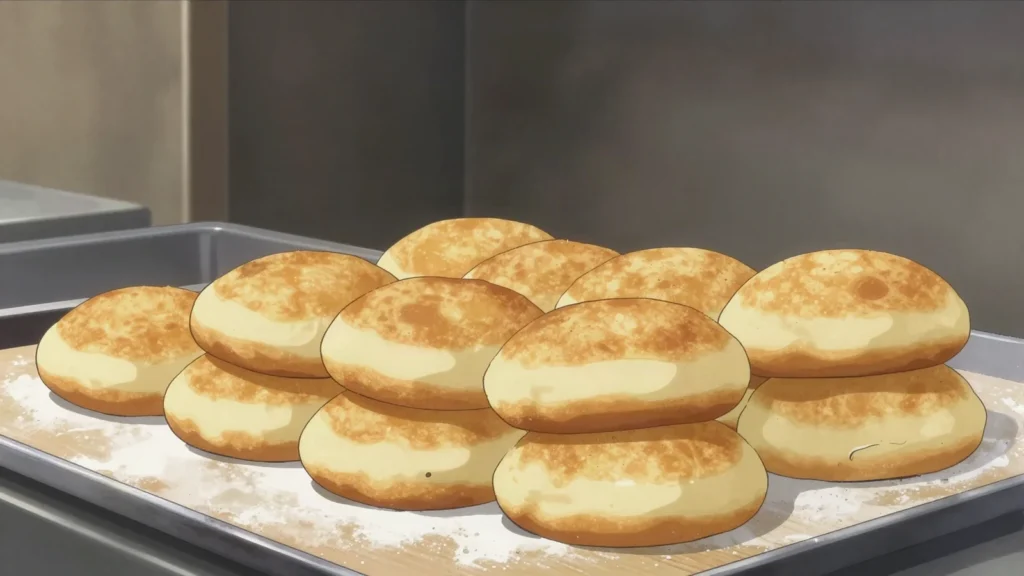
- They are sold at markets and taxi stands across the Central African Republic, made fresh through the morning and eaten out of hand.
- They belong to the same wide family as West African puff-puff, Nigerian bofrot and East African mandazi, all fried leavened dough sold on the street.
Technique
- They are best within an hour of frying and go tough by evening.
- Nutmeg is common but not universal, and some cooks use none.
- The dough can be proved overnight in the fridge for a slightly more developed flavour.
Substitutions
- Coconut milk for part of the water, which enriches them.
- Fresh yeast, using about 20 g.
Variations
- Puff-puff, the West African version.
- With banana mashed into the dough.
- Rolled in cinnamon sugar.
History
Fried dough balls sold at markets and taxi stands, the Central African branch of the West African beignet and puff-puff tradition.
Frequently asked questions
What is Makara?
Makara is a bread & pastry from Central African Republic: fried leavened dough rounds sold at markets. Fried dough balls sold at markets and taxi stands, the Central African branch of the West African beignet and puff-puff tradition.
How long does Makara take to make?
Makara takes 20 min plus 1 hr 30 min rising of preparation and 25 min of cooking. The recipe makes about 30. It is rated easy to make.
What can I substitute in Makara?
Yes, within limits. Coconut milk for part of the water, which enriches them. Fresh yeast, using about 20 g.
What is the most important thing to get right in Makara?
Keep it slack. A stiff dough gives heavy, bready makara instead of the light hollow ball you want.