
Ingredients
Dough
- 500 gplain flour
- 7 gdried yeast
- 1 tspsugar
- 1 tspsalt
- 300 mlwarm water or matsoni thinned with water
- 2 tbspoil
Filling
- 400 gdried red kidney beans, soaked, or 800 g cooked
- 1onion, finely chopped
- 50 gbutter or bacon fat
- 1 tspground coriander seed
- 1 tspblue fenugreek, utskho suneli
- 1 tspdried marigold, imeretian saffron
- 1 tspground summer savory
- salt and black pepper
Sometimes
- 100 gsmoked bacon or ham, finely chopped
To finish
- melted butter for brushing
To serve
- hot, torn by hand, with pickles
Directions
- Cook them well past tender, since the filling is mashed and any firm bean leaves an unpleasant hard fleck. Now a genuine safety point about dried kidney beans.
- Soak dried beans for at least five hours, discard the soaking water, and then boil them hard for at least ten minutes before reducing to a simmer. That vigorous initial boil is essential and is not the same as a gentle simmer, which is not hot enough to destroy the lectin reliably.
- Fry the onion gently in butter or bacon fat until soft and sweet, which takes ten minutes. Cook the onion properly rather than briefly, since it is the main flavour alongside the spices. Add the drained beans and mash them coarsely with a fork or a potato masher.
- Mash it coarsely rather than blending it smooth, since some texture is wanted and a purée is claggy. Season the filling firmly and taste it now. Season it more heavily than seems right, since the bland dough around it will mute everything considerably. Let the filling cool completely before it goes anywhere near the dough.
- Warm filling melts the dough and makes it impossible to seal, and it also releases steam that bursts the bread open. It should be thick enough to hold its shape in a ball. Mix the flour, yeast, sugar and salt, then add warm water and oil to make a soft dough. Knead for eight to ten minutes until smooth and elastic. Let it rise, covered, until doubled, which takes about an hour and a half.
- Divide the dough into four and roll each into a circle about twenty centimetres across. Put a ball of filling in the centre of each. Seal it thoroughly with no gaps, since any opening lets filling escape and the bread deflates. Turn the sealed ball over so the seam is underneath. Roll it out slowly and evenly to a disc about two centimetres thick.
- Press outward from the centre with gentle even pressure, since a heavy hand splits the dough and the filling comes through. If it tears, pinch it closed and carry on. Let the shaped breads rest for fifteen minutes. In a pan, cook them dry over a medium heat for five to six minutes a side until browned and blistered.
- Keep the heat moderate, since a fierce pan burns the outside before the middle heats through. In the oven, bake at 220°C on a hot tray or stone for about twenty minutes. Serve them hot, cut into wedges or torn by hand. They are eaten with pickles and often with a glass of wine, and they are best within an hour of baking.
Technique
- It is built exactly like khachapuri with a bean filling.
- Dried kidney beans must be boiled hard for ten minutes for safety.
- It is traditionally baked for Barbaroba in December.
Substitutions
- Tinned kidney beans, which are already fully cooked.
- Khmeli suneli in place of the individual Georgian spices.
Variations
- With smoked bacon worked into the filling.
- Made as a large single bread to share.
- Made with a mix of beans.
History
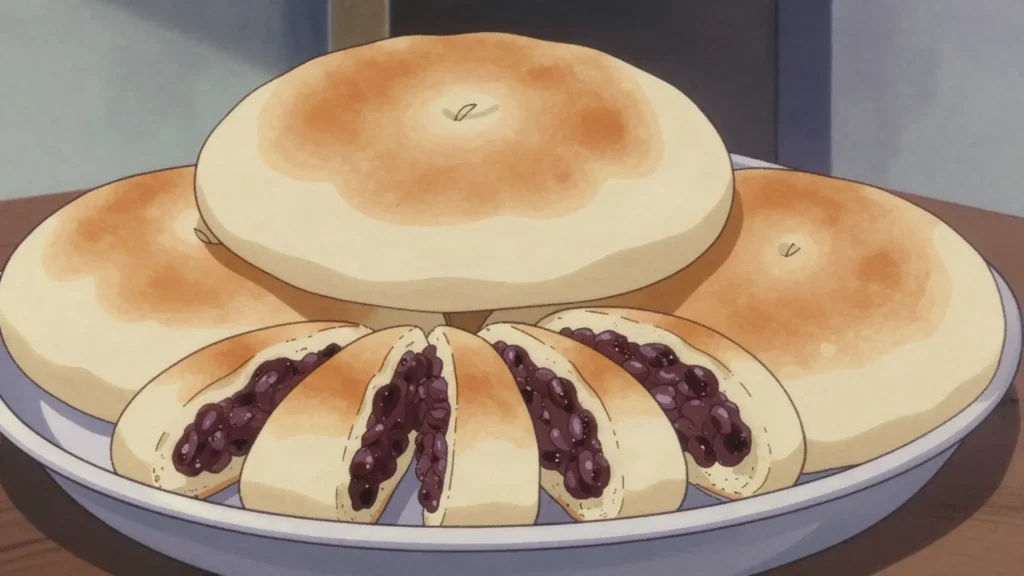
A round, baked bread filled with a spiced, mashed bean paste, documented across Georgia as a traditional filled bread closely related to khachapuri, the country’s more internationally famous cheese-filled bread, though built around beans rather than cheese as its central filling. Its bean filling, seasoned with onion, coriander and Georgian spice blends, reflects the deep importance of bean-based cooking across Georgian cuisine more broadly, seen also in the related dish lobio, and lobiani is particularly associated with Georgian Orthodox Christian fasting periods when the meatless, cheese-free bean filling makes it an appropriate dish during those observances. Lobiani remains a popular traditional bread across Georgia, commonly sold alongside khachapuri at bakeries throughout the country.
Frequently asked questions
What is Lobiani?
Lobiani is a bread & pastry from Georgia: flatbread filled with seasoned bean paste. A round, baked bread filled with a spiced, mashed bean paste, documented across Georgia as a traditional filled bread closely related to khachapuri, the country’s more internationally famous cheese-filled bread, though built around beans rather than cheese as its central filling. Its bean filling, seasoned with onion, coriander and Georgian spice blends, reflects the deep importance of bean-based cooking across Georgian cuisine more broadly, seen also in the related dish lobio, and lobiani is particularly associated with Georgian Orthodox Christian fasting periods when the meatless, cheese-free bean filling makes it an appropriate dish during those observances. Lobiani remains a popular traditional bread across Georgia, commonly sold alongside khachapuri at bakeries throughout the country.
How long does Lobiani take to make?
Lobiani takes 40 min plus 1 hr 30 min rising of preparation and 30 min of cooking. The recipe makes 4 breads. It is rated medium to make.
What can I substitute in Lobiani?
Yes, within limits. Tinned kidney beans, which are already fully cooked. Khmeli suneli in place of the individual Georgian spices.
What is the most important thing to get right in Lobiani?
Fry the onion gently in butter or bacon fat until soft and sweet, which takes ten minutes. Cook the onion properly rather than briefly, since it is the main flavour alongside the spices. Add the drained beans and mash them coarsely with a fork or a potato masher.