
Ingredients
What is in the bottle
- Sorghum (kaoliang) grown on Kinmen island, contracted from local farmers
- Wheat qu, the moulded starter cake that both saccharifies and ferments
- Granite-filtered water from Baoyue spring
- Nothing else: no sugar, no flavouring, no colour
- Alcohol by volume: 58 percent for the standard white bottle, 38 percent for the softer one
To serve at a banquet
- 20 mlper person in a tiny porcelain or glass cup, filled to the brim
- the bottle kept at room temperature, never chilled
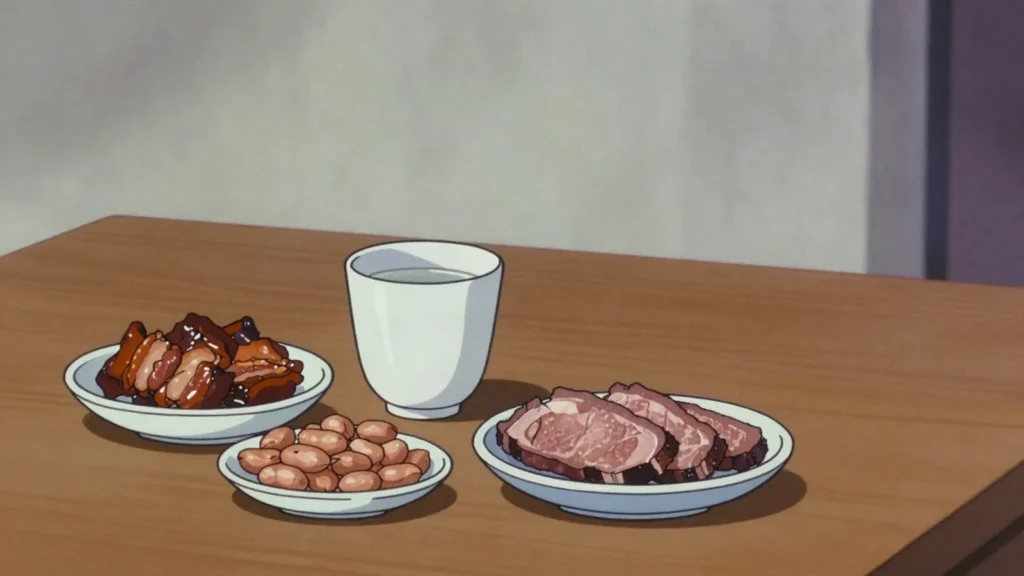
- plenty of food on the table: braised dishes, salted peanuts, noodles
- a phrase to toast with: gan bei, dry the cup
Directions
- Know what it is: Kinmen Kaoliang has been distilled on Kinmen, the island group a few kilometres off the Chinese coast, since 1952, when General Hu Lien set up a distillery to give the garrison’s farmers a cash crop and the soldiers a drink.
- Sorghum is steamed, cooled and mixed with crushed wheat qu, a brick of wheat colonised by moulds and yeasts, which converts starch to sugar and ferments it in one step.
- The mash is fermented solid-state, damp rather than liquid, in jars or cement-lined pits for about a week, which is what gives kaoliang its intense, sharp, slightly sour aromatic character.
- The fermented grain is loaded into a steam retort and distilled; the heads and tails are cut away and only the heart is kept.
- The spirit is cut with granite-filtered spring water and rested in large ceramic jars, many of them in tunnels blasted into the island’s granite during the artillery years, where the temperature is naturally stable.
- Ageing softens the fierce edge; the standard white bottle rests months, while aged and vintage expressions rest years and cost many times more.
- To drink it, pour small: 20 ml in a thumb-sized cup, at room temperature, never over ice and never diluted.
- Toast before every sip. Nobody drinks kaoliang alone or between toasts; you catch someone’s eye, say gan bei, drain the cup and show the empty base.
- Eat continuously while drinking. At 58 percent it is punishing on an empty stomach, and the whole ritual assumes a table covered in food.
Technique
- Kinmen Kaoliang is a baijiu, and specifically a light-aroma (qing xiang) style, cleaner and less funky than the soy-sauce-aroma baijius of Guizhou. Taiwanese drinkers regard it as the national spirit for banquets and weddings.
- The distillery is owned by the Kinmen county government and is the island’s economic backbone, funding public services on an island that spent decades under bombardment.
- Never sip it like whisky. The aroma is designed to be met in one swallow followed immediately by food, and nosing it slowly mostly delivers ethanol.
Substitutions
- Outside Taiwan, Kinmen Kaoliang is sold by Chinese grocers; another light-aroma baijiu such as a Fenjiu-style spirit fills the same role.
- The 38 percent bottle is the honest option if 58 percent is too much, and it is what many Taiwanese hosts now put on the table.
Variations
- Baijin Long, the aged white gold expression, rounder and less hot.
- Commemorative bottlings in artillery-shell shaped ceramic, a Kinmen speciality.
- Kaoliang splashed into hotpot broth or used to perfume braises, a common Taiwanese kitchen use.
History
Founded in 1952 under garrison commander Hu Lien, the Kinmen distillery turned islanders’ sorghum into liquor and still funds the county budget.
Frequently asked questions
What is Kinmen Kaoliang?
Kinmen Kaoliang is a wine & spirit from Taiwan: fierce clear sorghum liquor from the frontline islands, poured at every banquet. Founded in 1952 under garrison commander Hu Lien, the Kinmen distillery turned islanders’ sorghum into liquor and still funds the county budget.
How long does Kinmen Kaoliang take to make?
Kinmen Kaoliang takes 5 min of preparation and 6 months to several years in ceramic jars of cooking. The recipe makes 1 bottle, 600 ml. It is rated easy to make.
What can I substitute in Kinmen Kaoliang?
Yes, within limits. Outside Taiwan, Kinmen Kaoliang is sold by Chinese grocers; another light-aroma baijiu such as a Fenjiu-style spirit fills the same role. The 38 percent bottle is the honest option if 58 percent is too much, and it is what many Taiwanese hosts now put on the table.
What is the most important thing to get right in Kinmen Kaoliang?
The mash is fermented solid-state, damp rather than liquid, in jars or cement-lined pits for about a week, which is what gives kaoliang its intense, sharp, slightly sour aromatic character.