
Ingredients
Coffee
- 80 ggreen coffee beans, washed
- 1 litrewater
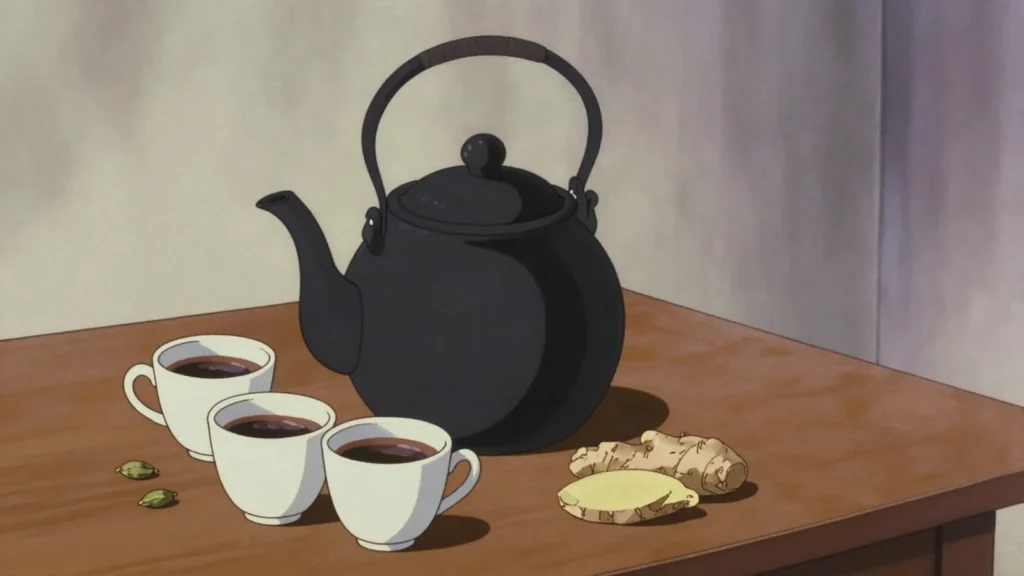
- 3cm fresh ginger, peeled and sliced, or 1 tsp dried ginger
- 4cloves, optional
- 3cardamom pods, optional
- 1 tspcinnamon bark, optional
Equipment and table
- 1jebena, a round clay pot with a long neck and spout
- a plug of palm fibre or a wad of cotton for the spout
- a mihmasa, a shallow iron roasting pan
- a fandik or heavy mortar and pestle
- 6finjan, small handleless cups on a tray
- 2 tbspsugar per cup, or to taste
- a piece of bakhoor incense on coals
Directions
- Set the charcoal going, put incense on the coals and lay out the tray. In Sudan the whole point is that this happens in front of the guests, not in a kitchen.
- Rinse the green beans in cold water and drain them.
- Roast the beans in the iron pan over the charcoal, shaking and stirring constantly, for 10 to 15 minutes. They crackle, then pale, then turn tan, then dark brown and start to smoke and shine with oil.
- Carry the pan around the guests so everyone can wave the smoke towards themselves; this is the greeting, and it also tells you the roast smells sweet rather than burnt.
- Tip the hot beans into the mortar with the ginger and any other spices and pound to a coarse, damp grind, not a powder.
- Bring the water to the boil in the jebena over the coals, then spoon in the grounds, stir once and let it come up to a boil.
- Watch it: when the crema climbs the neck, lift the jebena off the heat and let it settle, then return it and repeat once or twice more, never letting it boil over.
- Rest the pot 3 minutes so the grounds sink, plug the spout with the fibre filter, and pour from a height in one continuous stream into all six cups in a single pass, so every cup gets the same strength.
- Serve with plenty of sugar already in the cup, and pour a second and third round from the same pot for anyone still sitting.
Technique
- Ginger is the Sudanese signature. Ethiopian and Eritrean jebena ceremonies use the same clay pot but rarely the ginger, and Sudanese coffee is also ground much more coarsely.
- Pouring from a height and in one continuous pass is not showmanship: it aerates the coffee and it prevents the last cup being the strongest.
- Refusing the coffee, or leaving before the second round, is read as a snub. The ceremony is a social contract, and it can run to a full hour.
Substitutions
- No green beans: use 60 g of the darkest whole roasted beans you can find, coarsely pounded with the ginger, and skip the roasting step. The aroma of the roast is lost, which is half of the ritual.
- No jebena: a small unglazed clay pot or a stovetop pan and a fine sieve will brew it, though clay gives a rounder, less metallic cup.
Variations
- Jebena with cardamom and cinnamon, common in eastern Sudan and towards the Red Sea.
- Gahwa saada, unsweetened and served at funerals.
- The three rounds are named in Ethiopian practice as abol, tona and baraka, and Sudanese hosts keep the same rhythm.
History
Brewed in the long-necked jebena pot of the Nile valley and Horn, often perfumed with ginger and cardamom and shared in rounds.
Frequently asked questions
What is Jebena coffee?
Jebena coffee is a drink from South Sudan: spiced coffee brewed in a clay pot and poured through a grass filter. Brewed in the long-necked jebena pot of the Nile valley and Horn, often perfumed with ginger and cardamom and shared in rounds.
How long does Jebena coffee take to make?
Jebena coffee takes 10 min of preparation and 40 min of cooking. The recipe makes 6 small cups. It is rated medium to make.
What can I substitute in Jebena coffee?
Yes, within limits. No green beans: use 60 g of the darkest whole roasted beans you can find, coarsely pounded with the ginger, and skip the roasting step. The aroma of the roast is lost, which is half of the ritual. No jebena: a small unglazed clay pot or a stovetop pan and a fine sieve will brew it, though clay gives a rounder, less metallic cup.
What is the most important thing to get right in Jebena coffee?
Set the charcoal going, put incense on the coals and lay out the tray. In Sudan the whole point is that this happens in front of the guests, not in a kitchen.