
Ingredients
Salt
- 200 gcoarse salt
Fresh
- 2whole heads of garlic, peeled
Dried spices
- 3 tbspground coriander seed
- 2 tbspground blue fenugreek, utskho suneli
- 2 tbspground dried marigold, imeretian saffron
- 1 tbspdried summer savory, kondari
- 1 tbspdried dill seed, optional
- 1 tspcaraway seed, ground
- cayenne or dried red chilli, to taste
Equipment
- a mortar and pestle, or a food processor
To serve
- on tomatoes, potatoes, meat, eggs, anything
Directions
- Peel the garlic and pound it with a little of the salt into a paste. Pound it with salt rather than chopping it. The salt acts as an abrasive and the garlic breaks down into a smooth paste that distributes evenly.
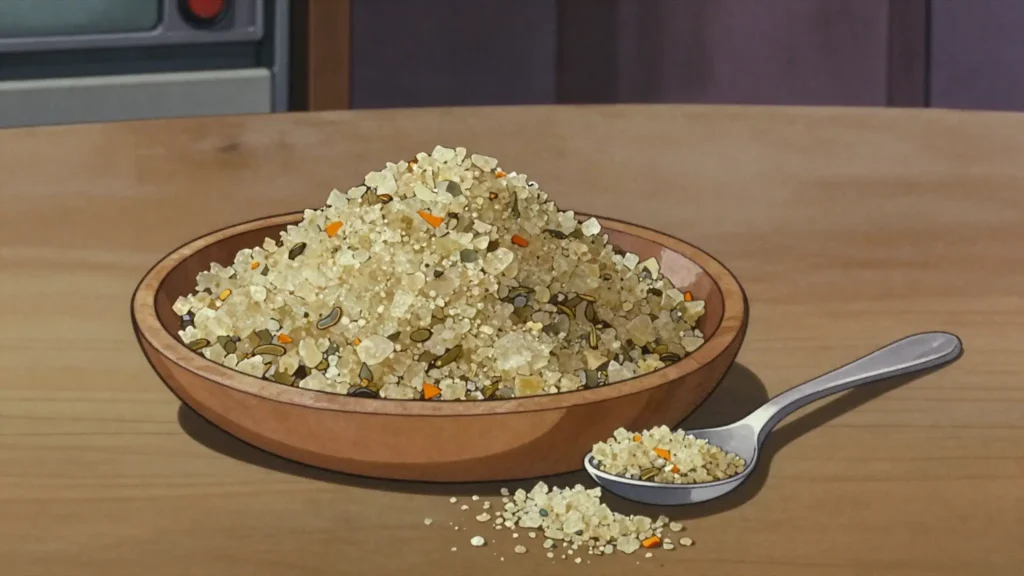
- Work the garlic paste right through the salt until every grain is coated and slightly damp. The salt should turn faintly moist and take on the garlic completely, which is what makes this a single ingredient rather than a mixture.
- Add them gradually rather than all at once, which lets you taste and adjust the balance as you go. Grind the whole spices fresh if you can, since ground spice loses most of its aroma within months.
- Add the cayenne last and cautiously. Svan salt is warm rather than fiercely hot, and the chilli should sit behind the herbs rather than in front of them.
- Spread it on a tray and leave it somewhere airy for a day or two, stirring occasionally. Break up any lumps as it dries. It can also be dried in an oven on its lowest setting with the door ajar, for an hour or two.
- Sprinkle it on sliced tomatoes and cucumbers, which is the classic and simplest use. Use it on boiled and roast potatoes, on grilled meat, on fried eggs, on beans and in soups.
- Use it as you would salt rather than as a spice blend, since it is salt and it seasons at the same time.
Technique
- Blue fenugreek and dried marigold are essential and are sold in Georgian shops.
- Every family has its own proportions and they vary considerably.
- It is used as a salt rather than as a finishing spice.
Substitutions
- Ordinary fenugreek in place of blue, used sparingly, accepting more bitterness.
- There is no substitute for dried marigold, and turmeric is not one.
Variations
- Made hotter, with more dried chilli.
- With dried dill seed, which some families include.
- Made without chilli at all.
History
Highland Svaneti stretched costly imported salt with dried herbs; it is now sprinkled on tomatoes, potatoes and meat.
Frequently asked questions
What is Svanuri marili?
Svanuri marili is a sauce & condiment from Georgia: svanetian salt ground with garlic, coriander, blue fenugreek and marigold. Highland Svaneti stretched costly imported salt with dried herbs; it is now sprinkled on tomatoes, potatoes and meat.
How long does Svanuri marili take to make?
Svanuri marili takes 30 min of preparation and no cooking at all. The recipe makes about 400 g. It is rated easy to make.
What can I substitute in Svanuri marili?
Yes, within limits. Ordinary fenugreek in place of blue, used sparingly, accepting more bitterness. There is no substitute for dried marigold, and turmeric is not one.
What is the most important thing to get right in Svanuri marili?
Peel the garlic and pound it with a little of the salt into a paste. Pound it with salt rather than chopping it. The salt acts as an abrasive and the garlic breaks down into a smooth paste that distributes evenly.