
Ingredients
The batter
- 250 gchickpea flour (harina de garbanzo)
- 750 mlwater, at room temperature
- 1 tspfine salt
- 4 tbspextra virgin olive oil, plus 3 tbsp for the tray
- 1 tspcoarsely ground black pepper
To serve
- More black pepper
- A slice of pizza de muzzarella, to eat it on top of
Directions
- Whisk the chickpea flour into the water gradually, not the other way round, breaking every lump. Lumps do not dissolve later and bake into dry pockets.
- Add the salt and 4 tbsp of the olive oil and whisk again until the batter is the consistency of single cream.
- Cover and rest at room temperature at least 4 hours, or overnight in the fridge. This hydrates the flour and lets the raw, chalky legume taste fade.
- Skim off any foam that has risen to the surface; leaving it makes a bitter crust.
- Heat the oven to its maximum, 250°C (475°F) or higher, with a heavy black steel or cast-iron tray inside for 15 minutes. Fainá needs a fierce oven, which is why pizzerias make it and home cooks often struggle.
- Pour the remaining 3 tbsp oil onto the hot tray, swirl it, then pour in batter to a depth of no more than 6–7 mm. Any deeper and the middle stays wet.
- Bake 20–25 minutes until the surface is deep gold with dark blistered patches and the edges have pulled away and crisped.
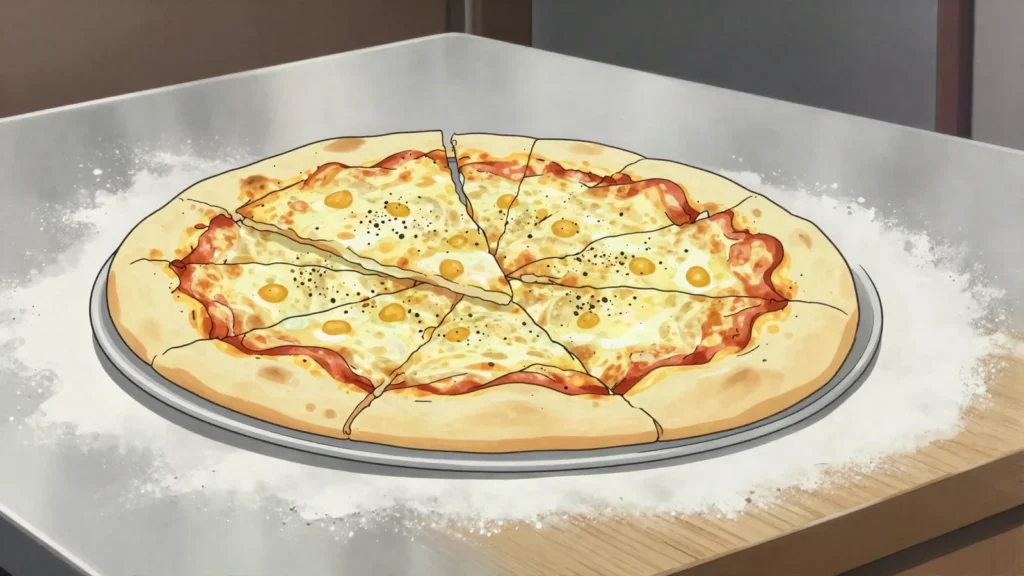
- Grind black pepper over generously, cut into wedges and serve hot. In Buenos Aires you lay a wedge on top of a slice of pizza and eat the two together, which is called a caballo.
Technique
- Fainá is the Genoese farinata, brought by Ligurian immigrants to Buenos Aires and Montevideo in the nineteenth century. In Italy it is a dish in its own right; in Argentina it became a topping for pizza.
- The resting time is what separates good fainá from a chalky one. Chickpea flour needs hours to hydrate fully.
- The tray must be hot before the batter goes in, or the base steams instead of frying in the oil.
- Black pepper is generous and traditional. Salt lightly, pepper heavily.
Substitutions
- No chickpea flour: there is no honest substitute, since the flour is the dish. Do not use besan blended with wheat flour, which turns rubbery.
- A well-seasoned cast-iron pan will do if you have no steel tray; use half the batter for a thicker Ligurian-style round.
Variations
- Fainá porteña, plain, peppery and eaten on top of pizza.
- Fainá con muzzarella, baked with cheese on top and sold as a slice.
- The Ligurian farinata, made thinner and with rosemary.
History
A thin, baked flatbread made from chickpea flour, olive oil and water, developed in Argentina reflecting significant Genoese Italian immigrant influence, since the dish traces directly to farinata, a similar chickpea flatbread from the Liguria region of Italy, brought to Argentina by Italian immigrants during the late 1800s and early 1900s. Its simple, naturally gluten-free preparation, relying entirely on chickpea flour rather than wheat, reflects that specific Ligurian culinary tradition, and fainá is traditionally served in Argentina placed directly on top of a slice of pizza, a specifically Argentine serving custom called a la piedra. Fainá remains a popular accompaniment to pizza across Buenos Aires and the wider Río de la Plata region.
Frequently asked questions
What is Fainá?
Fainá is a bread & pastry from Argentina: chickpea flatbread slice laid atop pizza, Genoese legacy. A thin, baked flatbread made from chickpea flour, olive oil and water, developed in Argentina reflecting significant Genoese Italian immigrant influence, since the dish traces directly to farinata, a similar chickpea flatbread from the Liguria region of Italy, brought to Argentina by Italian immigrants during the late 1800s and early 1900s. Its simple, naturally gluten-free preparation, relying entirely on chickpea flour rather than wheat, reflects that specific Ligurian culinary tradition, and fainá is traditionally served in Argentina placed directly on top of a slice of pizza, a specifically Argentine serving custom called a la piedra. Fainá remains a popular accompaniment to pizza across Buenos Aires and the wider Río de la Plata region.
How long does Fainá take to make?
Fainá takes 10 min of preparation and 25 min, plus 4 hr resting of cooking. The recipe makes 1 tray, 8 slices. It is rated easy to make.
What can I substitute in Fainá?
Yes, within limits. No chickpea flour: there is no honest substitute, since the flour is the dish. Do not use besan blended with wheat flour, which turns rubbery. A well-seasoned cast-iron pan will do if you have no steel tray; use half the batter for a thicker Ligurian-style round.
What is the most important thing to get right in Fainá?
Whisk the chickpea flour into the water gradually, not the other way round, breaking every lump. Lumps do not dissolve later and bake into dry pockets.