
Ingredients
Dough
- 500 gplain flour
- 500 ghoney
Equipment
- carved wooden moulds
Directions
- There are two ingredients and there is nothing else at all. No fat, no eggs, no sugar, no raising agent and no water.
- Warm the honey until it runs freely but is nowhere near hot.
- Pour it onto the flour and work the two together into a very stiff, dense dough.
- Knead it hard. It will fight you, and it is supposed to: this is closer to working clay than to making pastry, and the resistance is the point.
- Let the dough rest for several hours or overnight, so the flour hydrates fully and the mass becomes workable.
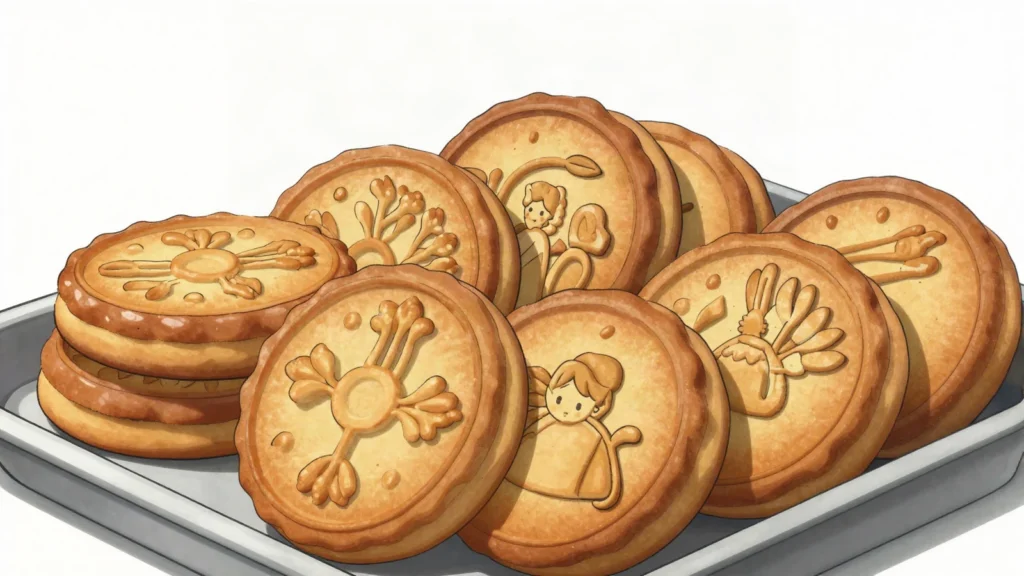
- Press pieces firmly into carved wooden moulds, forcing the dough right into every detail with your thumbs.
- Turn each one out and set it on a baking tray.
- Bake at 250°C (480°F), or as hot as your oven will go, for 8 to 10 minutes, until deep brown at the edges.
- Cool completely, at which point it will be genuinely rock hard.
- That hardness is not a fault. A couque de Dinant is sucked or broken into shards rather than bitten, and people have chipped teeth on them, so warn anyone meeting one for the first time.
- It keeps for years, which is exactly the point. The story goes that it dates from the 1466 sack of Dinant, when townspeople baked their remaining flour and honey into something that would last.
Technique
- Two ingredients and a mould. The craft is entirely in the kneading and the carving.
- The moulds are collectable objects in their own right in Wallonia, some of them centuries old.
- The Couque de Rins from nearby is softer and made with a little sugar, if you would rather eat than admire.
Substitutions
- A silicone mould or a springerle board will take an impression, though not as crisply as carved wood.
- There is no substitute for the honey. It is half the recipe by weight.
Variations
- Couque de Rins, softer and edible without dental risk.
- Made thin, which bakes harder still and keeps longer.
- Left plain and unmoulded, simply scored, if you have no mould.
History
Said to date from the 1466 sack of Dinant, when townspeople baked their remaining flour and honey into keeping biscuits.
Frequently asked questions
What is Couque de Dinant?
Couque de Dinant is a bread & pastry from Belgium: rock-hard honey and flour biscuit pressed in carved wooden moulds. Said to date from the 1466 sack of Dinant, when townspeople baked their remaining flour and honey into keeping biscuits.
How long does Couque de Dinant take to make?
Couque de Dinant takes 30 min plus overnight resting of preparation and 10 min of cooking. The recipe makes 8 biscuits. It is rated medium to make.
What can I substitute in Couque de Dinant?
Yes, within limits. A silicone mould or a springerle board will take an impression, though not as crisply as carved wood. There is no substitute for the honey. It is half the recipe by weight.
What is the most important thing to get right in Couque de Dinant?
Knead it hard. It will fight you, and it is supposed to: this is closer to working clay than to making pastry, and the resistance is the point.