
Ingredients
Cheese
- 1 kgareesh cheese (fresh acid-set curd made from soured milk), broken into pieces
- or 5 L whole milk soured to make your own areesh
Brine and flavourings
- 1 Lwhey or water
- 200 gcoarse salt (about 15–20% of the finished weight of the jar contents)
- 4 tbspfenugreek seeds (helba), lightly cracked
- 3 tbspchilli flakes or 6 dried red chillies
- 2 tbspblack peppercorns
- 2 tbspground coriander
- 100 gmish tarry, an old batch, as a starter (optional but traditional)
Directions
- If you are starting from milk, leave whole milk at room temperature until it sours and separates into laban rayeb, then hang it in a cloth to drain for 12 hours. The resulting fresh acid-set curd is areesh, and because it is set by acid rather than rennet it is naturally vegetarian.
- Break the areesh into rough walnut-sized pieces and spread them on a tray. Salt them heavily and leave 24 hours in a cool place to draw out moisture; pour off the liquid that collects.
- Boil the whey or water with 150 g of the salt, then cool it completely. A hot brine would cook the curd; a weak brine is a safety failure.
- Sterilise a wide-mouthed earthenware jar or a glass jar with boiling water and dry it thoroughly.
- Layer the salted curd into the jar with the fenugreek, chilli, peppercorns and coriander, and the spoonful of old mish if you have it, which carries the established microflora and speeds and steers the ferment.
- Pour over the cooled brine so everything is submerged by at least 3 cm, and weight the curd down under a small plate or a brine-filled bag so nothing sits above the liquid.
- Seal loosely so gases can escape, and keep the jar in a dark place at a steady 20–30°C (70–85°F). Egyptian households leave it in a store room or bury it, and mish is often kept going for years, topped up with fresh curd.
- Leave at least 12 months. Over that time the curd dissolves into a thick, grainy, amber-brown paste that smells sharply of ammonia and fenugreek, with a taste somewhere between very old blue cheese and miso.
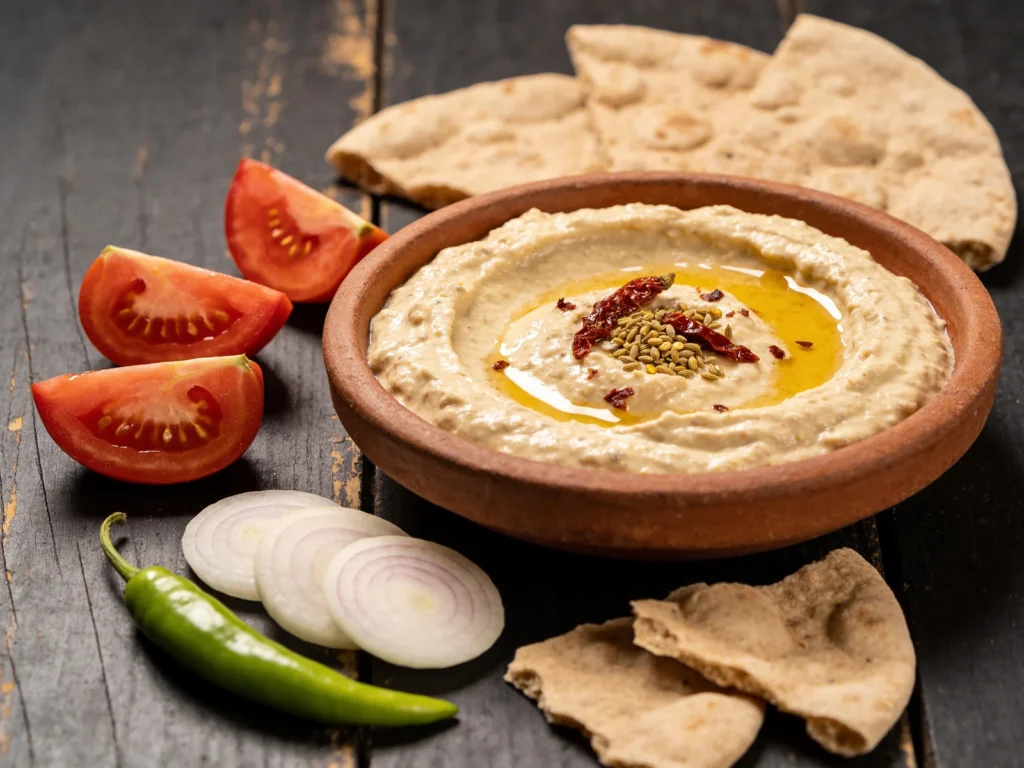
- Serve a small amount in a shallow dish, dressed with a little olive oil, alongside tomato, raw onion, green chilli and baladi bread. It is eaten at breakfast in small, salty scrapes, never in spoonfuls.
Technique
- Salt is the safety mechanism here. Mish is preserved by a salt concentration of 15 per cent or more in the brine plus complete submersion, which suppresses pathogens while allowing salt-tolerant bacteria and yeasts to work. Never reduce the salt to make it milder, and discard any batch where curd has been left dry above the brine and grown fuzzy mould.
- Mish is one of the oldest continuously made foods in the world; pots of similar salted fermented curd have been excavated from ancient Egyptian sites, and rural families still keep a family jar going for decades, the old batch seeding the new.
- Fenugreek is not a garnish. It contributes both the characteristic bitter-maple aroma and antimicrobial compounds that help the ferment stay clean.
Substitutions
- No areesh: drained full-fat cottage cheese or a firm salted labneh can be used, though the ferment is less predictable and needs watching in the first month.
Variations
- Mish with a few pieces of old dry bread added to the jar, a village practice said to feed the ferment.
- A young mish of only three months, milder and paler, spread on bread with tomato.
History
A village crock is never emptied: new cheese and brine are added to the old, and the sharp, ammoniac paste is eaten with bread and green onions.
Frequently asked questions
What is Mish?
Mish is a cheese & dairy from Egypt: salted cheese fermented in whey with fenugreek and chili for a year. A village crock is never emptied: new cheese and brine are added to the old, and the sharp, ammoniac paste is eaten with bread and green onions.
How long does Mish take to make?
Mish takes 1 hr of preparation and 12 months fermenting of cooking. The recipe makes about 1 kg fermented cheese. It is rated hard to make.
What can I substitute in Mish?
Yes, within limits. No areesh: drained full-fat cottage cheese or a firm salted labneh can be used, though the ferment is less predictable and needs watching in the first month.
What is the most important thing to get right in Mish?
If you are starting from milk, leave whole milk at room temperature until it sours and separates into laban rayeb, then hang it in a cloth to drain for 12 hours. The resulting fresh acid-set curd is areesh, and because it is set by acid rather than rennet it is naturally vegetarian.


