
Ingredients
Dough
- 600 gplain flour
- 1 tspsalt
- 350 mlwarm water
Layering
- 300 gghee or clarified butter, melted, plus more for brushing
To serve
- honey
- molasses and tahini
- cheese
Directions
- Mix the flour, salt and water into a very soft, slack dough and knead for 10 minutes.
- Divide into eight balls, coat each thoroughly in melted ghee, and rest them in a tray of ghee for at least an hour.
- Resting in fat is what makes the stretching possible. The dough relaxes and the ghee lubricates it, and without both it tears the instant you pull.
- Oil a very large smooth surface, ideally an entire table.
- Take a ball, press it out, then stretch it with the backs of your hands and by swinging it, until it becomes a vast translucent sheet you could read newsprint through.
- Get it thinner than seems possible. Feteer is judged on the number of layers, and an Egyptian baker’s single sheet will cover a whole table.
- Brush the sheet with more ghee, then fold it into a square: sides in first, then top and bottom.
- Set it aside and repeat with the remaining balls.
- Stack two folded squares, brush with ghee, and press or roll them out again into a larger square.
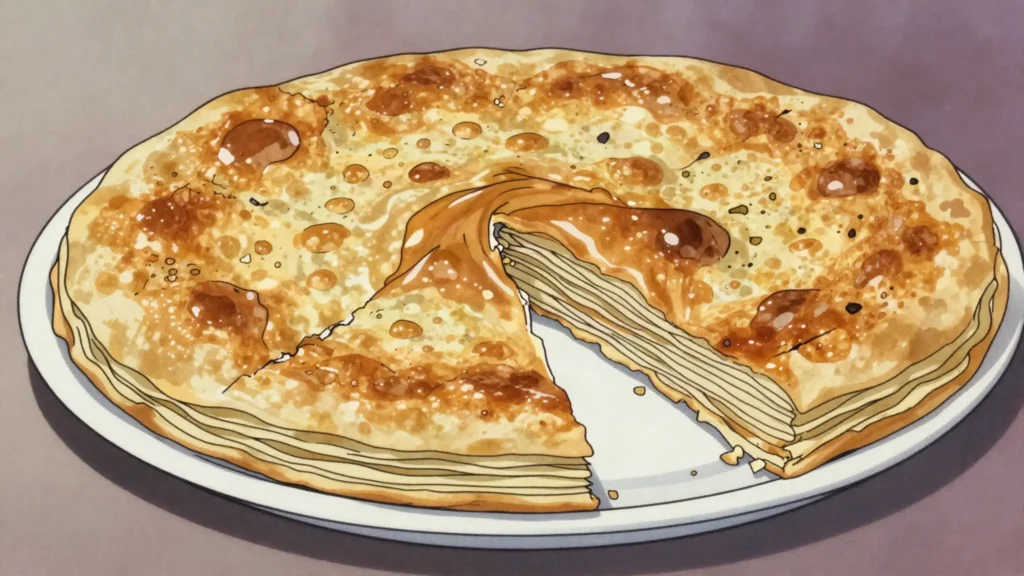
- Repeat that fold-and-stack twice more, which is what multiplies the layers into the hundreds.
- Bake in a very hot oven, at least 250°C (480°F), for 15 to 20 minutes, until puffed, golden and visibly flaking apart.
- Brush with ghee straight out of the oven.
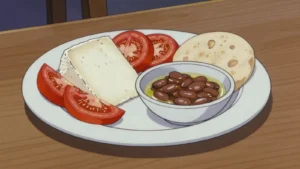
- Serve torn, with honey, with molasses and tahini, or with cheese, which are the three standard Egyptian ways.
- It is nicknamed the pharaohs’ pie, since layered offering breads appear in temple reliefs, and villagers bake it to honour a guest and for religious feasts.
Technique
- Ghee rather than butter. The water in butter steams and welds the layers together where ghee keeps them apart.
- It is genuinely difficult and worth attempting anyway. Even a clumsy one is very good.
- The sweet and savoury versions use the same pastry, and the filling goes in at the final fold if you want one.
Substitutions
- A large oiled plastic sheet on the table, if your worktop is rough or small.
- Clarified butter made at home by melting butter and pouring off the solids.
Variations
- Filled with cheese and cream at the last fold.
- Filled with spiced minced meat, as feteer lahma.
- Made small, as individual pastries.
History
A flaky, layered pastry, made by stretching dough extremely thin and folding it repeatedly with butter or ghee before baking, documented across Egypt for many generations as a distinctive traditional bread, often described as an Egyptian version of a croissant or puff pastry given its similarly flaky, buttery layers, though developed independently within Egyptian baking tradition. Its labor-intensive preparation, requiring the dough to be stretched paper-thin and folded many times to build up its characteristic flaky layers, demands specialized skill traditionally associated with dedicated feteer bakers. Feteer meshaltet remains a beloved traditional Egyptian pastry, eaten either plain, filled with savory ingredients, or topped with honey and sweet fillings as a dessert.
Frequently asked questions
What is Feteer meshaltet?
Feteer meshaltet is a bread & pastry from Egypt: many-layered buttery flaky pastry, eaten with honey, cheese or savoury fillings. A flaky, layered pastry, made by stretching dough extremely thin and folding it repeatedly with butter or ghee before baking, documented across Egypt for many generations as a distinctive traditional bread, often described as an Egyptian version of a croissant or puff pastry given its similarly flaky, buttery layers, though developed independently within Egyptian baking tradition. Its labor-intensive preparation, requiring the dough to be stretched paper-thin and folded many times to build up its characteristic flaky layers, demands specialized skill traditionally associated with dedicated feteer bakers. Feteer meshaltet remains a beloved traditional Egyptian pastry, eaten either plain, filled with savory ingredients, or topped with honey and sweet fillings as a dessert.
How long does Feteer meshaltet take to make?
Feteer meshaltet takes 45 min plus 1 hr resting of preparation and 20 min of cooking. The recipe makes 4 large pastries. It is rated hard to make.
What can I substitute in Feteer meshaltet?
Yes, within limits. A large oiled plastic sheet on the table, if your worktop is rough or small. Clarified butter made at home by melting butter and pouring off the solids.
What is the most important thing to get right in Feteer meshaltet?
Ghee rather than butter. The water in butter steams and welds the layers together where ghee keeps them apart.