
Ingredients
Caramel
- 200 gcaster sugar
- 60 mlwater
- a squeeze of lemon juice
Custard
- 1 tinsweetened condensed milk, 395 g
- 1 tinevaporated milk, 375 ml
- 5eggs
- 2egg yolks
- 1 teaspoonvanilla extract
- a pinch of salt
- a strip of lime zest, optional
Equipment
- a round metal or ceramic mould
- a deep roasting tin, for the water bath
Directions
- Keep children out of the kitchen while it cooks. Never touch or taste caramel in the pan. Put the sugar and water in a heavy pan. Add the squeeze of lemon juice. The acid helps stop it crystallising.
- Stir over a low heat until the sugar dissolves. Brush the sides of the pan with a wet brush. Once the syrup is clear, stop stirring completely. Swirl the pan gently rather than stirring. It stays clear for several minutes.
- Take it off when it is a deep amber. A black one is burnt and must be thrown away. Pour the hot caramel into the mould. It sets hard within about a minute. Beat the eggs and yolks together in a bowl. Beat them gently rather than whipping air in. Add the condensed milk and whisk it in. Add the evaporated milk, vanilla and salt.
- Whisk it until it is completely smooth. Skim off any foam from the surface. Pour it gently over the set caramel. Baking it needs a proper water bath. Heat the oven to 160C to bake it. Set the mould in a deep roasting tin. Pour hot water into the tin around it.
- Bring the water halfway up the sides of the mould. That water bath keeps the heat gentle and even. Cover the mould loosely with foil. Bake it for about one full hour. Testing it tells you when to stop. Lift the mould out of the water bath. Let it cool to room temperature. Then refrigerate it for at least six hours.
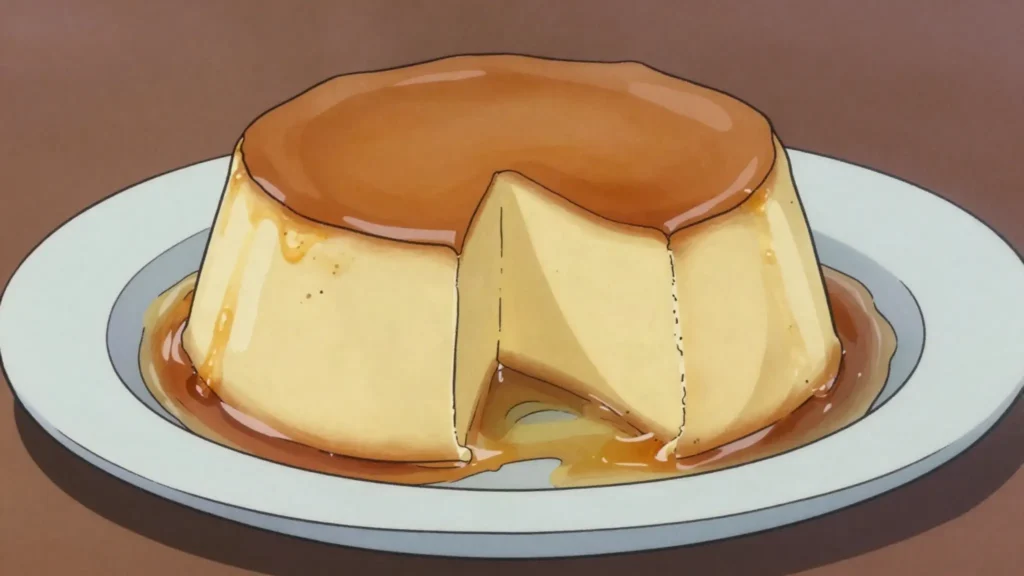
- Set a rimmed serving plate over the top. The plate must have a rim to hold the caramel. Lift the mould away from it slowly. Dip the base in hot water for ten seconds if it sticks. Serving it is done cold in slices.
- Cut it with a knife dipped in hot water. Spoon the caramel from the plate over each slice. It keeps for three days refrigerated.
Technique
- Condensed and evaporated milk are what distinguish the Cuban style from Spanish or French versions made with fresh milk and cream.
- The result is denser and sweeter, and it holds its shape more firmly when turned out.
Substitutions
- Fresh milk and cream can replace the tinned milks with sugar added, though the texture is lighter.
- The lime zest can be replaced with orange or left out entirely.
Variations
- Flan de coco adds coconut milk and grated coconut.
- Flan de queso adds cream cheese for a denser, tangier custard.
- Some households flavour it with a spoonful of rum.
History
A Spanish colonial legacy of the Roman and Iberian baked custard tradition, adopted across Mexico with condensed milk from the 20th century.
Frequently asked questions
What is Flan?
Flan is a dessert from Cuba: caramel-topped baked custard. A Spanish colonial legacy of the Roman and Iberian baked custard tradition, adopted across Mexico with condensed milk from the 20th century.
How long does Flan take to make?
Flan takes 20 minutes of preparation and 1 hour, plus chilling of cooking. The recipe makes serves 8. It is rated medium to make.
What can I substitute in Flan?
Yes, within limits. Fresh milk and cream can replace the tinned milks with sugar added, though the texture is lighter. The lime zest can be replaced with orange or left out entirely.
What is the most important thing to get right in Flan?
Keep children out of the kitchen while it cooks. Never touch or taste caramel in the pan. Put the sugar and water in a heavy pan. Add the squeeze of lemon juice. The acid helps stop it crystallising.