
Ingredients
Starter
- rye sourdough starter, raugas, active
Scald
- 200 gwholegrain rye flour
- 400 mlboiling water
- 1 tbspcaraway seeds, crushed
- 50 grye malt, optional
Dough
- 600 gwholegrain rye flour
- 200 gactive starter
- the cooled scald
- 15 gsalt
- 2 tbsphoney or molasses
- warm water as needed
To finish
- a little water, for glazing
- caraway seeds
To serve
- sliced thin, with butter, cured meat or curd cheese
Directions
- Pour boiling water over the rye flour and caraway and mix it into a thick paste. Keep it warm, around sixty degrees, for four to six hours or overnight. It will taste noticeably sweet when it is ready, which is the enzymes at work.
- Let it cool to lukewarm before it goes into the dough. A rye sourdough starter takes five to seven days to establish from flour and water.
- Mix it thoroughly with a wet spoon or wet hands until combined, and stop. It should be a thick, sticky paste rather than a dough you can handle.
- Cover it and let it rise for four to eight hours at room temperature. It will not double: it rises modestly and the surface develops cracks, which is the sign it is ready.
- Bake at 240°C for the first fifteen minutes, then reduce to 180°C for another hour or more. A large rye loaf needs a long bake and it will look done long before it is.
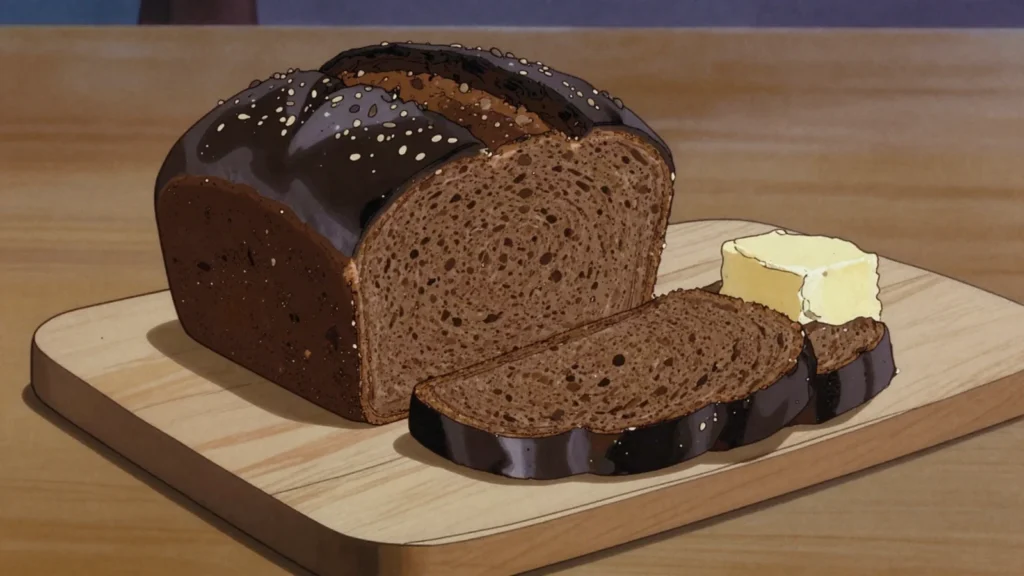
- Brush the loaf with water as it comes out of the oven, which gives the characteristic shine. Do not cut into it for at least twenty-four hours, and forty-eight is better.
- Slice it thinly, since it is very dense. Serve it with butter, with curd cheese, with cured meat or with herring.
Technique
- Rye must be soured, since acidity suppresses the enzymes that would gum the crumb.
- The scald gelatinises starch and gives colour, sweetness and keeping quality.
- Do not cut it for at least a day, since a warm rye loaf is gummy.
Substitutions
- A shop-bought rye starter to save the establishing days.
- Molasses in place of rye malt for colour.
Variations
- With whole caraway seeds through the crumb.
- Baked in a tin, which is easier than free-form.
- Made with a proportion of wheat flour, which is lighter.
History
Rye survives the Lithuanian climate where wheat struggles; loaves were blessed, crossed with a knife before cutting and never discarded.
Frequently asked questions
What is Dark rye bread?
Dark rye bread is a bread & pastry from Lithuania: heavy sour dark rye, the sacred everyday loaf. Rye survives the Lithuanian climate where wheat struggles; loaves were blessed, crossed with a knife before cutting and never discarded.
How long does Dark rye bread take to make?
Dark rye bread takes 40 min plus 5 days starter and 12 hr rising of preparation and 1 hr 30 min of cooking. The recipe makes 1 large loaf. It is rated hard to make.
What can I substitute in Dark rye bread?
Yes, within limits. A shop-bought rye starter to save the establishing days. Molasses in place of rye malt for colour.
What is the most important thing to get right in Dark rye bread?
Mix it thoroughly with a wet spoon or wet hands until combined, and stop. It should be a thick, sticky paste rather than a dough you can handle.